

 Lou Orlando
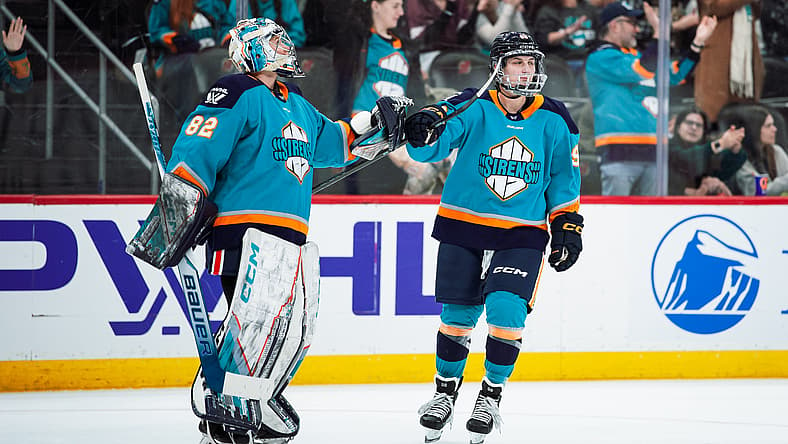
The New York Sirens find themselves in an all-too-familiar position during the PWHL’s three-day holiday break.
Four straight regulation losses leave the Sirens with six points (2-0-0-5) through seven games of the 2025-26 season. New York sits dead last among the League’s eight teams at Christmas.
For a team that’s trying to avoid its third consecutive last-place finish, it’s not the start they envisioned, especially after claiming victories in two of their first three games.
Seven games may seem like a small sample size, but it’s not in the context of a 30-game regular season. The Sirens are already five points out of a playoff spot and 13 points behind the first-place Boston Fleet. By Jan. 2, New York will have a third of its season in the rearview mirror. In the words of the late great Yogi Berra — it gets late early out there.
Hope isn’t lost for this promising group, though they could benefit from a few gifts. Here’s what the Sirens should be asking for this Christmas.
3 things that should be on Sirens’ Christmas wishlist
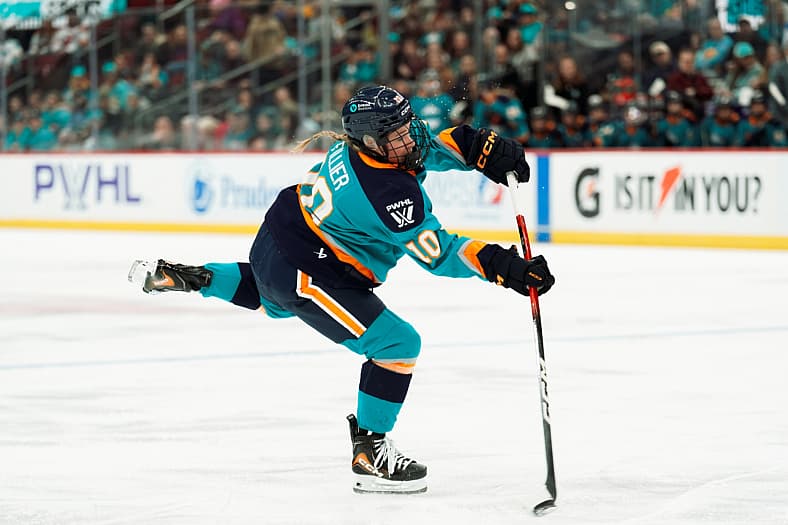
1. Improved Finishing
Consistent finishing eludes New York this season.
The Sirens lead the PWHL with 32.6 shots per game and have outshot their opponents in every contest. But that’s only part of the battle, as evidenced by their last-place record. New York’s 5.7 shooting percentage ranks dead last. Ultimately, it’s a good recipe for some hard-fought losses.
Their 95.5 PDO (on-ice shooting percentage plus on-ice save percentage) is worst in the League, per PWHL Analytics. PWHL teams typically rebound to a 99 PDO, according to the hockey analytics platform Crease Giants, suggesting that the Sirens are underperforming and due for positive regression.
Between that and a struggling power play, it’s no wonder the Sirens have been so inconsistent offensively. Still, they can’t blame all of their offensive troubles on poor puck luck.
Head coach Greg Fargo has stressed the importance of generating net-front chances, and to New York’s credit, they’ve heeded his words. The Sirens have 50 shot attempts directly in front of the crease, the most in the PWHL. That should translate into more goals throughout the course of the season, but it doesn’t solve the bigger issue at hand.
New York’s League-worst shooting percentage isn’t that peculiar for a team that’s relying on so many rookies for offensive production. 2025 No. 1 overall pick Kristyna Kaltounkova scored twice last Sunday against the Toronto Sceptres, raising her season total to three — tied for the most among PWHL rookies — but she’s the only member of the Sirens’ 2025 draft class to find the back of the net thus far.
Fourth-round pick Maddi Wheeler (No. 27 overall) has four points, second-most amongst rookies and tied with Taylor Girard for the team lead. No. 9 overall pick Anne Cherkowski (three assists) and No. 3 overall pick Casey O’Brien (two assists) have contributed as well in largely top-six minutes.
On a team with more scoring depth, it wouldn’t be an issue. But on a Sirens squad that parted ways with four of their top five scorers in the offseason, the rookies need to make an immediate impact if New York has any dreams of contending.
It also doesn’t help that Sarah Fillier, who tied Hillary Knight for the PWHL lead with 29 points as a rookie last season, is off to a slow start. The 2024-25 First Team All-Star has two points (one goal, one assist) and is shooting just 3.7 percent on 27 shots. Fillier’s a top-notch talent, but she’s hurting without an elite veteran like Alex Carpenter centering her line.
Perhaps it’s an unfair burden to place on a group of young forwards, but New York’s clearest path to consistent offense goes through Fillier and the rookies.
2. More from Osborne
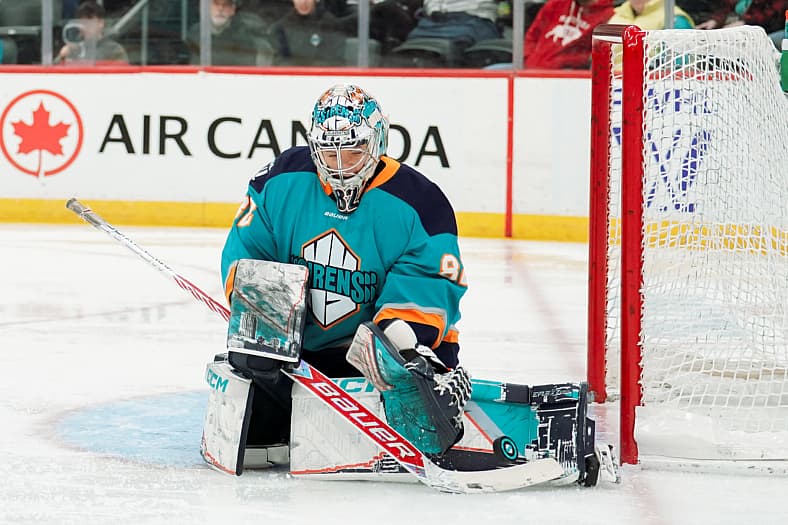
Kayle Osborne isn’t a problem for New York. In fact, the second-year goalie has taken a vital leap in 2025-26, assuming starting responsibilities after appearing in 10 games as a rookie in 2024-25.
Osborne is more than capable of being a starter in the PWHL — which is no small feat in an eight-team League. She’s just not quite in that next tier of elite goalies who can routinely steal games, and that’s what the Sirens need right now.
The Sirens are the only team in the PWHL with a save percentage below .900, trailing the pack at .898 after Jesse Compher’s empty-net tally cemented a four-goal effort last week for Toronto. Osborne sports a more respectable .909 save percentage and 2.19 goals against average (GAA) while appearing in all seven of New York’s contests, tied with Ottawa Charge goalie Gwyneth Philips for the most games started in the League.
She’s played better than the stats indicate. Many of her goals against have come on second chances or deflections, and she’s kept the Sirens close in games with clutch saves. Then again, the most important stat is the win-loss column; Osborne is 2-0-5 heading into a clash in Dallas with the Seattle Torrent on Sunday.
Her .909 save percentage ranks second-worst amongst PWHL goalies with at least three games played, only ahead of former Siren Corinne Schroeder (.889). That’s in part a product of volume — New York has allowed the fewest shots on goal in the League.
She’s not to blame for this squad’s slow start, but until the offense finds its footing, the Sirens need a goalie who can play hero ball more often than not.
It’s unclear what they have behind her in net. A pair of rookies, fourth-round pick Callie Shanahan (No. 28 overall) and Kaley Doyle (No. 41 overall), serve as the backups to Osborne, though neither has appeared in a PWHL game through the first month.
That leaves Osborne to shoulder the workload. She’s been a bright spot already, but the Sirens will need even more from her to make up ground in the standings. It’s a lot to ask of a 23-year-old, but Fargo and general manager Pascal Daoust seem to believe she’s the real deal.
3. Revised expansion format
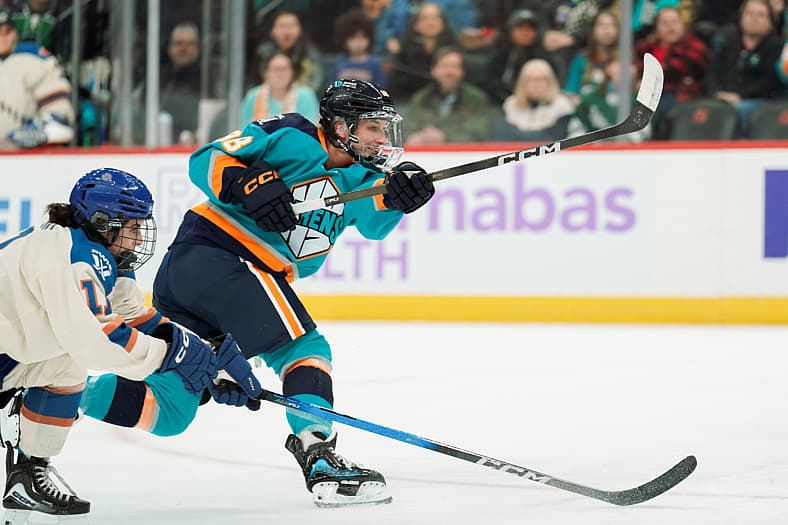
Captain Micah Zandee-Hart and the Sirens have made a concerted effort to quiet any talks of the PWHL’s upcoming expansion. Instead, they’re directing their attention to the season at hand and embracing a “win-now mentality.”
But that doesn’t diminish the threat of a potentially seismic expansion. A two-team expansion last offseason led to mass roster changes for every Inaugural Six team in the PWHL. Now the League eyes the addition of four new teams for 2026-27, leaving the rest of the hockey world to wonder what ramifications that could wreak on the existing eight squads.
Last summer, PWHL teams were allowed to protect three players from expansion. After losing two players in expansion, each existing team could then add a fourth to its protected list.
New York elected to part ways with a host of veteran players, opting to build a decidedly younger core with a draft class headlined by Kaltounkova, O’Brien, and Cherkowski. If the expansion format remains the same, that young Sirens core could be poached after just one season.
No matter how you slice it, the Sirens stand to lose integral pieces, especially if they can only retain three players from expansion. There would be no greater long-term Christmas gift for the Sirens than a revised expansion format with expanded player protection.