

 Lou Orlando
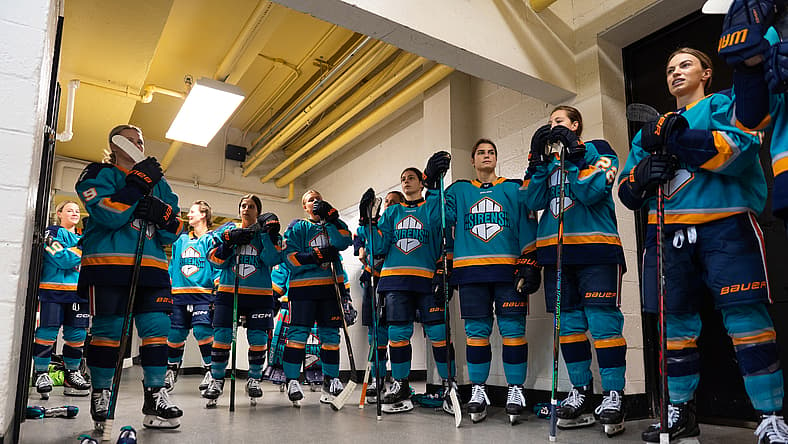
NEWARK — The New York Sirens hit the road this week to battle the two new expansion teams in the PWHL, visiting the Seattle Torrent on Wednesday ahead of a Saturday rematch with the Vancouver Goldeneyes.
The League operated with six teams through its first two seasons — largely East Coast-centric with no venue further west than Minnesota. That changed in season No. 3. The PWHL planted seeds on the West Coast after a successful Takeover Tour in 2024-25 that included stops in Seattle and Vancouver.
The early returns are stellar, to say the least.
The Goldeneyes drew a crowd of 14,958 in Pacific Coliseum on opening night and rewarded the Vancouver faithful with a 4-3 overtime win over the Torrent. One week later, Seattle set a United States women’s hockey attendance record, filling Climate Pledge Arena with 16,041 people in their home opener.
“For me personally, I’m excited about the growth of the League and the fact that we’re now on the West Coast,” Sirens coach Greg Fargo said last week. “There’s more eyeballs watching the League, I think it’s great for the whole thing.”
PWHL unveils next steps in expansion
The elephant in the room, however, is that the League isn’t done yet.
“Next year, we are expanding again,” PWHL executive VP Amy Scheer said last week in an interview with CNBC Sport. “It’s either two to four teams. If I was a betting woman, I’d say it would be four teams — and then I think we’ll hold at 12 for a bit.”
A 16-game takeover tour this season, featuring 11 different locations in the United States and Canada, serves as a preview to the next PWHL cities.
While that’s an exciting prospect for the League’s growth, it’s a daunting cloud looming over the eight existing teams — particularly the six that just endured a hectic expansion last offseason.
Should the PWHL maintain its current expansion model, it will be all but impossible for any team to avoid franchise-altering changes. Last summer, teams were only allowed to protect three players, each of whom had to be under contract for the following season. After losing two players in expansion, a team was then allowed to add a fourth to its protected list.
The remaining pool of players, unprotected or on expiring contracts, were eligible to be poached by expansion teams — either in an exclusive signing window or the ensuing expansion draft.
The end result? A major roster overhaul for every original-six team, and a completely transformed landscape of the PWHL.
Sirens embracing ‘win-now’ mentality amid anticipated PWHL expansion
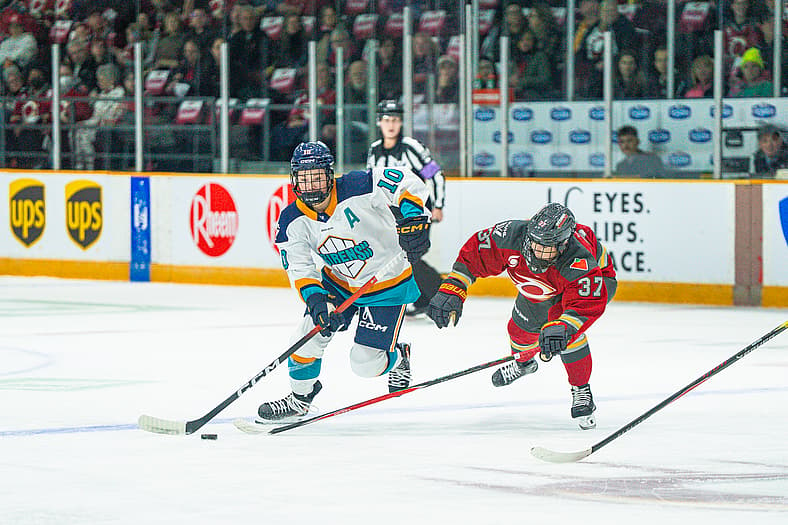
Sarah Fillier — photo courtesy PWHL
New York made the most of the expansion process this summer. After back-to-back last-place finishes, Sirens general manager Pascal Daoust opted to take his squad in a decidedly younger direction.
That young core, headlined by reigning Rookie of the Year Sarah Fillier and first-round picks Kristyna Kaltounkova (No. 1 overall) and Casey O’Brien (No. 3 overall), has the Sirens off to a promising 2-0-0-1 start in 2025-26.

Casey O’Brien — photo courtesy PWHL
Whether or not they can keep that core together remains to be seen. A two-team expansion led to seismic change across the League this past summer. One can only imagine what adding four teams in one offseason would yield.
“I don’t even think we’ve thought about it at all,” Sirens captain Micah Zandee-Hart said Friday. “I don’t think we’re actively not trying to think about it, but I think obviously, with what happened last spring, it is very clear that this league is a win-now league.”
“As a coach, you’re trying not to pay too much attention to what’s going to happen six, seven months down the road,” Fargo added. “We’re focused on today, and just trying to coach our team the way that it is, and not worry too much about expansion.”
For New York — and every other original-six team — the drama and discourse that accompany the prospect of expansion are nothing new. But the Sirens are emphasizing a different approach within the locker room this season.
“Last year, when there was a lot of talk of expansion, I felt like we were talking about it a lot,” Fargo revealed. “What was it going to look like, what was the draft going to look like, how it affects the teams — it was almost a daily conversation.”
Many of those same questions still apply this season. That uncertainty can crush a locker room — or it can embolden one.
“We don’t know what’s going to happen next year,” Zandee-Hart acknowledged. “So I think that maybe for some of the veterans in the League, it makes you think, ‘I want to make the most of this moment and this team we have here.'”
That’s likely the most optimal route forward. If the upcoming offseason is as tumultuous as expected, all any team can do is be where their feet are.