

 Danny McCloskey
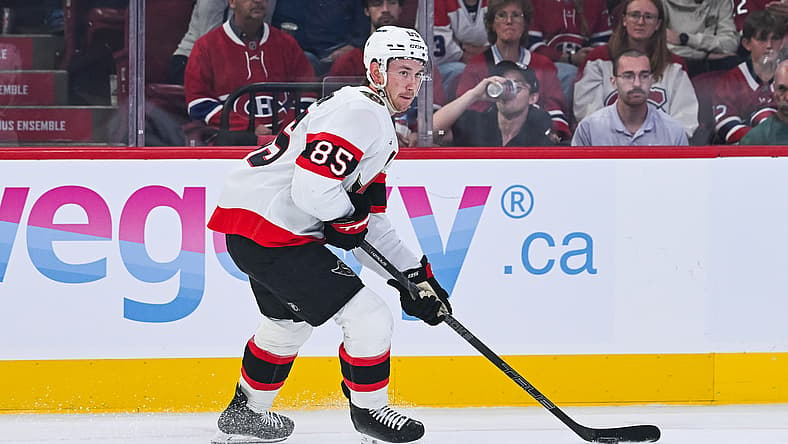
The road back to the playoffs starts tonight for the Ottawa Senators. Here’s a not-so fun fact- The last time the Sens made the playoffs in back-to-back seasons was in 2013. That was back when Paul MacLean was their head coach. History shows us that it’s never the same 16 teams in the playoffs from the season prior. So, why does it seem likely that the Senators will make it again? Let’s dive into the details!
READ MORE: A Look at the 2025-26 Ottawa Senators
1. Hamonic-less Pace
The Senators played at a 111 point pace in the 23 games that Hamonic was out of the lineup. Hamonic’s work ethic was never questioned, but he struggled the last couple of seasons. Making matters worse, when Zub was out, Hamonic was often paired with Jake Sanderson, which negatively impacted Ottawa’s top defensemen. On paper, Ottawa’s defensive depth this season is stronger.
2. Second-Half Pace
Is the 23 game sample size above not big enough for you? Say no more! The Senators tied for the 2nd best point percentage from January 11th onward. Their pace in those 42 games was for 109 points. That’s despite an 8% shooting percentage at 5 on 5 during that time, which ranked 27th.
3. Unlucky Shooting
Believe it or not, the Senators low shooting percentage during the second half was actually an improvement from the first half. For the entire season the Sens had just a 7.6 shooting percentage at 5 on 5. That ranked 30th in the NHL. Sure the argument could be made that the Senators lack pur goal scorers, but they have enough talent to climb up higher than 30th in the entire league.
4. Growth From Pinto
Shane Pinto scored 20 goals in his last 50 games. That translates to 33 over a full 82 games. He led the Senators in goals during that time. He did this while thriving as a defensive player as well, highlighted by being asked to match up against Auston Matthews in the playoffs.
5. Growth From Greig
Ridly Greig signed a contract extension on January 10th. From that point forward, he averaged 18:33 per game, second among Sens forwards to only Stützle. He averaged 0.54 points and played over two minutes per game on the penalty kill during this time. At just 23 years old, there is room for Greig’s game to elevate even further.
6. Growth From Sanderson
Sanderson scored 35 points in his last 40 games. That ranked him 5th best league wide among d-men during that time. The only four guys ahead of him? Makar by eight points, Dahlin by three, and Hedman and Bouchard by one each. If he could maintain that production for a full season, he would score 72 points.
7. Sanderson Continued
During that stretch of dominance, Sanderson received offensive zone starts just 39% of the time at 5 on 5. The other four guys mentioned were all over 58%. Lane Hutson, who also scored 35 points during that time, was at 75%. Essentially, Sanderson kept up with the league’s elite offensive defenseman production wise, while still being asked to be the Senators best defensive defenseman as well.
8. One More Sanderson Stat
Realistically, I could come up with ten stats just about Sanderson. This is an interesting one. Last season, the Senators shooting percentage at 5v5 with Sanderson on the ice was 6.2%. Out of the 203 d-men that played at least 40 games, that ranked Sanderson 200th. So not only was he highly productive last season, scoring 57 points, he did so despite the fact that the team had bad offensive puck luck while he was on the ice. Imagine his numbers with even average shooting while he’s on the ice.
9. Linus Ullmark’s Consistency
Consistent goaltending is a trait among most playoff teams. That’s good news for the Senators. Last season was Ullmark’s six in a row with a save percentage of .910 or better. During that time, his .919 SV% ranks first among all goalies who have started more than 100 games.
10. No Salary Cap Concerns
Last season, Steve Staios and company had to battle the cap all year long. That’s not the case anymore, thanks to a rising cap, plus some nice moves made by Staios. The Senators have roughly three million dollars in cap space. That will allow them to handle call-ups easier than a season ago, and it puts them in a good spot to be a buyer in the trade market when the timing is right.
Final Thoughts
So there you have it, ten stats that show why the Senators should be back in the playoffs come April. Those stats, by the way, didn’t even include the likes of Tkachuk, Stutzle, Chabot, Batherson, and a few other Senators who are pretty good at hockey. Inevitably, stats only matter so much. It’s up to the 2025-26 Ottawa Senators to earn their way into the playoffs with their play on the ice. That starts tonight, against the Tampa Bay Lightning.