Matt Higgins
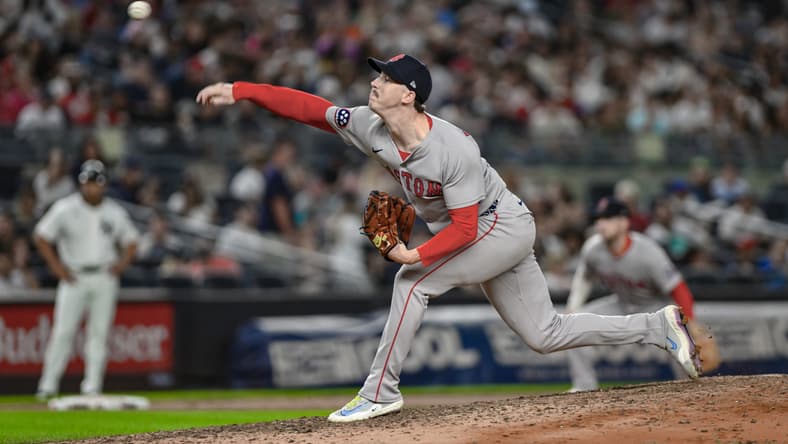
A two-time All-Star pitcher is clearly not a fan of the ABS (automated ball-strike) system that could be implemented across baseball as soon as 2026.
Ahead of his Philadelphia Phillies debut on Friday, Walker Buehler — an eight-year veteran who won two World Series with the Los Angeles Dodgers — explained what he believes is wrong with ABS.
“I think it’s inaccurate. I think in most of the stadiums it’s not actually on the plate. I think it shifts certain directions in certain ballparks. I think the human element is a huge part of this game,” Buehler said. “I think starting pitchers that have pitched for a long time deserve certain parts of the plate that other guys don’t get. When I got to the big leagues, I didn’t get every part of the zone that other guys did and I think that’s part of the game and should be.”
Walker Buehler … not a fan of ABS.
— On Pattison (@OnPattison) September 11, 2025
(Via @TimKellySports) pic.twitter.com/Z2qC55nY0V
Even though fans have been clamoring for the ABS system when umpires call a pitch a strike six inches off the plate or one a ball that’s clearly inside the strike zone, Buehler is one of many players who have their doubts about it.
MLB has been testing the system for years in the minors.
The Flaws in Buehler’s Logic and ABS Technology
However, there’s a flaw in Buehler’s assessment when he says veteran pitchers should get certain parts of the plate younger players don’t. This is supposed to be an even playing field, no matter if you’re a rookie, a veteran like Buehler, or a future Hall of Famer like Max Scherzer. A ball is a ball and a strike is a strike. It’s as simple as that.
But he did bring up a good point about the potential inaccuracy of ABS. In a report by The Athletic’s Ken Rosenthal and Jayson Stark in May, they revealed the technology is “not quite as precise as many assumed.” Arizona Diamondbacks pitcher Corbin Burnes, who is one of four player representatives on MLB’s joint competition committee, told Rosenthal and Stark that the margin for error was about a half-inch.
“In other words, the system could place a pitch that was one-tenth inside the strike zone four-tenths of an inch outside the strike zone,” Rosenthal and Stark reported.
They continued: “The choice is not only whether to introduce ABS, but also whether to implement another groundbreaking possibility, a change in the definition of the strike zone. The ABS zone used this spring — and the zone used in the minor leagues — is different from the traditional rule book strike zone. It is more rectangular, dips lower at the top of the zone, extends slightly higher at the bottom and is narrower on the sides.”
So the strike zone box fans see while watching games at home is different from the one ABS will use.
Buehler did admit he thinks the system “in general, is a very good idea,” but believes it will be negative for the game overall.
“I don’t think we have any idea where to put it on the plate. I don’t think we have any idea how to function it correctly in terms of the angles in ballparks. I don’t think the umpire’s union is going to be happy about it. There’s a lot of negative about the ABS,” said Buehler.
MLB Commissioner Rob Manfred said earlier this summer that he plans to introduce a proposal to the game’s competition committee to bring ABS to MLB next season. It’s believed there are enough votes on the committee to push it through.