
 Dave Litman
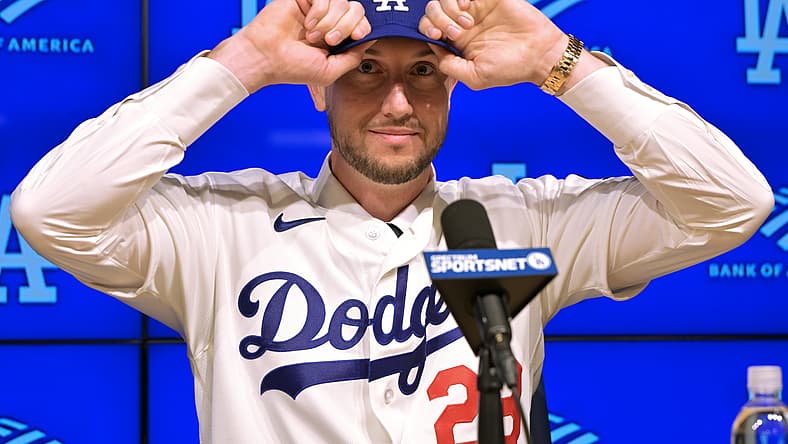
The Toronto Blue Jays were the frontrunners to land top free agent Kyle Tucker seemingly all offseason long. Until they weren’t. First, the New York Mets, then ultimately the Los Angeles Dodgers, swooped in at the 11th hour with outrageous high-AAV offers that the outfielder simply couldn’t refuse.
Tucker had made a much-ballyhooed visit to the Jays’ high-tech spring training complex in Dunedin, Florida in early December, and the media spin cycle immediately anointed Toronto as Tucker’s top choice.
In fact, former Blue Jay-turned-insider Whit Merrifield said on the 6ix Inning Stretch podcast that Tucker really DID want to be a Blue Jay.
“I know people in his camp very well… When he signed, his agent texted me, and was like, ‘Hey, Kyle really wanted to go to Toronto’. The Jays offered him ten years for ($350 million)… I felt like they needed a little bit more based on Kyle and his market and comparables. Toronto just wasn’t willing to do more than ($35 million) a year.
“Everyone has a value for different players. Toronto felt that his value was ($35 million) a year for ten years, which is an incredible offer. The Dodgers came in and said about ($60 million) a year. It’s hard to say no to that.”
Blue Jays did not want to give Tucker a higher AAV than Guerrero Jr.
With Vladimir Guerrero Jr.’s salary being $35.7 million annually, the Jays, understandably, did not want to pay Tucker more in AAV than their franchise player.
Even Dodgers’ head of baseball operations Andrew Friedman was surprised by the way it all played out.
“I think when we’ve seen these shorter-term, higher AAV deals, I don’t think they’ve ever come when they also had a really long, significant deal. Not that I can remember. Usually, guys take those shorter-term deals because the longer-term deal hasn’t materialized.”
The Dodgers, however, in addition to offering an insane contract, were able to pitch Tucker on the chance to play with a two-time defending World Series champion. And a roster full of superstars.
“For us,” Friedman said, “it was about selling the opportunity to play with these guys, to play in front of these fans, to play in this city, to connect with this community.”
And hey, connecting with $60 million a year isn’t a bad selling point, either, it turns out.