
 Matt Higgins
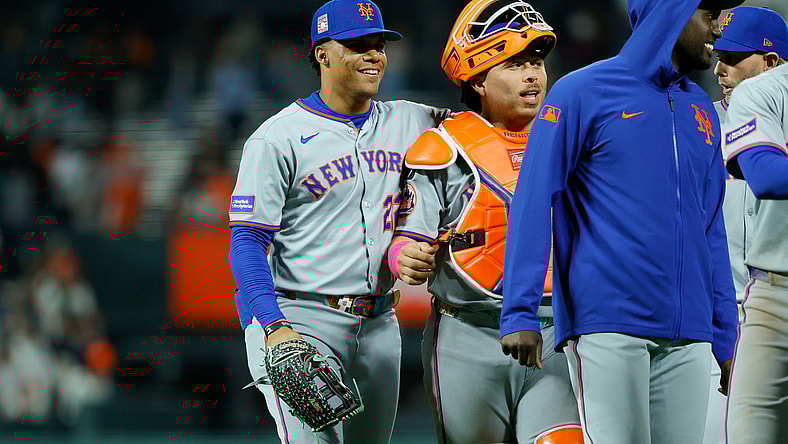
It was a wild MLB trade deadline as several stars changed teams, some in shocking fashion. The San Diego Padres, New York Mets and Philadelphia Phillies were among the biggest deadline winners while the Los Angeles Dodgers, Chicago Cubs and Detroit Tigers surprisingly didn’t make a splash.
Here’s how the MLB Power Rankings shake out following the trade deadline.
- New York Mets ( OG. 1 )
- Milwaukee Brewers ( OG. 2 )
- Chicago Cubs ( OG. 3 )
For editorial purposes only. Not affiliated or endorsed by any team mentioned.
**Statistics as of Friday, Aug. 1**
1. New York Mets (Previously: 8)
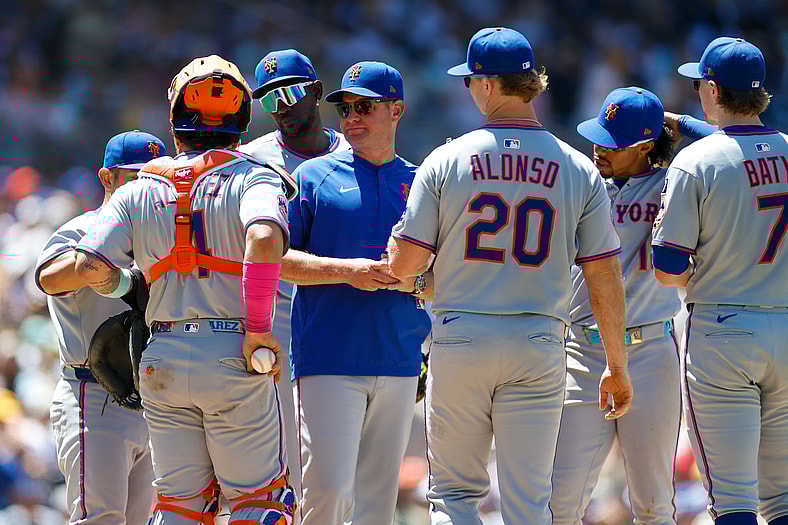
The Mets significantly upgraded an already strong bullpen, adding relievers Gregory Soto, Tyler Rogers and Ryan Helsley ahead of the deadline, while also fixing their offensive void in center field by trading for Cedric Mullins. The National League East leaders will be an incredibly dangerous team come October with Juan Soto, Francisco Lindor and Pete Alonso leading the way.
2. Milwaukee Brewers (Previously: 6)
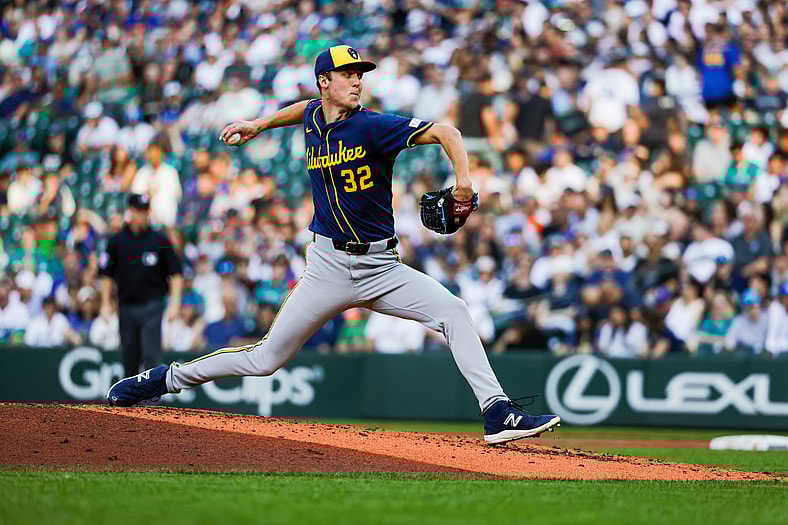
The Milwaukee Brewers boast the best record in baseball heading into Friday night’s game against the Washington Nationals. They have a superb pitching staff led by rookie sensation Jacob Misiorowski that can carry them to the World Series. However, they didn’t add an impact bat at the deadline while Eugenio Suarez was available. That could come back to bite them with an offense tied for 17th in OPS (.712).
3. Chicago Cubs (Previously: 2)
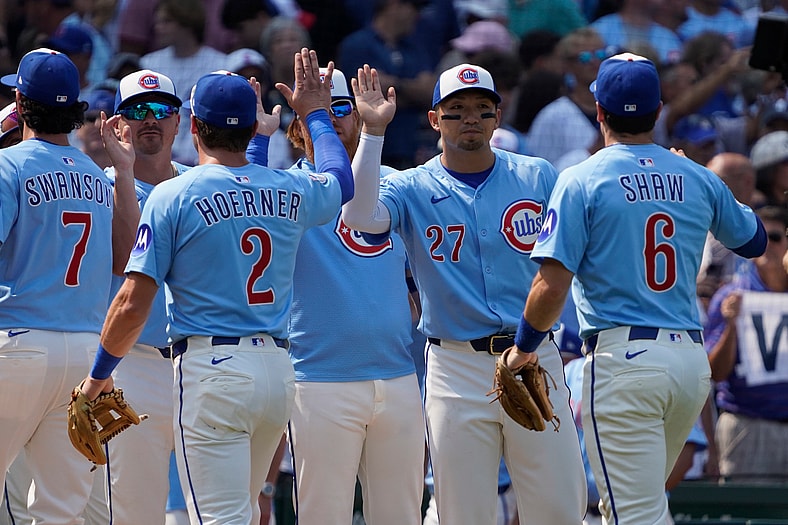
The Cubs are right on Milwaukee’s heels after the Brewers overtook them for the National League Central lead. They made several moves at the trade deadline: acquiring starter Michael Soroka, relievers Andrew Kittredge and Taylor Rogers, and super-utilityman Willi Castro. But Soroka and his 4.87 ERA wasn’t the pitcher who can upgrade Chicago’s rotation to World Series-caliber.
4. Los Angeles Dodgers (Previously: 4)
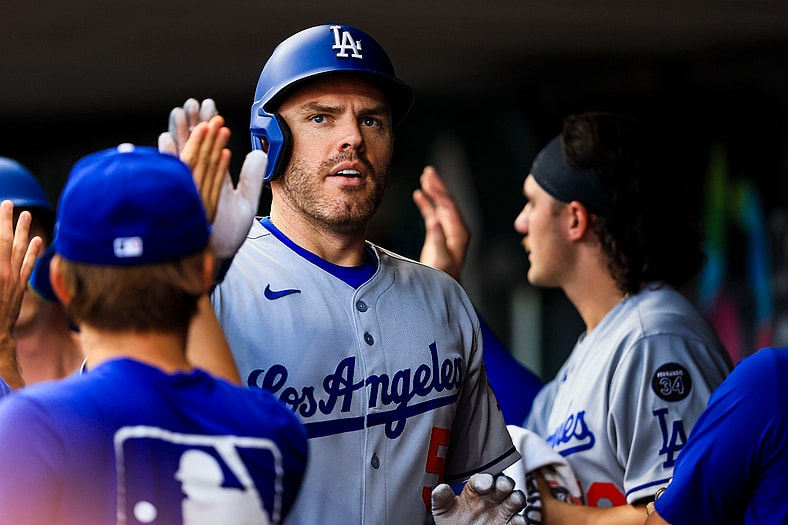
The Dodgers were incredibly aggressive last offseason, but they took a passive approach this trade deadline. They brought in reliever Brock Stewart and outfielder Alex Call while trading away starting pitcher Dustin May and outfielder James Outman. It wasn’t the trade deadline many expected from the Dodgers as top-tier relievers like Mason Miller, Jhoan Duran and Ryan Helsley went to National League rivals. Los Angeles is counting on their pitching staff to get fully healthy ahead of October as they defend their World Series title.
5. Toronto Blue Jays (Previously: 5)
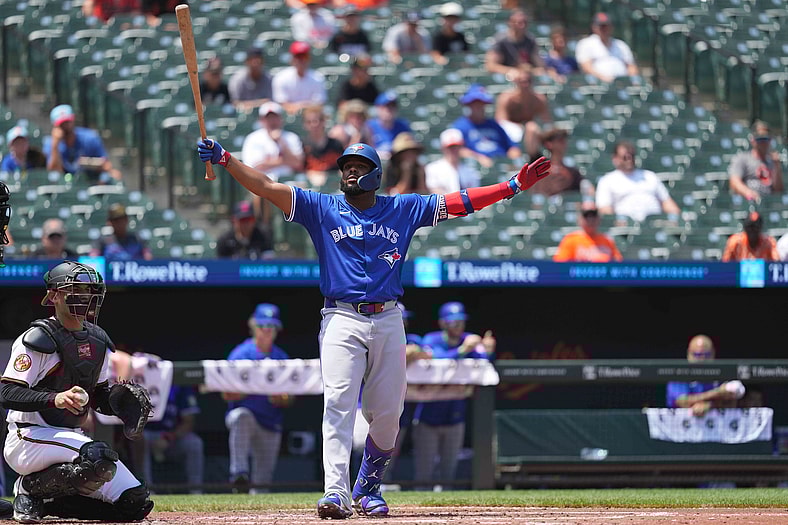
The Toronto Blue Jays overtook the New York Yankees for first place in the American League East after going 18-8 in July. Currently holding a 3.5-game lead for first place, it was the perfect time to make a big splash at the trade deadline. Instead, they added middle relievers Seranthony Dominguez and Louie Varland and took a flier on starting pitcher Shane Bieber, who is currently on a rehab assignment in the minors after missing most of 2024 due to Tommy John surgery.
6. Philadelphia Phillies (Previously: 7)
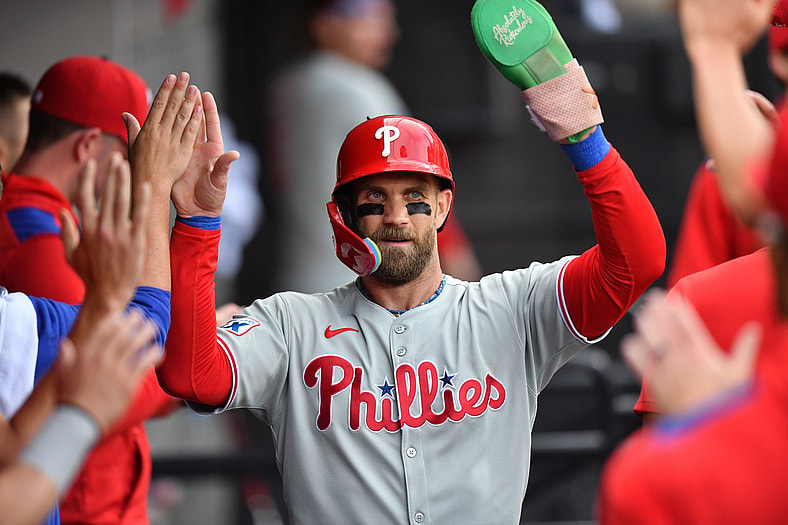
The Philadelphia Phillies had two main objectives at the trade deadline — acquire a high-leverage reliever with swing-and-miss stuff and a right-handed outfield bat. They accomplished both. The Phillies traded for one of the best relievers on the market in Jhoan Duran and have him through 2027 while also adding center fielder Harrison Bader, who has 12 home runs on the season and plays excellent defense.
7. Detroit Tigers (Previously: 1)
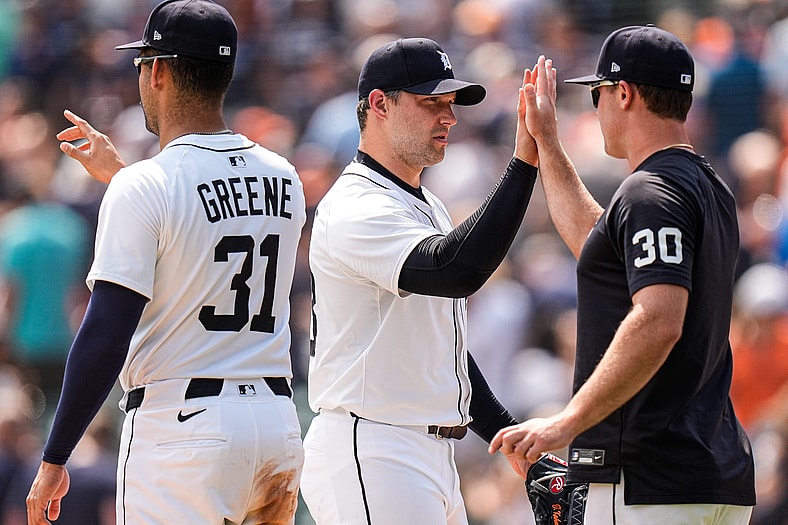
The Detroit Tigers have taken a tumble in the power rankings after losing 12 of 13 before righting the ship somewhat and winning their last four games. They still hold a commanding nine-game lead in the American League Central, and added seven new arms at the trade deadline: starters Chris Paddack and Charlie Morton and relievers Kyle Finnegan, Paul Sewald, Rafael Montero, Randy Dobnak and Codi Heuer. But they failed to add an impact bat and a high-leverage reliever that they needed. Their new pitchers are essentially depth pieces.
8. San Diego Padres (Previously: 12)
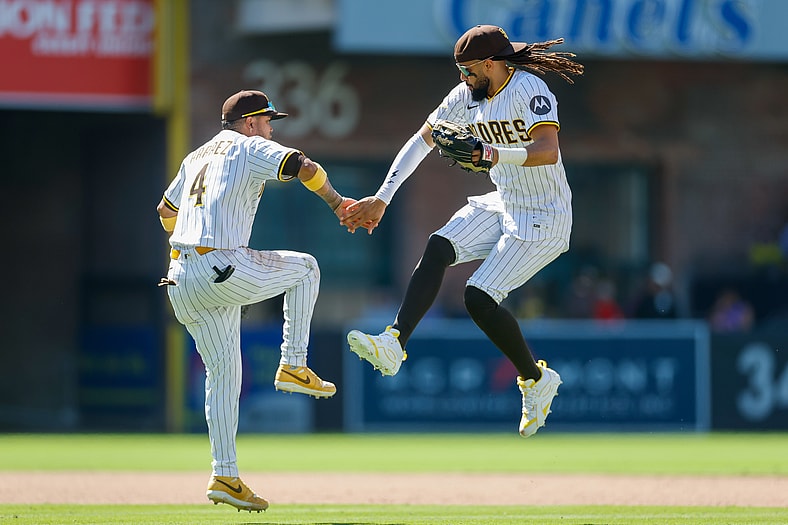
The Padres went all-in at the deadline, adding elite closer Mason Miller, All-Star slugger Ryan O’Hearn, starting pitchers J.P. Sears and Nestor Cortes, outfielder Ramon Laureano, infielder Will Wagner and catcher Freddy Fermin. They also kept ace Dylan Cease and two-time All-Star reliever Robert Suarez. They’re looking to topple the Dodgers and make a deep postseason run.
9. Houston Astros (Previously: 3)
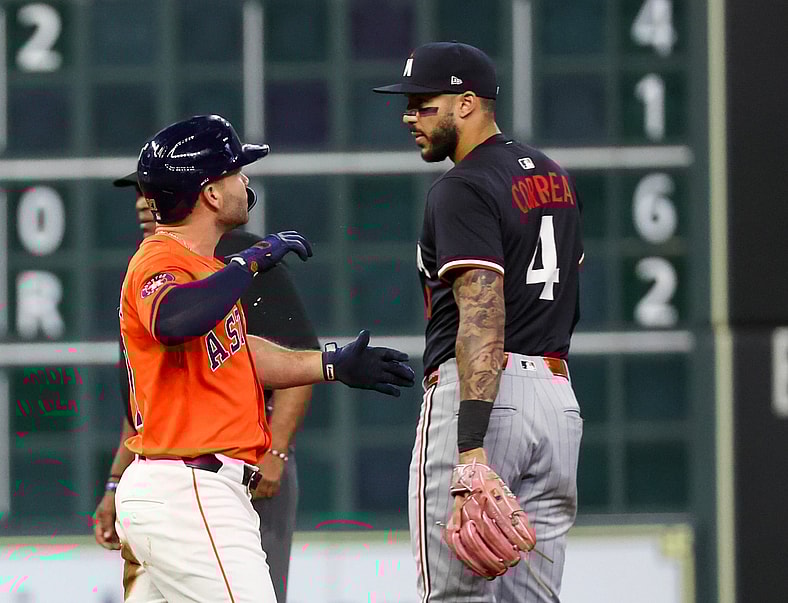
The Houston Astros made one of the most shocking trade deadline deals in recent memory, reuniting with Carlos Correa, who will be playing third base as Isaac Paredes could be out for the season with a severe hamstring injury. Correa returns to Houston where he spent the first seven seasons of his career, made two All-Star teams and was part of the scandal-plagued 2017 World Series championship team. Correa was never the same player with the Minnesota Twins due to injuries, but the Astros are hoping he finds the fountain of youth. The Astros also acquired outfielder Jesus Sanchez and infielder Ramon Urias.
10. New York Yankees (Previously: 10)
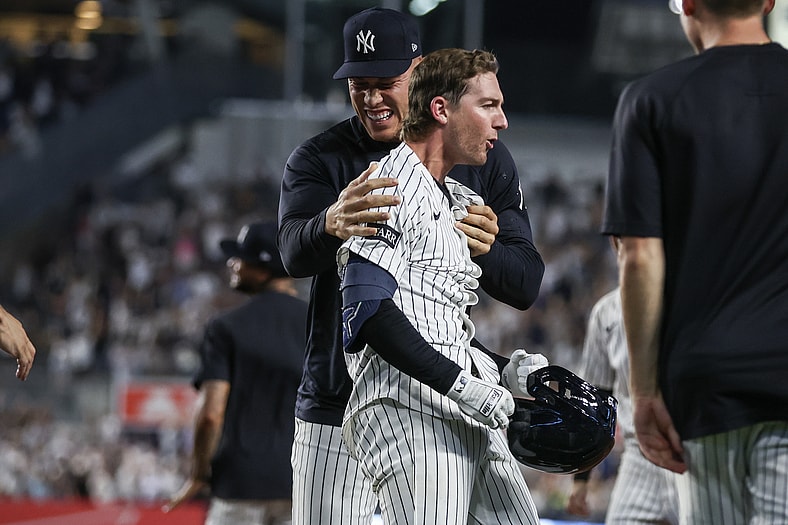
The Yankees didn’t stand idly by at the trade deadline, revamping a bullpen that ranks 20th in ERA (4.19). They brought in two-time All-Star closer David Bednar and relievers Jake Bird and Camilo Doval, a former All-Star himself. They addressed their third base issue, acquiring slick-fielding Ryan McMahon, who is under contract through 2027. He’s never had a full season where his OPS+ finished above 100 — which is league average — but he has five seasons with at least 20 home runs.
11. Seattle Mariners (Previously: 11)
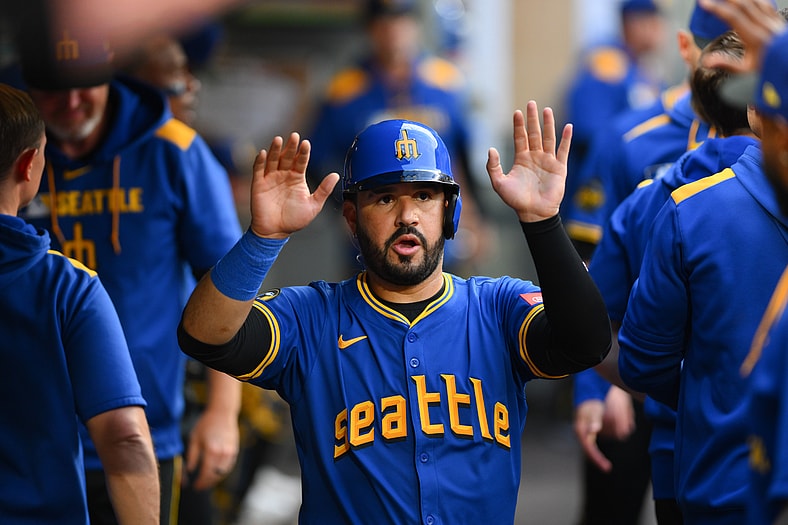
The Seattle Mariners weren’t playing around this trade deadline, going all-in to their fans’ delight. They significantly upgraded first and third base with Josh Naylor and Eugenio Suarez, respectively. Suarez (36 home runs) and Cal Raleigh (42 home runs) form a potent power duo while Naylor’s .795 OPS helps lengthen a lineup that includes Julio Rodriguez, Randy Arozarena and J.P. Crawford. With Seattle’s superb pitching staff and their offensive additions, the Mariners have a very real shot at winning their first World Series championship in franchise history.
12. Boston Red Sox (Previously: 9)
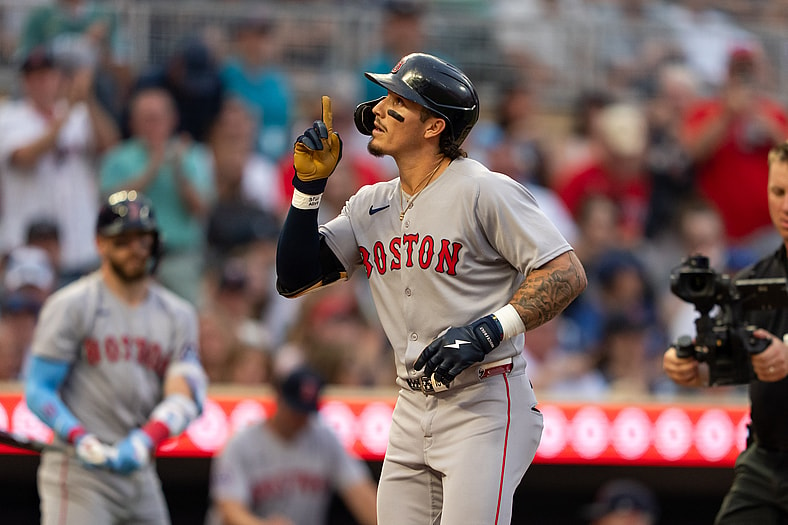
The Boston Red Sox had a head-scratching trade deadline. Instead of adding a high-end starter like Merrill Kelly or Joe Ryan, they ended up with two injury-prone pitchers in Steven Matz and Dustin May. Matz has turned into a reliever with a 3.22 ERA while May is sporting a 4.85 ERA in 19 games (18 starts). They also held onto outfielder Jarren Duran, who they could trade in the offseason. Boston currently holds the second Wild Card spot but their underwhelming deadline could hurt them down the stretch.
13. Cincinnati Reds (Previously: 15)
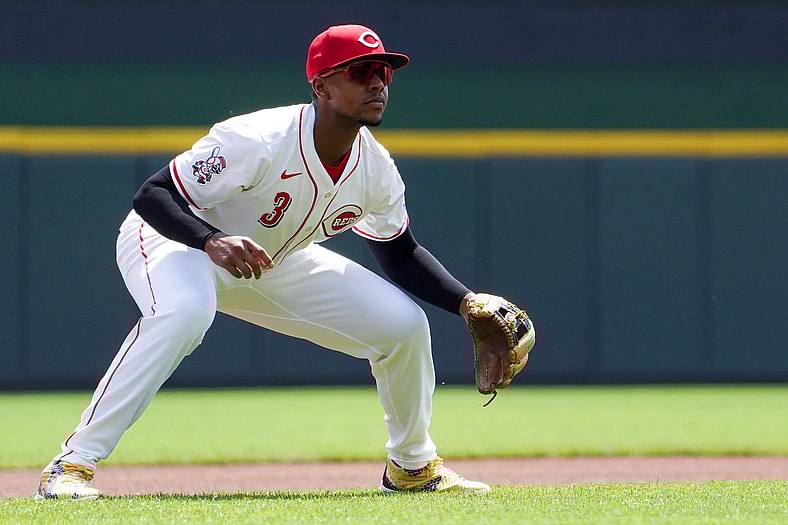
The Cincinnati Reds surprisingly landed Ke’Bryan Hayes from NL Central rival Pittsburgh Pirates. He’s one of the best defensive third basemen in the league, but his bat leaves much to be desired. He has a .575 OPS, 61 OPS+ and three home runs, but did homer in his first game as a Red. He’s under control through 2030 and if he can become a league average hitter, it would be a major win for the Reds. They also acquired starting pitcher Zach Littell who has a 3.83 ERA in 22 games, but they did give up reliever Taylor Rogers and didn’t replace his arm in the bullpen.
14. Texas Rangers (Previously: 17)
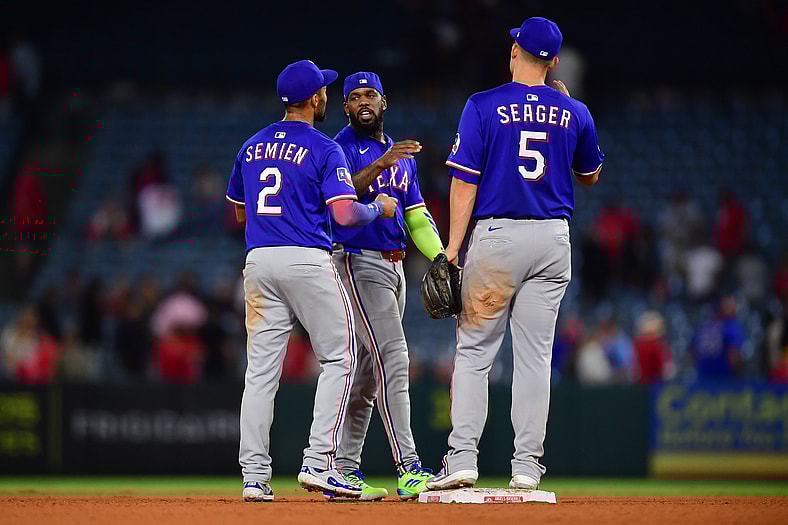
The Texas Rangers turned it on in July, going 16-9 and averaging 5.5 runs per game. They upgraded their pitching staff at the deadline, bringing on starter Merrill Kelly and southpaw reliever Danny Coulombe. The Rangers, though, did hold onto Adolis Garcia, who, despite regressing offensively the last two seasons, was bandied about in trade rumors. For the Rangers to make a postseason push, they’re going to count on Corey Seager, Marcus Semien, Nathan Eovaldi and Jacob deGrom to lead the charge.
15. Tampa Bay Rays (Previously: 16)
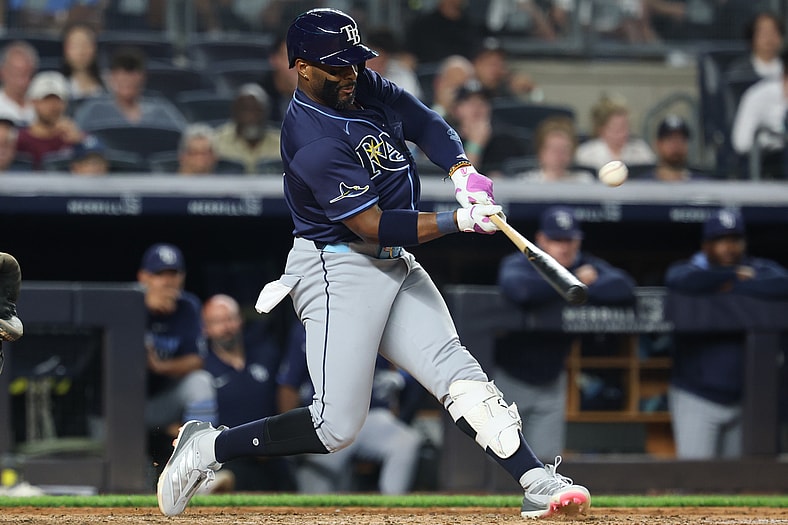
The Tampa Bay Rays were struggling mightily heading into the trade deadline, going 7-18 in July. Despite being two games under .500 and four games behind the last Wild Card spot with four teams ahead of them, they decided to hold onto Yandy Diaz, Brandon Lowe and Pete Fairbanks and added one of the top relievers in Griffin Jax and also starting pitcher Adrian Houser. These seem like building for the future moves instead of competing for a playoff spot this year.
16. St. Louis Cardinals (Previously: 14)
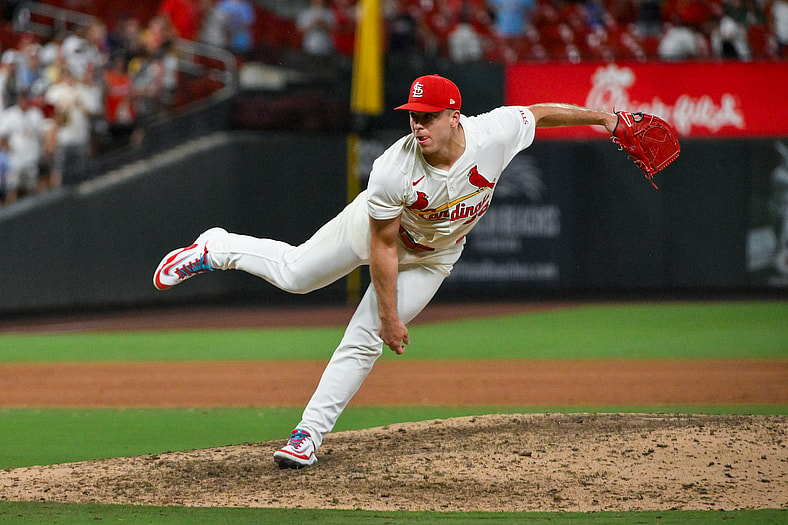
The St. Louis Cardinals said goodbye to two-time All-Star closer Ryan Helsley and relievers Steven Matz and Phil Maton at the trade deadline, but failed to capitalize on the prospect package — especially for Helsley. The Mets only gave up infielder Jesus Baez (New York’s No. 8 prospect), right-handed pitcher Nate Dohm (New York’s No. 14 prospect) and right-handed pitcher Frank Elissalt. Baez is the highlight for the Cardinals in the deal but he’s only 20 and years away from contributing. On top of that, third baseman Nolan Arenado has been placed on the injured list with a right shoulder strain.
17. San Francisco Giants (Previously: 13)
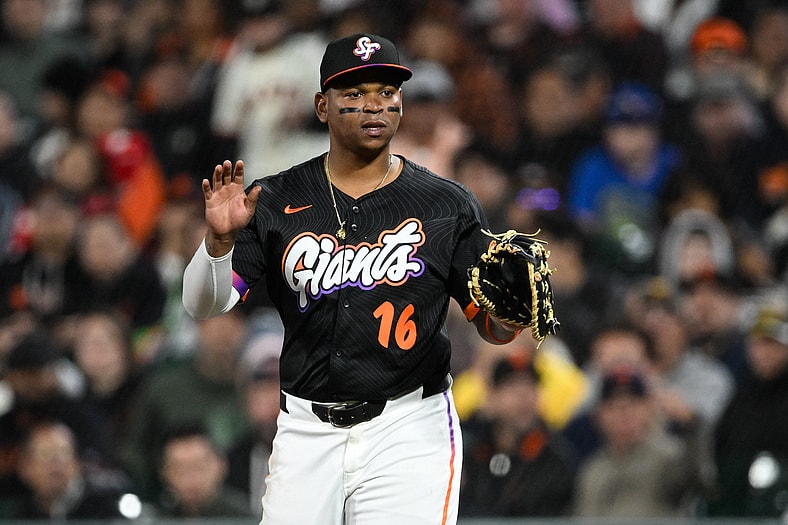
The San Francisco Giants made their bold move weeks before the deadline, trading for Rafael Devers in a blockbuster deal with the Red Sox. But the trade hasn’t borne the fruit they expected as Devers is hitting just .219 with a .692 OPS in 37 games and the Giants are currently one game under .500 and six games behind the last Wild Card spot entering August. They traded reliever Tyler Rogers to the Mets and outfielder Mike Yastrzemski to the Kansas City Royals. The Giants made out well in the Rogers deal, receiving pitcher Jose Butto, outfield prospect Drew Gilbert and pitching prospect Blade Tidwell.
18. Kansas City Royals (Previously: 19)
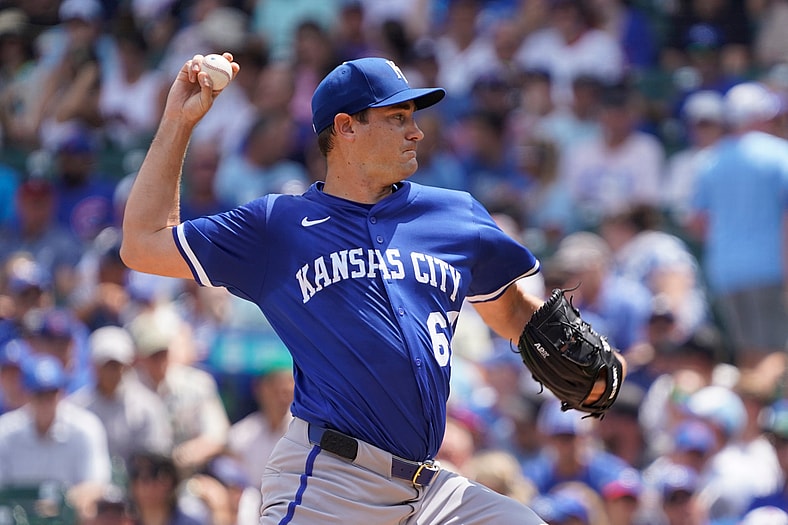
The Kansas City Royals made several moves at the trade deadline as they are 3.5 games out of the final AL Wild Card spot. They added outfield bats in Randal Grichuk and Mike Yastrzemski, as well as pitchers Bailey Falter, Ryan Bergert and Stephen Kolek. On top of that, they agreed to a two-year, $46 million extension with ace Seth Lugo. They’re still battling for a playoff spot in 2025 and also building for 2026 and beyond.
19. Cleveland Guardians (Previously: 21)
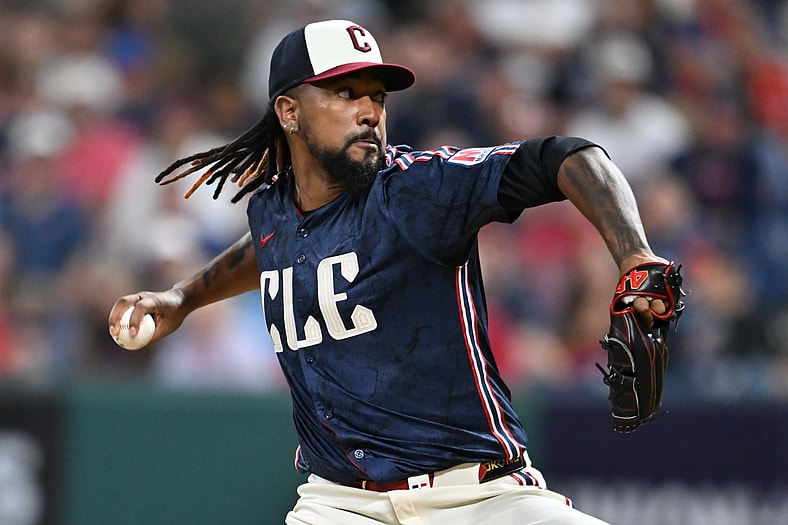
The Cleveland Guardians were getting ready to reload for the future as they were dangling three-time All-Star closer Emmanuel Clase on the trade market. But those dreams were dashed when he was placed on paid leave due to MLB’s sports betting investigation that ensnared his teammate Luis F. Ortiz. All-Star outfielder Steven Kwan’s name was also bandied about in trade talks but he stayed put. They did trade Shane Bieber to the Blue Jays and got a decent prospect back in return: pitcher Khal Stephen. Now the Guardians are stuck in neutral until the offseason when they figure out what the franchise’s future looks like.
20. Arizona Diamondbacks (Previously: 22)
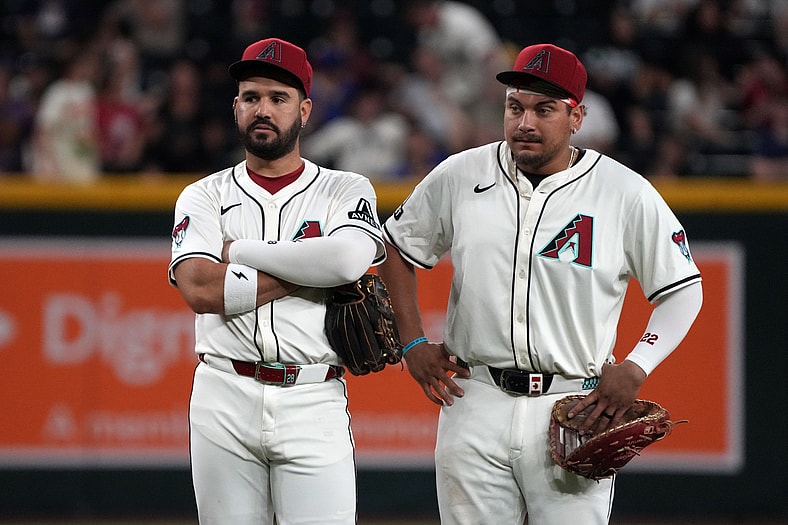
Mired in fourth place in the National League West with no path towards the playoffs, the Arizona Diamondbacks did what they had to do and traded pitcher Merrill Kelly, third baseman Eugenio Suarez and first baseman Josh Naylor. They got a pitching bounty for Kelly from the Rangers with left-hander Kohl Drak (Texas’ No. 5 prospect), southpaw Mitch Bratt (Texas’ No. 9 prospect) and righty David Hagaman (Texas’ No. 13 prospect). The Diamondbacks also added pitching prospects Brandyn Garcia and Ashton Izzi in the Naylor deal and first base prospect Tyler Locklear for Suarez.
21. Los Angeles Angels (Previously: 20)
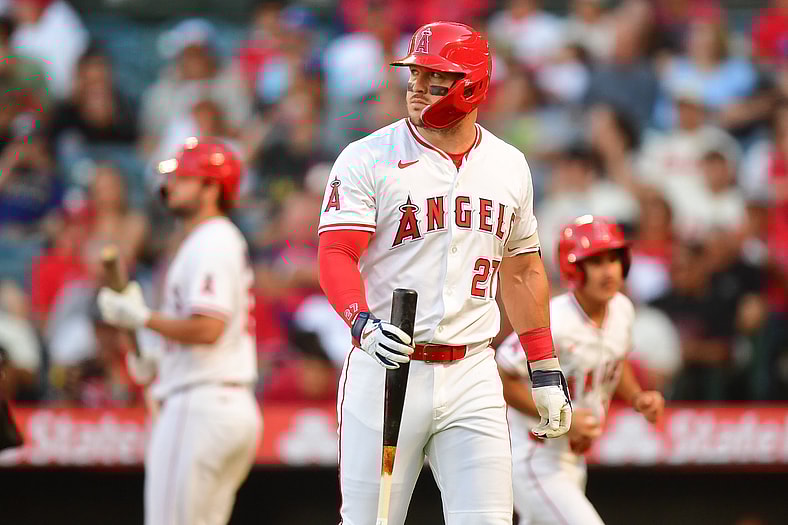
What were the Los Angeles Angels doing at the deadline? Instead of reloading by trading players like Taylor Ward, Kenley Jansen and Reid Detmers, they traded for two average relievers in Andrew Chafin and Luis Garcia from the Washington Nationals. Hopefully they do Mike Trout right and trade him to a contender so he has a chance to win a World Series before his career comes to an end.
22. Miami Marlins (Previously: 24)
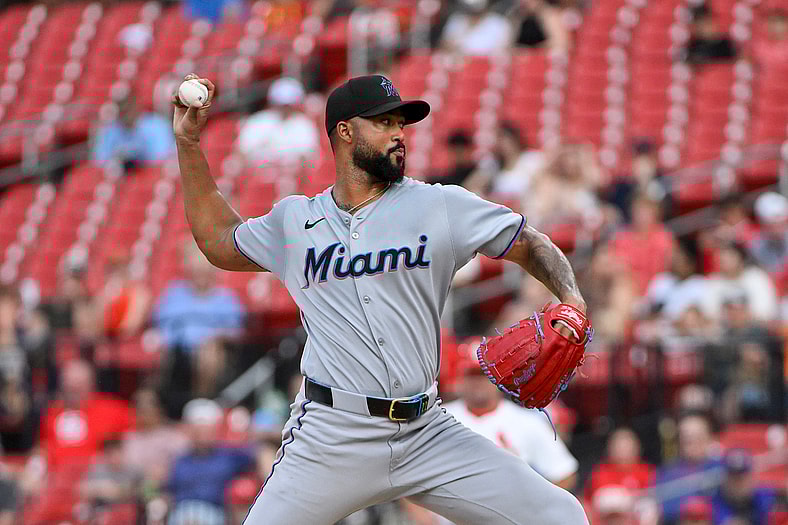
The Miami Marlins decided to hold onto their two biggest trade targets in pitchers Sandy Alcantara and Edward Cabrera after going 15-10 in July. They’re 52-55 and seven games out of the last Wild Card spot but they have been one of the hottest teams in baseball in recent weeks. The Marlins can also look to move Alcantara in the offseason as he’s posted a 6.36 ERA in 21 starts after coming back from Tommy John surgery.
23. Baltimore Orioles (Previously: 23)
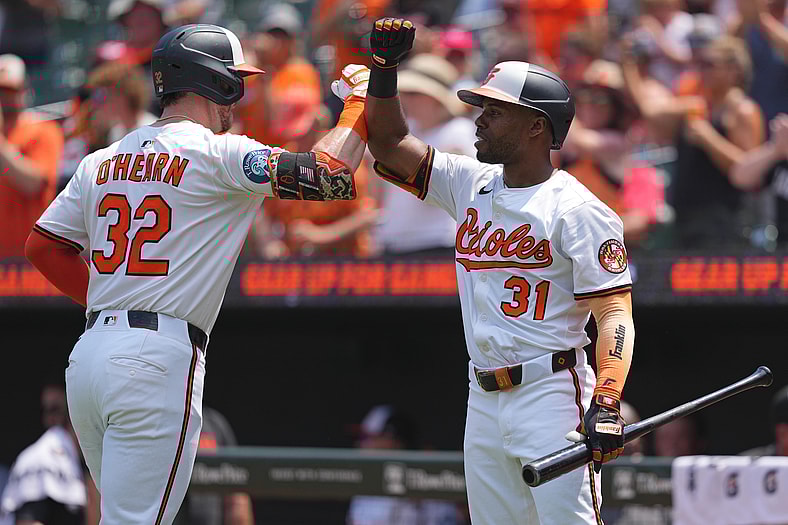
Unlike the Angels, the Baltimore Orioles understood the assignment and traded Cedric Mullins (Mets), Ryan O’Hearn (Padres), Ramon Laureano (Padres), Andrew Kittredge (Cubs), Charlie Morton (Tigers) and Seranthony Dominguez (Blue Jays). The front office can now reassess in the offseason how to get the O’s back to the playoffs.
24. Minnesota Twins (Previously: 18)
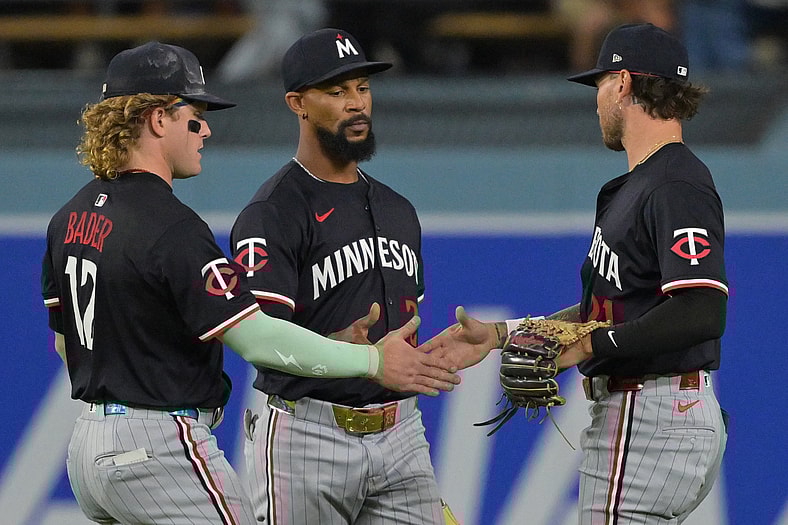
Byron Buxton told Minnesota he wants to stay with the Twins for life and then the front office traded away 11 of his teammates, including shortstop Carlos Correa, closer Jhoan Duran, reliever Griffin Jax, center fielder Harrison Bader and super-utilityman Willi Castro. Minnesota got two top pitching prospects back in Mick Abel and Taj Bradley and catching prospect Eduardo Tait, who is years away from making it to the big leagues.
25. Atlanta Braves (Previously: 25)
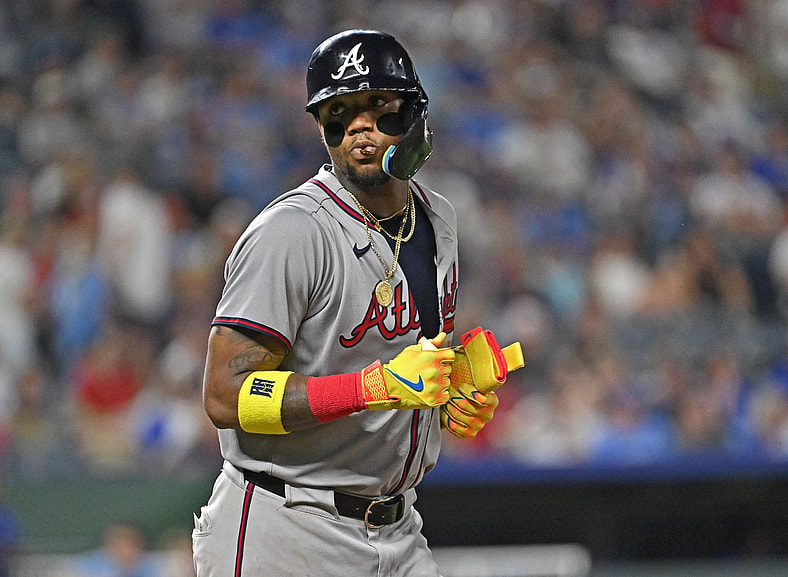
Going nowhere fast and with Ronald Acuna Jr. back on the injured list, the Braves decided to hold onto Marcell Ozuna, Ozzie Albies and Raisel Iglesias instead of trying to get any prospect package back for them. It’s just been a nightmare season for the Braves who had spring training hopes of getting back to the postseason.
26. Athletics (Previously: 26)
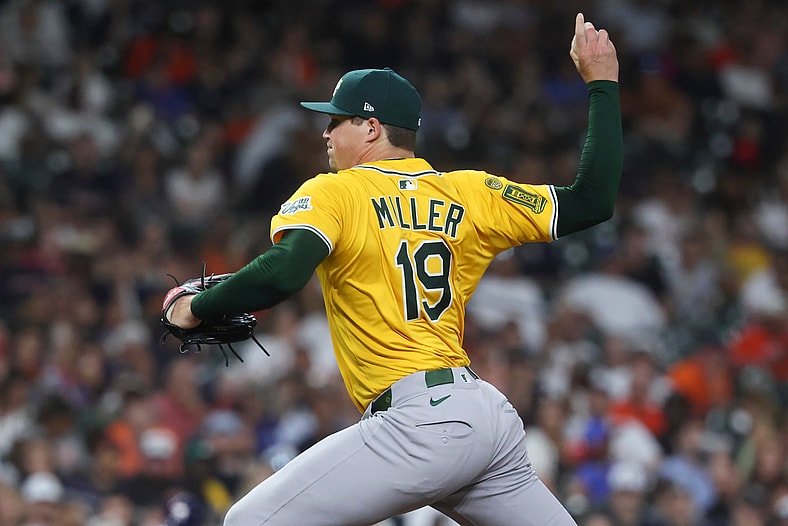
The Athletics traded their dominant closer in Mason Miller and got one of the best prospects in baseball back from the Padres: Leo de Vries, who could turn into a superstar one day. He’s only 18 and is a few years away but it’s a phenomenal pickup for the A’s.
27. Pittsburgh Pirates (Previously: 27)
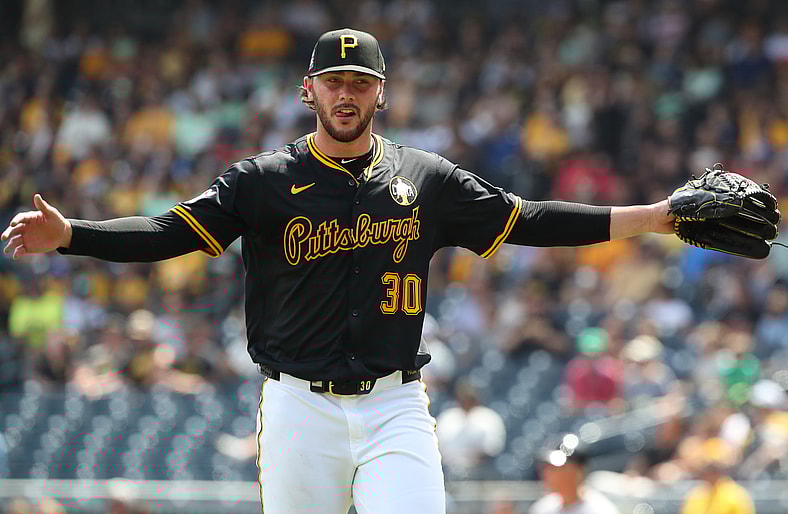
The Pittsburgh Pirates loaded up on prospects after trading David Bednar and Ke’Bryan Hayes, getting back catcher Rafael Flores and infielder Sammy Stafura, but these deals didn’t improve them for 2026. And with owner Bob Nutting refusing to spend in free agency, it’s just going to be another long year for Paul Skenes.
28. Washington Nationals (Previously: 28)
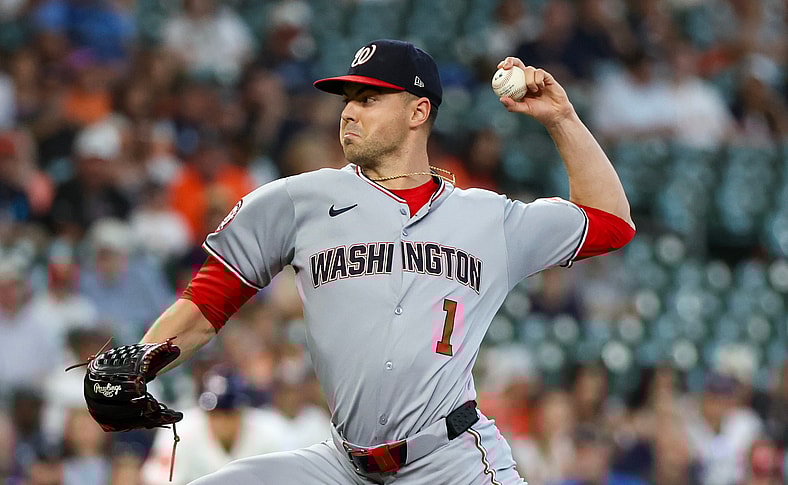
The Washington Nationals made some minor moves at the deadline, trading closer Kyle Finnegan, infielder Amed Rosario and starting pitcher Michael Soroka. But they held onto their biggest trade chip in MacKenzie Gore and right now, 2026 will look a lot like 2025.
29. Chicago White Sox (Previously: 29)
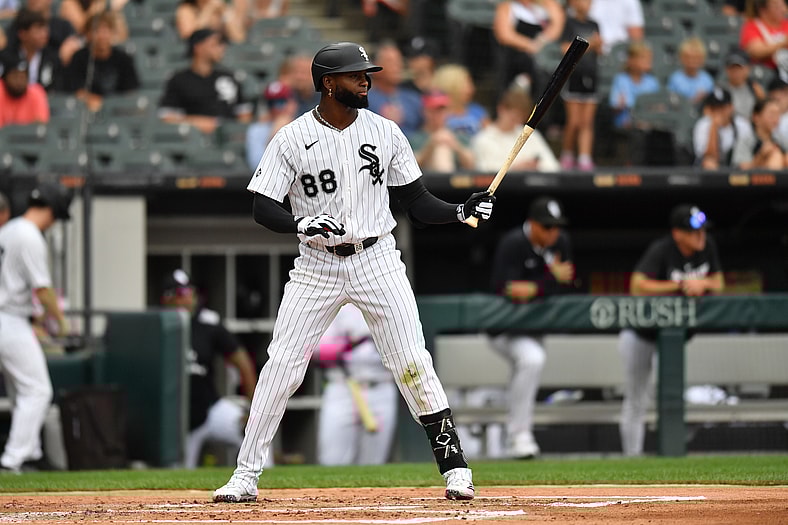
The Chicago White Sox refused to trade center fielder Luis Robert Jr. despite interest from several contending teams. That tells you everything about how this franchise is run.
30. Colorado Rockies (Previously: 30)
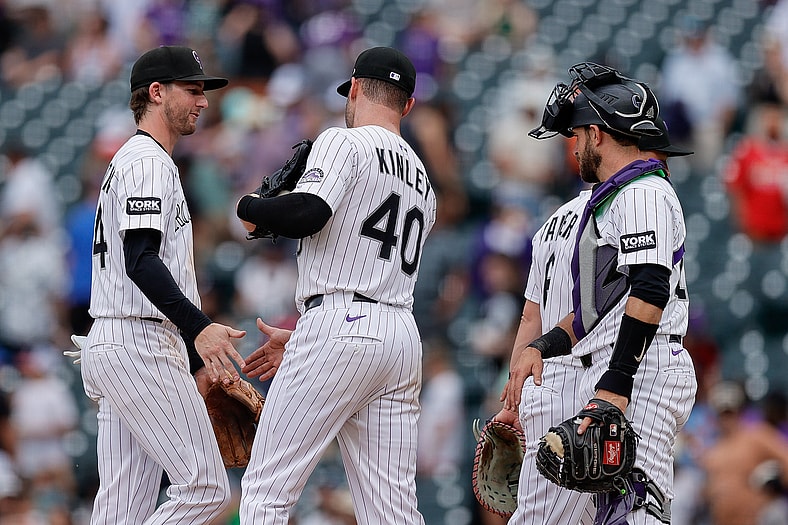
The Colorado Rockies said goodbye to third baseman Ryan McMahon and relievers Jake Bird and Tyler Kinney. The franchise still has a long way to go, though.

