
 Scott Gulbransen
The fastest lap at Thursday’s F1 testing in Bahrain belonged to Kimi Antonelli. But nobody was really talking about Kimi Antonelli.
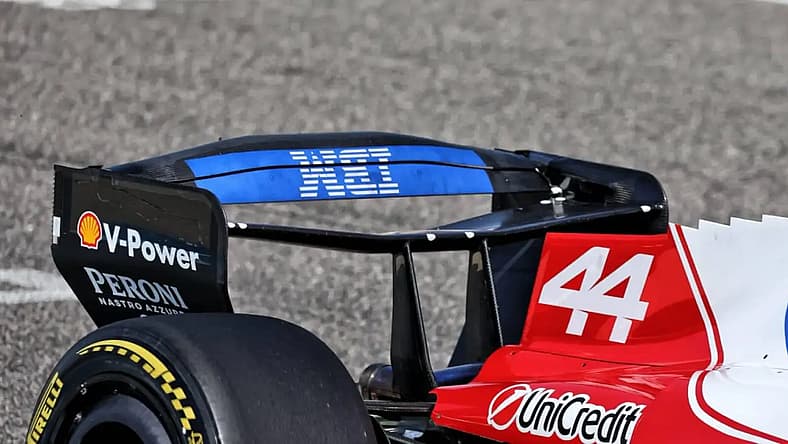
Lewis Hamilton rolled out of the Ferrari garage early in the morning session, and within a few laps, people watching were doing double-takes at their screens. The rear wing on his SF-26 didn’t open the way the wings on every other car did. It flipped. Completely inverted. Like someone had physically turned the thing upside down at 180 mph and called it an engineering solution.
Because that’s exactly what it is.
Ferrari Turning Heads at F1 Testing
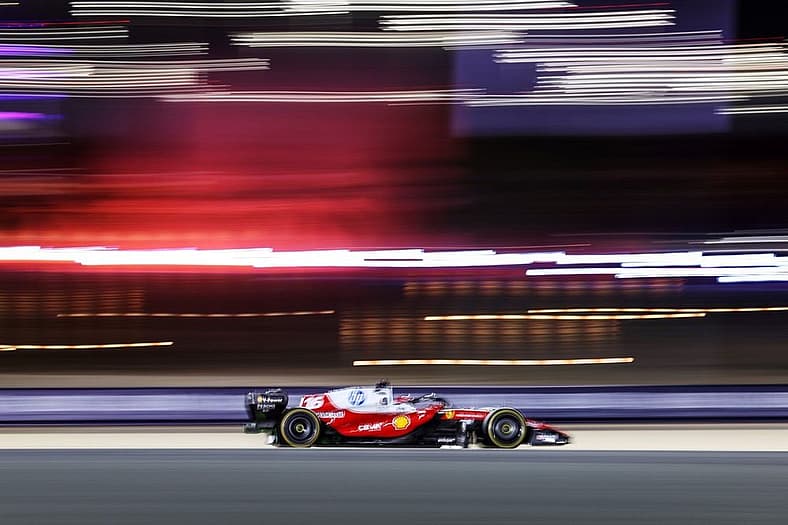
Quick background on why this matters: One of the big rule changes in 2026 is something called active aerodynamics. Every car on the grid now runs wings that adjust depending on where you are on the track — open position on the straights to cut drag, closed position through corners to generate grip. The concept is straightforward. What Ferrari did with it is anything but.
Rather than simply opening the rear wing element flat, the SF-26’s upper flap rotates a full half-turn, ending up inverted on the straight, functionally mimicking an aircraft wing, which generates lift instead of downforce, and sheds drag more aggressively than anything else in the paddock right now.
Sky Sports technical analyst Sam Collins caught it first on today’s broadcast.
“I thought at first that was a technical failure,” he said, watching the replay. “It wasn’t.”
Anthony Davidson, also on Sky Sports, offered the theory that makes the most sense: Wednesday’s trick gave Ferrari more grip through corners. The problem is that it also slowed the car down on the straights. Thursday’s upside-down wing looks like the answer to that problem: a way to claw back the speed they’d given up. Two unconventional solutions working together.
Whether either one makes it to Melbourne is a separate question. Ferrari called the wing a test item and left it at that.
What’s less easy to leave alone is what happened after those first five laps. Hamilton came back in. Sidepods came off. Screens went up. The team said there was “an issue,” which in Formula 1 PR terms means: we’re not telling you anything. He sat in the garage for two and a half hours while Lando Norris and Max Verstappen ran lap after lap around him. Hamilton finally got back in the car with nine minutes left in the morning session, did a handful of laps, and then (at the simulated race start at session’s end) launched off the line so cleanly it looked like a different car from the ones around him.
So the machinery isn’t broken. And Hamilton, for his part, sounded like a man at peace with where things stand.
“With the car, I think we’ve started off quite well so far,” he said earlier in the week. “It’s an exciting time with the new generation of cars, because it’s all brand new, we’re all trying to figure it out on the go.”
He ended the day fourth fastest at 1:33.408 on 78 laps. That mileage number is the one that’ll quietly nag at the team between now and the Australian Grand Prix on March 8.
Mercedes and Antonelli Run Well on Day 2 of F1 Testing
Antonelli, meanwhile, gave Mercedes the headline they wanted. He took over from George Russell after lunch and late in the afternoon posted a 1:32.803 that nobody could match. That’s the fastest lap of either Bahrain test. Oscar Piastri got closest, 0.058 seconds back in the McLaren, but Antonelli held on. The kid is 18 years old, this is his first full pre-season in Formula 1, and he is not acting like either of those things is true.
Mercedes and McLaren both logged north of 150 laps combined between their driver pairs. That’s not an accident. Both teams are clearly running clean programs with cars they trust, and they’re piling on data accordingly.
Verstappen was third, 0.359 off the pace, but he drove the whole day solo — 139 laps, more than any other single driver on Thursday. Red Bull gave him the car all day and he gave them a mountain of long-run information. That probably matters more than P3 on a test timesheet.
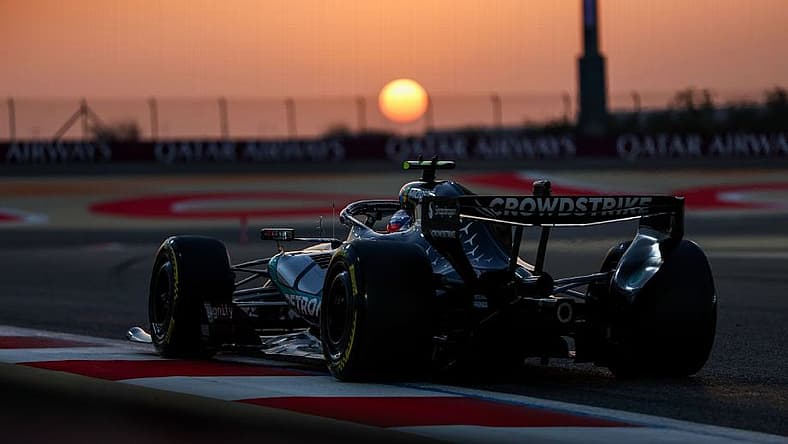
Aston Martin had a rougher afternoon. Alonso — back in the car after Stroll handled Wednesday — stopped just past Turn 4 with roughly three hours left and didn’t return. He finished 15th, 4.6 seconds off Antonelli’s time, which sounds alarming until you factor in tire compounds and fuel loads. (The compounds range from C1, the hardest, to C5, the softest — Alonso was on C3s, most of the front runners too, so that’s a reasonable apples-to-apples comparison. The gap is still not great.)
Cadillac brought up the rear again. Sergio Perez and Valtteri Bottas slotted in 14th and 16th. The team is learning what everyone expected they’d be learning at this stage. It’s just a lot more visible when you’re on a timing sheet with Ferrari and Mercedes.
One day left. Then everyone packs up and heads to Australia. The clock is running.