
 Farah Ben Gamra
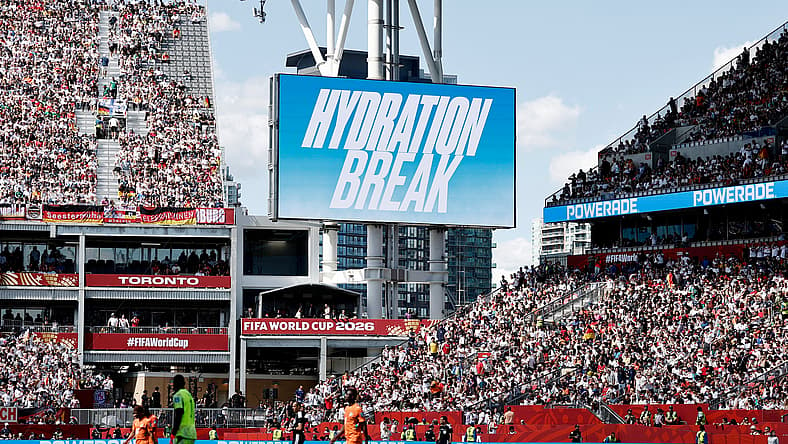
The mandatory hydration breaks introduced at the 2026 FIFA World Cup, labelled a “player welfare measure”, have rapidly become one of the most lucrative advertising innovations in modern sports broadcasting, generating an estimated $250 million for U.S. broadcaster Fox Sports alone.
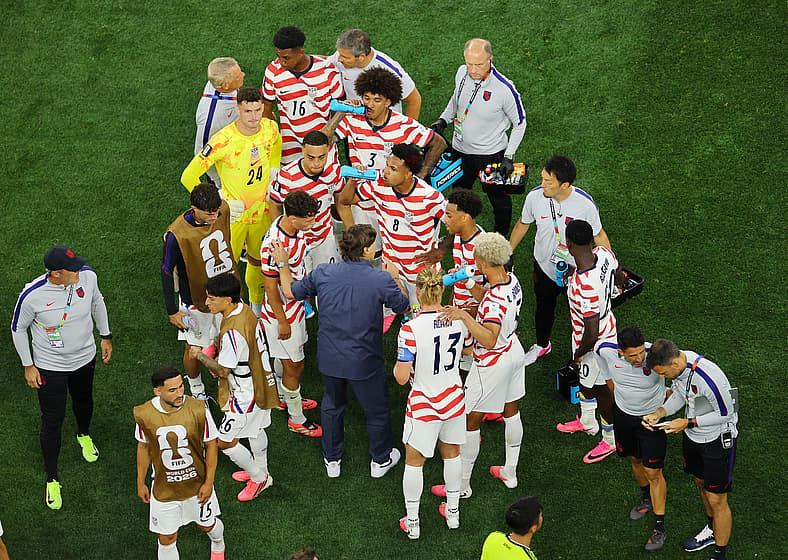
FIFA keeps saying that the breaks were initially implemented to protect players from extreme summer temperatures across host nations (United States, Mexico, and Canada). The three-minute stoppages, scheduled once in each half, have now created a highly valuable new advertising space inside live matches.
Each match now includes two fixed hydration breaks, effectively dividing games into segments and allowing broadcasters to insert additional commercial inventory during live play without reducing pre-match or halftime advertising slots.
In total, broadcasters can air up to four 30-second ads per break, creating eight additional advertising slots per match. Across the tournament’s 104 matches, this generates approximately 832 new commercial opportunities that did not previously exist in football broadcasts.
Fox Sports cashes in on a new advertising engine inside the match
In the United States, Fox Sports is expected to earn roughly $249.6 million to $250 million from advertising tied directly to these hydration breaks. This windfall is a huge return on its reported $485 million investment for exclusive U.S. broadcast rights to the tournament.
Advertising rates vary depending on match profile:
- Around $200,000 for a standard group-stage 30-second spot
- Up to $750,000 for matches involving the United States Men’s National Team (USMNT)
This pricing structure has made World Cup broadcast time one of the most expensive advertising environments in global sports.
Global impact surpasses $1 billion
While Fox Sports dominates the U.S. market, analysts estimate that the global advertising impact of hydration breaks could exceed $1 billion when combined across all international broadcasters.
Countries where in-game advertising is widely integrated such as Spain, Canada, and Mexico, will also fully capitalize on these commercial windows, increasing the global revenue effect.
However, not all broadcasters are monetizing these pauses in the same way.
In the United Kingdom, both the BBC (which operates without advertising) and ITV (subject to strict commercial limits) continue to air the breaks without inserting additional ads. Similarly, the U.S. Spanish-language broadcaster Telemundo has opted not to fully commercialize these interruptions in the same manner as Fox.
By embedding advertising directly into the flow of matches, the 2026 tournament has effectively created a new mid-game advertising economy. So, are the hydration breaks definitely here to stay?