
 Matt Johnson
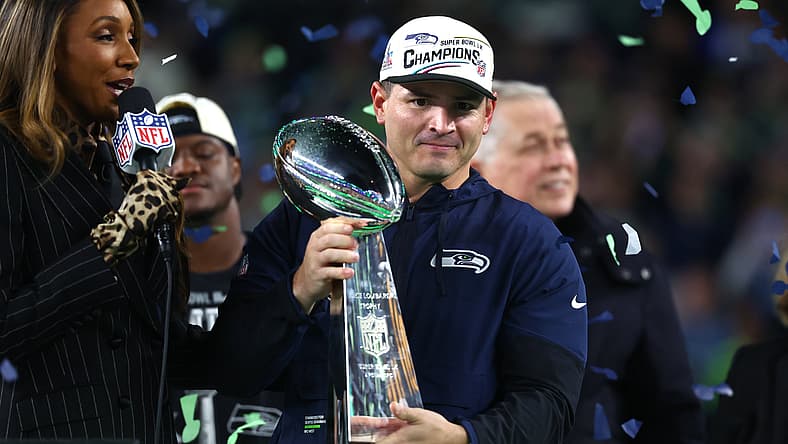
Seattle Seahawks head coach Mike Macdonald became the third-youngest coach to win a Super Bowl, just two years after he was hired during the NFL coaching carousel. The success of Seattle’s defensive play-caller should serve as a lesson to teams searching for a head coach next year.
NFL teams are so often seeking that wunderkind who made a name for himself as a play-caller, orchestrating one of the best units in the league for multiple seasons before making the jump to head coach. Being a great leader who can build a strong and well-rounded coaching staff still matter, but owners want a perceived genius in the building whose mastery of the Xs-and-Os can almost single-handedly win games.
Related: Winners and Losers from Super Bowl LX, including Seahawks HC Mike Macdonald
It is an understandable approach to take. Whether a franchise fires its head coach midseason and starts evaluating NFL coaching candidates in October or waits until days after Black Monday, the same names are always immediately targeted to fill head-coaching vacancies.
Fittingly, in a hiring cycle that had a record-tying 10 vacancies this offseason, it seems that many teams did not learn from the Seahawks’ success during their playoff run. Maybe Macdonald hoisting the Lombardi Trophy will change that.
Reflecting on the 2026 NFL Coaching Carousel
As previously mentioned, there were 10 head-coach openings in the NFL coaching carousel this offseason. Four of those went to recently fired coaches—John Harbaugh (New York Giants), Robert Saleh (Tennessee Titans), Mike McCarthy (Pittsburgh Steelers), and Kevin Stefanski (Atlanta Falcons). The other six were coordinators landing their first head-coaching gig.
Related: Grading NFL Coaching Hires 2026
Six of the 10 NFL head-coach hirings were from the offensive side of the ball—McCarthy, Stefanski, Mike LaFleur (Arizona Cardinals), Joe Brady (Buffalo Bills), Todd Monken (Cleveland Browns), and Klint Kubiak (Las Vegas Raiders)—and all but Stefanski will serve as the team’s offensive play-caller in 2026.
In the NFL coaching carousel over the last two years, just five coaches with a background as a defensive coordinator were hired to fill the 17 head-coaching vacancies over that span. One of them—Mike Vrabel (New England Patriots)—did not even serve as the defensive play-caller.
Related: Why the Pittsburgh Steelers Made a Mistake Hiring Mike McCarthy
The trend is evident. Team owners are heavily favoring offensive-minded gurus to become their next head coach, viewing it as the best way to lock in a quarterback with a great play-caller. This has led to many equally smart defensive architects being passed over for jobs. Maybe that changes thanks to Macdonald.
Mike Macdonald’s Path to a Super Bowl Win
Macdonald, a Super Bowl-winning coach at 38 years old, worked on the Baltimore Ravens coaching staff from 2014 to 2020 under John Harbaugh. He worked his way up from coaching intern to linebackers coach before joining Jim Harbaugh as the Michigan Wolverines defensive coordinator in 2021.
In his lone season as defensive play-caller at Michigan, the Wolverines ranked eighth in scoring defense (17.4 PPG), 12th in first downs allowed per game (17.1), and 13th in yards-per-play allowed (4.9). He was immediately brought back to the NFL, taking over as the Ravens defensive coordinator.
Related: Super Bowl LX MVP Winner, Ranking Super Bowl MVP Candidates for Seahawks vs Patriots
The season prior to his arrival, Baltimore ranked 32nd in yards per play allowed (6.0), 19th in yards per drive allowed (32.4), and 27th in Defensive EPA per play (0.078). By the end of Macdonald’s second season as play-caller, the Ravens defense had improved to third (4.6), fourth (26.2), and second (-0.127) in those same categories.
Recognizing what Macdonald’s defense could do to Kyle Shanahan’s offense—19 points allowed with 5 takeaways—Seattle hired him as its head coach in January 2024. He inherited a defense that in 2023 ranked 30th in EPA per play (0.066), third-down defense (46.3% conversion rate), and Success Rate allowed (45.5%), 29th in points per drive allowed (2.20), and 25th in yards per play allowed (5.5). Furthermore, from 2022 to 2023, the San Francisco 49ers put up 29.6 points per game on Seattle with a 5-0 record.
Read More: Picking 10 Super Bowl Contenders for Next Season, including the Seahawks
Since taking over as head coach and defensive play-caller, Macdonald’s team has allowed just 10.75 points per game to Shanahan’s offense, and the Seahawks have a 3-1 record in that span over the last four meetings. Meanwhile, Seattle is coming off a regular season where its defense ranked second in yards per play allowed (4.6) and first in third-down defense (32.1% conversion rate), Defensive EPA per Play (-0.113), and points per drive allowed (1.48).
Macdonald created the best defense in football this season, proving just as he did in Baltimore that his unit reaches an elite level in his second year at the helm. It culminated in a Super Bowl run where Macdonald’s group limited offenses orchestrated by three renowned play-callers in Shanahan, Sean McVay and Josh McDaniels and three of the NFL MVP finalists—Matthew Stafford, Drake Maye and Christian McCaffrey—to 15.3 points per game with a 37% third-down conversion rate, 9 sacks and 7 turnovers, with the Los Angeles Rams (27 points and 479 total yards) doing a majority of that damage.
The Lesson for NFL Teams
One would think that these multi-billion-dollar franchises would be willing to think outside the box when it comes to making head-coaching hires. Instead, they are always going after the same offensive-minded wunderkind with the thought being that is the hire you have to make to elevate a quarterback and win the Super Bowl.
Except, the Seahawks are hoisting the Lombardi Trophy in a game where Sam Darnold had just 194 net passing yards on 34 attempts. Before that? The Philadelphia Eagles blew out the Kansas City Chiefs in Super Bowl LIX, in large part because of a defense that sacked Patrick Mahomes six times and didn’t allow a score until backups were in late in the third quarter. Speaking of the Chiefs, they won Super Bowl LVIII in part because their defense limited Kyle Shanahan’s offense to a 25% third-down conversion rate with just 2 red-zone trips on 13 drives.
Those Super Bowl victories, however, were seemingly all chalked up to quarterback play and great offensive play-calling. The reality is, it was a brilliant defensive mind who played an instrumental role in the team hoisting the Lombardi Trophy.
Plus, as is being pointed out now, it’s much harder to make year-to-year adjustments to an elite defense than it is an elite offense and the parts are more interchangeable, too. When the next NFL coaching carousel rolls around, teams with head-coaching vacancies need to keep this in mind.