
 Isaac Ciravolo
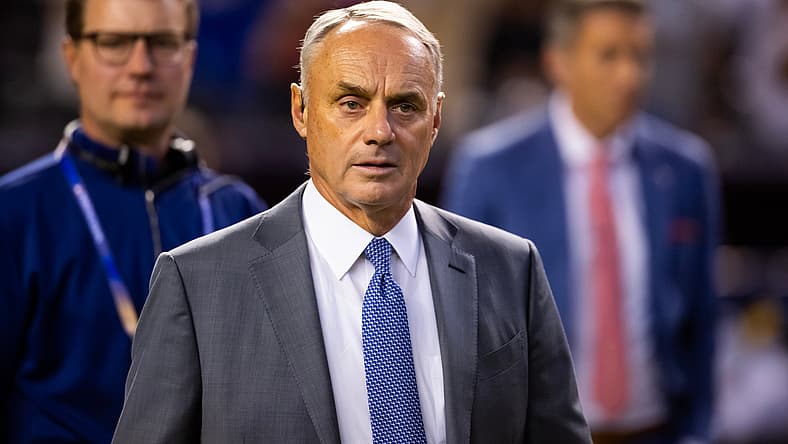
Major League Baseball delivered a new proposal to the MLB Players Association on Thursday, putting an economic overhaul on the table ahead of the current deal’s expiration.
The package includes historic pay bumps and accelerated free agency but hedges on the MLBPA accepting a salary cap/floor. This package would fundamentally alter how front offices construct rosters and how players hit the open market.
ESPN’s Jesse Rogers first detailed the core framework of the league’s offer:
Spending Limits and Max Contracts
- A 50/50 Revenue Split Cap Sheet: Starting in 2027, MLB proposes a hard $245.3 million salary cap and a $171.2 million floor, strictly tied to a 50/50 split of league revenues.
- NBA-Style Max Contracts: Free agent deals face strict ceilings tied to the cap sheet, with annual salary growth capped at 5%. If a player were to sign a deal making him switch teams, his deal would be capped at five years and $202 million max (15% of the projected 2027 cap). If a player were to resign with a team, his deal would be capped at six years and $265 million max (16% of the cap). This second condition is described as a “cornerstone provision” designed to give players more incentive to be loyal to a team.
- The Extension Exemption: Max contract rules apply only to free-agent years. Young players signing pre-arbitration extensions remain exempt from these caps. These exempt extensions include the early long-term deals signed by Konnor Griffin, Kevin McGonigle, and Roman Anthony.
- Deferrals Outright Banned: Deferred compensation is prohibited on all new contracts, ending heavily structured deferred payment plans. Existing contracts like Shohei Ohtani’s and Bobby Bonilla’s remain grandfathered in.
How it affects the game:
This effectively ends the decade-long mega-contract era. Superstars entering free agency in their mid-20s would no longer sign 10-to-13 year commitments. Instead, they would cycle back into free agency two or three times over a career. Meanwhile, the functions similarly to the NBA’s Bird Rights, giving mid-market franchises the financial ability to retain homegrown stars.
Accelerated Free Agency
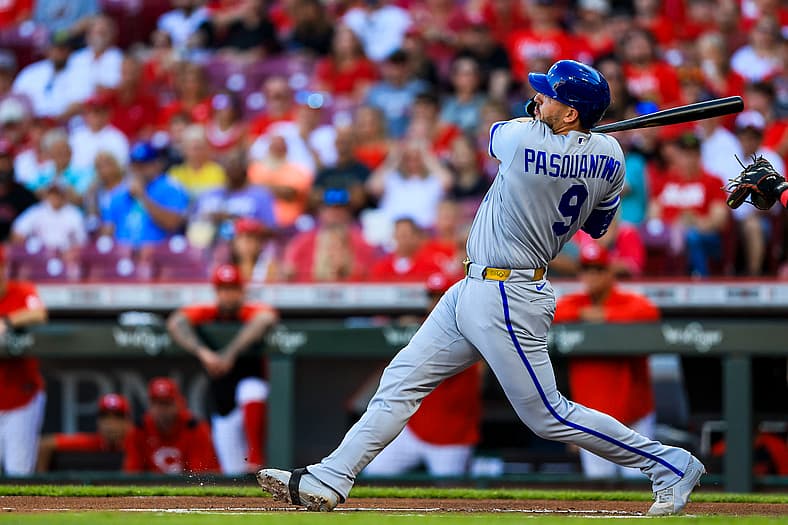
- Five Years to Free Agency: The reserve period drops from six years to five years for any player aged 30 or older. This marks the first time reserve requirements have dipped below six tears since the advent of free agency in 1976. MLB projects 354 players would reach free agency a year earlier under this model. Some of these players include veterans like Jarren Duran, Vinnie Pasquantino and Ernie Clement.
- Qualifying Offers Eliminated: The draft-pick compensation attached to departing free agents is completely abolished for the first time in 50 years. Two notable players taken with compensation picks are Mike Trout and Aaron Judge.
How it affects the game:
Erasing draft-picks removes the primary drag on the secondary free-agent market. Mid-tier veterans tied to qualifying offers frequently saw their markets freeze into January or February due to front offices refusing to forfeit draft capital. Eliminating the qualifying offer allows players to be moved more freely. Additionally, dropping the service-time threshold to five years for 30-plus veterans forces teams to make extension or trade decisions a year earlier on late-blooming core contributors.
Baseline Salary Increases
- The $1 million Minimum Wage: The baseline major league salary jumps 28%, rising from $780,000 to $1 million in 2027 for players with two-plus years of service. Pre-arbitration players (0-1+ years) receive a $900,000 base salary plus an automatic $100,000 bonus for logging a full major league season. League projections estimate 57% of players on Opening Day 40-man rosters this year would receive an immediate pay increase.
- Pre-Arb Pool Expansion: The central pre-arbitration bonus pool increases by 30% to $65 million in 2027, with annual escalators scaling it to $75 million.
- Expanded PPI Rewards: Prospect Promotion Incentive (PPI) rewards expand to grant clubs up to two draft selections for promoted award-winners, one domestic pick and one international pick. This proposal hedges on the MLBPA accepting MLB’s previous proposal for a separate international draft.
How it affects the game:
A million-dollar minimum drastically raises the real cash cost of 26-man depth. Front offices that heavily rely on churning pre-arbitration relievers and utility players to keep bottom-line payrolls low will see their budgets spike. This may not be a huge deal as these teams with low payrolls would already need to spend more to reach the salary floor. These salary proposals will compress the pay gap between entry-level depth pieces and veteran middle-class free agents. The increased PPI rewards will incentivize teams to call up their youth talent earlier and pay them their minimum wage earlier as well.