Scott Gulbransen
Nobody handed Lewis Hamilton a reset button. He had to earn it. After one of the most publicly difficult seasons any F1 legend has endured, where he finished 2025 without a single podium for the first time across 19 seasons, the seven-time world champion arrives in Melbourne for the Australian Grand Prix this weekend looking, by all accounts, like a man who went somewhere quiet, sat with the failure, and came out the other side with a sharper edge.
The question isn’t whether Hamilton still belongs in F1. That’s been settled by his career record. The question is whether everything surrounding him — the new car, the new regulations, his own adjusted mindset — lines up the way he needs it to.
My read? It does. And Ferrari, for the first time since that disastrous SF-25 campaign, looks like it might actually deserve to have him.
Lewis Hamilton Helped Build Ferrari’s New Car and That Matters
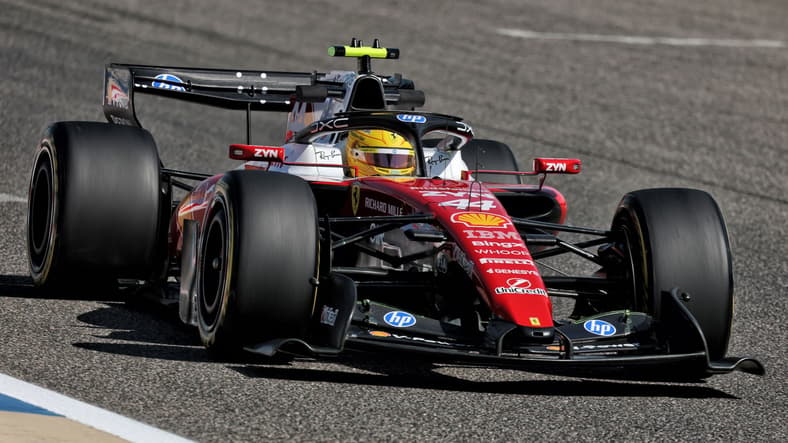
The SF-26 genuinely surprised people during Bahrain testing, and not in the way the paddock expected to be surprised. Before a wheel turned in pre-season, the chatter was about whether these new-generation cars would be embarrassingly slow. It was a concern rooted in what happened in 2014, the last time F1 massively overhauled its power units, when only Mercedes got it right and the field spent months floundering.
That didn’t happen this time. Ferrari’s team principal Fred Vasseur put it plainly to Motorsport Italy.
“People were saying we’d be close to F2, yet we’re only two or three seconds off the 2025 times, and last year the temperatures during the Bahrain tests were much lower,” he said last month. “The most important thing is to have strong competition: when there’s a tight battle between two or more teams, I don’t think being one or two seconds slower than last season matters much. What counts is being a tenth of a second faster than all the rivals.”
That’s the correct philosophy. And Ferrari backed it up with genuine innovation. The talk of the second testing week in Bahrain was Scuderia’s rear wing design that flips 180 degrees to reduce drag, and a new aerodynamic solution called the FTM that exploits exhaust gases to aid energy recovery. This is not a team coasting on history. Maranello is pushing technical boundaries aggressively in the new regulatory era, and that matters enormously for the development race that will define who wins races in the second half of 2026.
Now layer in what’s changed for Hamilton personally. The outgoing ground-effect cars — where engineers buried performance in complex aerodynamic channels running beneath the car — never suited him. He said it himself repeatedly, not as excuse-making but as honest technical assessment from a driver with 20 years of feel for what a good racing car requires. The 2026 cars are shorter, lighter, more mechanically responsive. They require the kind of active management of power deployment and energy recovery that rewards a driver who thinks deeply about every input across a lap. That description fits Hamilton perfectly.
‘Happy Lewis is a Fast Lewis’
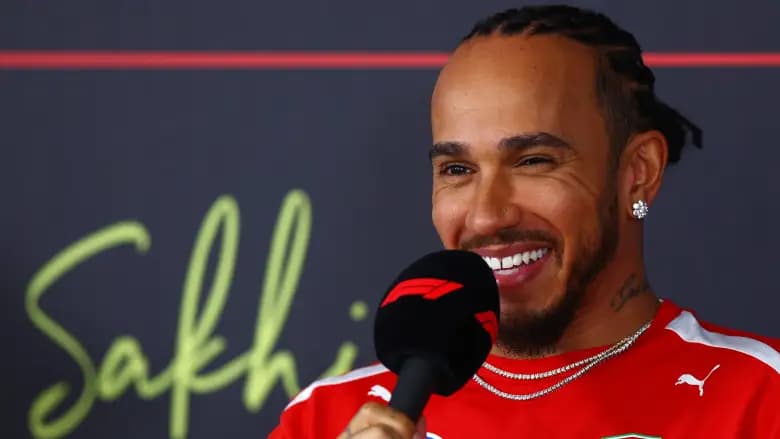
Now that the car seems to be moving in the right direction and Hamilton has reset his mind and is feeling positive, the game has changed. The harmony and happiness he seemingly has found means everything and it’s a big problem for the rest of the field.
“A happy Lewis has always been, and not just at Ferrari, a fast Lewis,” said Martin Brundle on Sky Sports F1. “And I have to say Ferrari have been quite innovative over the winter, so I’m confident Lewis will have a better year.”
Happy and fast. That’s the formula. And something has clearly shifted. When Ferrari unveiled the SF-26, Hamilton described the moment to reporters, translated through Corriere della Sera, as feeling “as happy as a child.” That is not a man going through professional motions. That’s someone who sees the car and recognizes possibility.
F1 broadcaster Will Buxton made it clear during a radio appearance recently that he believes Hamilton could return to 2021 form.
“The Ferrari looks really good, like really good, and Lewis was just waiting for this change of regulation to hopefully take him back to where he was, back in 2021, with a car that he liked,” Buxton said.
But it’s the self-examination that’s honestly more impressive than the racing. Reflecting on 2025 in his own words, he shows us why he’s one of the greatest to ever hit the grid.
“You have to look inside yourself and observe the people around you, from your colleagues to your family, stay motivated, and ask yourself uncomfortable questions. ‘Am I doing enough? Can I be better? Can I be kinder? How should I change my methods?” Hamilton said.
And then on Saturday morning, before this new season begins, he posted his own declaration. Already 20 seasons in, he simply said: “I’m still here, 20 years on, still standing, still hungry, still focused on the dream. No holding back.”
His teammate, Charles Leclerc, won’t make it easy. Leclerc is genuinely elite, and his pace in qualifying, especially, is a different animal from what Hamilton has had to deal with at any prior team. But that’s the point. This Ferrari lineup is capable of putting two cars at the front on the right weekend and the SF-26 looks like the machinery to do it.
Hamilton wins races this year. Leclerc wins races, too. Ferrari, for the first time in what feels like forever, is going to make people nervous. The comeback is real. It starts Sunday at Albert Park.