Scott Gulbransen
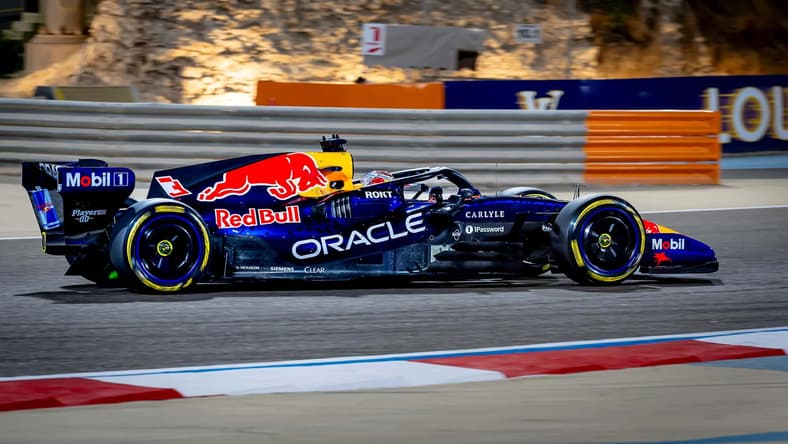
Three races into the 2026 Formula 1 season, the sport is already wrestling with a problem that nobody wanted to admit was coming. Super clipping, a term most fans had never heard six months ago, has quietly become the defining controversy of the new era, and the people running this sport know they have to address it before Miami.
So what exactly is super clipping, and why does it matter?
What Is Super Clipping in Formula 1?
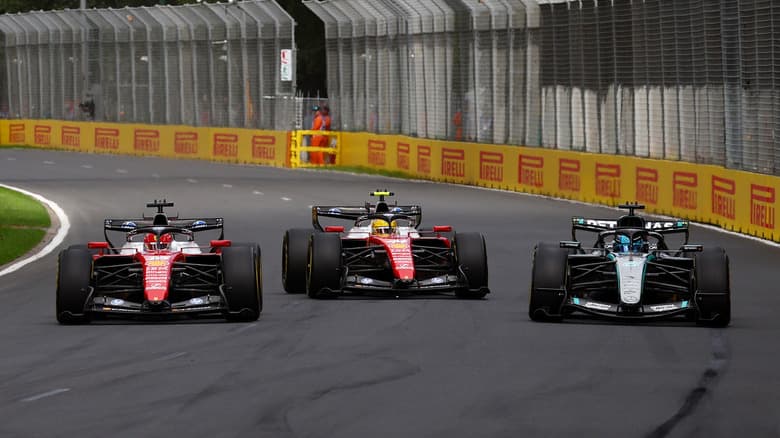
Let’s start with the basics. The 2026 power unit regulations represent the most significant overhaul of Formula 1’s hybrid technology in more than a decade. Where the previous-generation cars drew roughly 80% of their power from the internal combustion engine and about 20% from the battery, the new rules flip that dramatically — splitting the contribution nearly 50-50 between the two. More electrical power sounds like progress. In practice, it has created a headache.
Watch F1 LIVE: Get Ready for Miami and Check Out Formula 1 on Apple TV+!
The 2026 rules removed the MGU-H, the system that previously harvested exhaust energy to help keep the battery charged at high speed. Without it, teams now rely primarily on braking to recover electrical energy. On circuits with heavy braking zones, that works reasonably well. On circuits with long, fast straights and fewer slow corners — think Suzuka, think Melbourne — the battery bleeds dry faster than it can be replenished.
That’s where super clipping steps in. Super clipping is when the MGU-K switches into harvest mode while the driver is at full throttle, typically at the end of a straight or through a high-speed corner. Instead of all that power going to the rear wheels, the system pulls energy away and stores it for later in the lap.
The problem? It causes a sudden and visible drop in acceleration and top speed. Cars can look like they’re slowing down even though the driver has the throttle pinned to the floor.
What F1 Is Doing to Fix It Before Miami
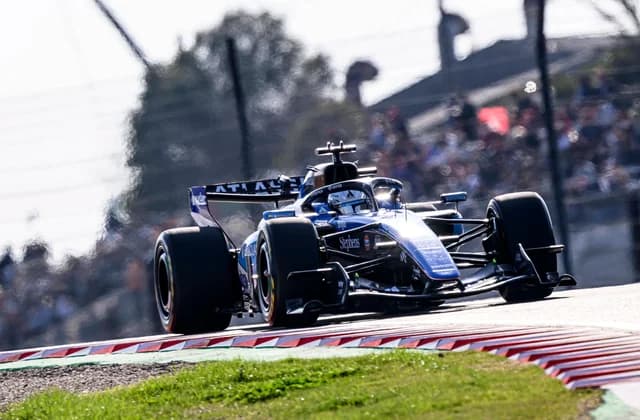
At the 2026 Japanese Grand Prix at Suzuka, it got ugly. Drivers were losing speed before they even reached the braking zones at corners like Degner 1, Spoon, and the legendary 130R. Alex Albon bluntly noted that there is no real high-speed anymore because cars are arriving so slowly; what used to be fast corners are now medium-speed corners.
Charles Leclerc put it more personally.
“What I love about this sport is when you get to Q3 and you have the maximum pressure on you to deliver at your best at that moment,” he said. “At the moment, this is not possible.”
Lewis Hamilton had already flagged the complexity problem back in pre-season testing. “None of the fans are going to understand it,” Hamilton said. “It’s ridiculously complex.”
He’s not wrong. But Formula 1 isn’t standing still. The F1 Commission, manufacturers, and the FIA have scheduled a series of meetings in the weeks leading up to Miami to assess the impact of power unit energy management on competition, with qualifying identified as the most distorted part of the race weekend.
The fixes being considered range from reducing the amount of recoverable energy per lap to adjustments in fuel chemistry and turbo pressure. Technical analysts suggest that tweaking the fuel’s calorific value, combined with a reduction in the recharging energy requirement, could be an acceptable near-term solution. None of it is simple, and not every manufacturer is equally positioned to adapt.
That last point matters. Some power unit suppliers have built competitive advantages around mastering energy management under the current rules. Asking them to level that playing field mid-season is a tough sell.
Miami can’t come soon enough — for fans, for drivers, and apparently for the people running the sport.