
 Scott Gulbransen
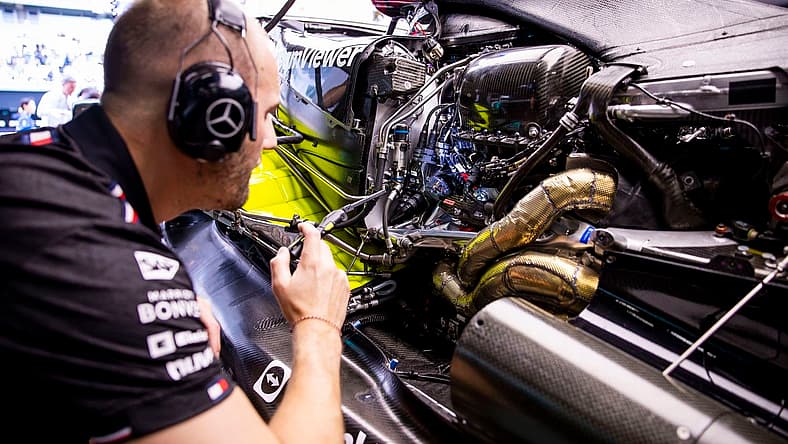
Formula 1’s 2026 energy management fixes have a hard deadline — and the clock is running. Three races. Two canceled grands prix. One driver is threatening to walk away from the sport he dominated for half a decade. The big new era is not going according to plan.
The FIA confirmed last week what most of the paddock already knew — the 2026 regulations need work. After a first-round meeting on April 9, the governing body released a statement acknowledging what it diplomatically called a “commitment to making tweaks to some aspects of the regulations in the area of energy management.” There are two more meetings scheduled, on April 15 and 16, before a high-stakes vote on April 20, where team principals, FIA officials, and Formula 1 management will determine what, if anything, changes before the Miami Grand Prix on May 3.
What happens in that room matters — a lot.
The Problem in Layman’s Terms
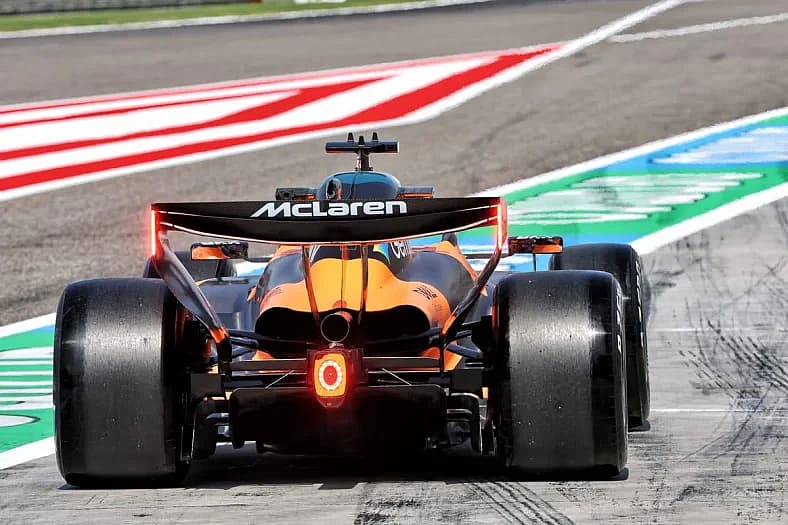
Start with the basics. The 2026 power unit regulations shifted the power balance in these cars to roughly 50-50 between the internal combustion engine and battery-electric power. The old MGU-H — the component that used to harvest exhaust energy and kept the battery topped up at high speeds — is gone. What replaced it is a much more powerful electric motor, and a much more complicated juggling act.
Because teams can’t harvest energy the way they used to, drivers now have to create their own opportunities to recharge the battery. On straights, in braking zones, wherever they can find a moment. The problem is that cars doing this look, to anyone watching, like they’re randomly losing speed for no reason. Super clipping, when the energy management system pulls power while the driver still has the throttle pinned, is exactly as strange as it sounds.
Charles Leclerc called it “Mario Kart.” Max Verstappen went further, calling it “Formula E on steroids.” Lewis Hamilton, to his credit, has been the outlier, saying the racing is the best he’s experienced in 20 years. Hamilton is not wrong about the Sunday races. He’s just not entirely right about qualifying.
Qualifying has been the most visible casualty. The cars have to lift and coast to manage battery reserves. They can’t push through high-speed corners the way they once did. Drivers are openly dissatisfied with the amount of energy-saving and energy-harvesting tactics the new cars require in qualifying — lifting and coasting, downshifting on straights, super clipping. An unintended consequence is that they no longer push in high-speed corners. For anyone who grew up watching Schumacher and Senna flat out through Suzuka’s 130R, watching an F1 car visibly slow before a corner it used to take without lifting is genuinely disorienting.
Bearman’s Crash Made It a Safety Issue
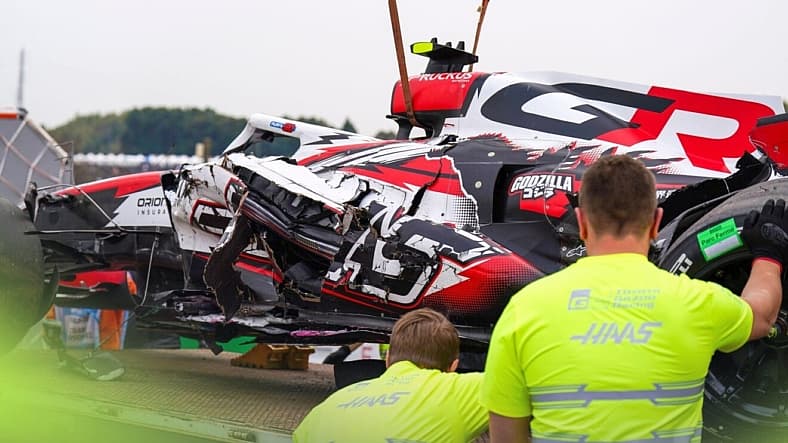
The abstract became very concrete at Suzuka.
Oliver Bearman’s Haas was fully deployed when Franco Colapinto’s Alpine, ahead of him, went into harvest mode mid-corner. When Colapinto’s Alpine hit that limit mid-corner, Bearman was left facing a car that had effectively dropped anchor on the racing line. “It was a massive overspeed, 50kph, which is a real, you know, it’s a part of these new regulations that I guess we have to get used to,” Bearman said.
He walked away with a badly bruised knee. The impact was 50G. It could have been far worse.
Verstappen didn’t mince words about what caused it.
“One guy is completely stuck with no power, basically, and then the other one uses the mushroom mode. It can be a 50-60 kilometers difference. Really big.”
GPDA chairman Alex Wurz called for immediate software-level intervention.
“From a safety standpoint, we simply must prohibit sudden surges in power output at top speed,” he said. “This will require software that is uniform across all teams.”
McLaren’s Andrea Stella had been warning this exact scenario was coming for weeks before Bearman hit the wall. Haas boss Ayao Komatsu said it simply after the crash: “We just cannot ignore it.” They won’t be able to.
What F1 Rule Changes are Actually On the Table
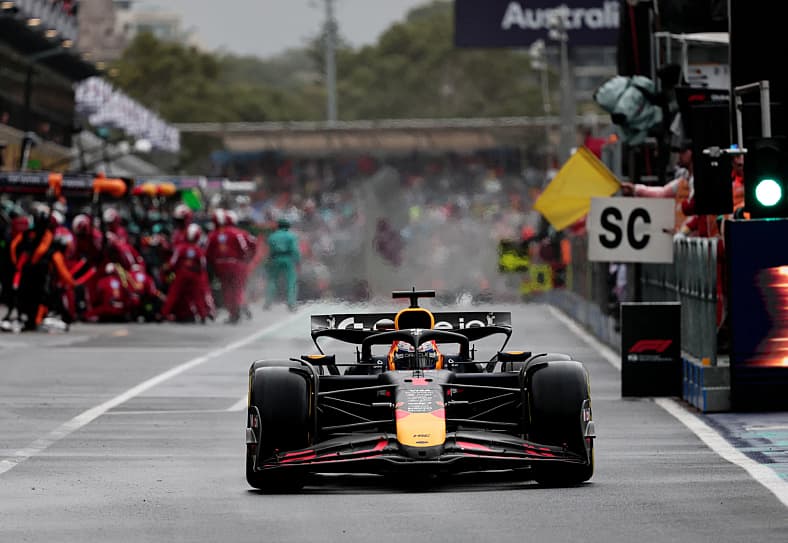
The April meetings are Formula 1’s best shot at meaningful 2026 energy management fixes before the season gets away from it entirely.
The most straightforward fix: increase how much power can be harvested during super clipping. Right now, drivers are limited to 250kW when doing this, compared to the 350kW that is available from lift and coast. If super clipping was increased to the same 350kW limit as lift and coast, then this would become the preferred route, at least reducing the prevalence of lift and coast.
There’s also a fix specific to qualifying under discussion, even though it sounds counterintuitive. Stricter recharge limits are also on the table. Qualifying currently allows nine megajoules of energy recovery per lap. Suzuka was dialed back to 8MJ at the last minute. Some discussions have centered on dropping to as low as 6 MJ, which would cost lap time but could eliminate the frantic energy management scramble that’s turning qualifying into a math problem.
The active aero zones are in the conversation too. Adjusting where and when straight mode can be activated would reduce the speed differentials that made Suzuka dangerous.
What probably isn’t coming yet is any change to the fundamental 50-50 power split itself. That’s a hardware conversation that engine manufacturers (particularly Audi and Honda) who built their power units around the current rules would resist aggressively. Any change to that scope is a 2027 discussion at the earliest.
The Verstappen Variable
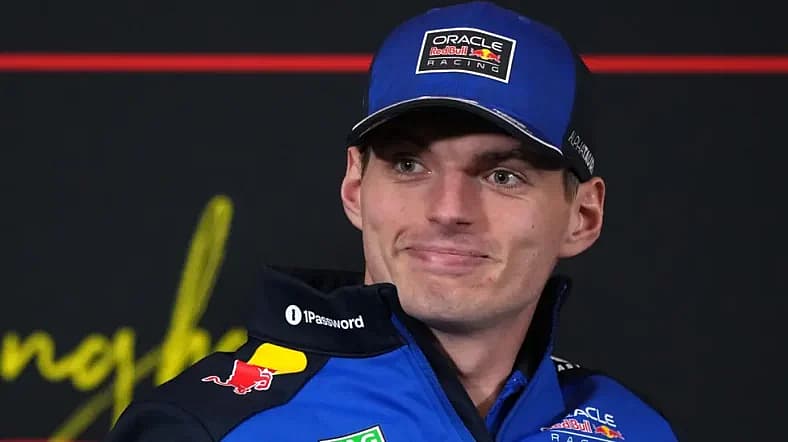
None of this happens in a vacuum. There is a not-insignificant chance that Max Verstappen will leave Formula 1 in the near future — and Red Bull’s downfall is not the main reason. The four-time world champion has been one of the most vocal critics of F1’s new rules, particularly the energy management, and has made it clear that he isn’t having fun right now.
We’ve written about this before — the criticism has real merit even if Verstappen is the wrong messenger for it, and the contract clause that could let him walk from Red Bull entirely has not gone away. The April 20 vote is as much a Verstappen retention decision as it is a technical one, whether Formula 1 wants to frame it that way or not.
Helmut Marko, now an ambassador at the Red Bull Ring rather than the man running Red Bull’s driver program, put it bluntly this week. “The current regulations are extremely focused on energy management — this only works in conjunction with the software engineers. The driver has been deprived of his dominant role.”
Hamilton admitted that he does not expect much from these meetings, as drivers often feel they are not sufficiently heard in regulatory discussions. “I hope they bring big changes. We drivers do not have a say and we do not have any power.”
That quote from the seven-time world champion — the same one who praised the racing more effusively than anyone — is the one Formula 1 leadership should sit with before April 20.
The Good News (Yes, There Is Some)
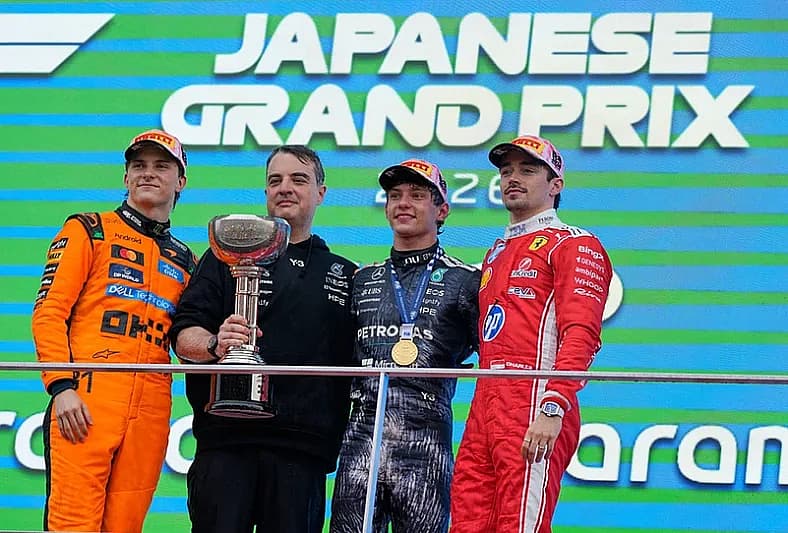
Formula 1 is not in freefall. The Sunday races have been genuinely entertaining. 149 overtaking moves were officially recorded over the first three grand prix races — substantially more than the 63 passes from the Melbourne, Shanghai and Suzuka contests last year. The action on race day is real. The problem is that qualifying — the part that sets up what fans see on Sundays, the part that decides who starts where, the part that used to be appointment television — has become a chore.
Fix qualifying. Eliminate the closing-speed danger that put Bearman in the medical center. Let the Sunday racing breathe. That’s the task.
The April 20 meeting is the deadline. Miami on May 3 is the test. Formula 1 has done harder things on shorter timelines. But the sport is going to need its best rooms in that room, not its most cautious ones.
The drivers are telling you what’s broken. The data from Suzuka is telling you what’s dangerous. The window is open.
Use it.