Scott Gulbransen
Formula 1 hasn’t even made it four races deep into its most ambitious regulatory overhaul in a decade, and already the sport is in emergency session mode.
This Thursday, April 9th, right in the middle of the five-week gap before Miami, team technical chiefs, power unit manufacturer representatives, FIA leadership, and F1 itself will gather to hash out what went wrong and what needs to change before the next race weekend. According to numerous reports, there are six opportunities for the sport to try and fix what have been early headaches and concerns for F1. Formula 1’s emergency meeting could be a make or break for the sport in 2026.
Three races in. Six fixes needed. That’s either the sign of a sport willing to self-correct quickly, or evidence that the 2026 ruleset was released with more rough edges than anyone publicly admitted.
The Three Problems F1 Needs to Fix
The list of what’s broken isn’t subtle.
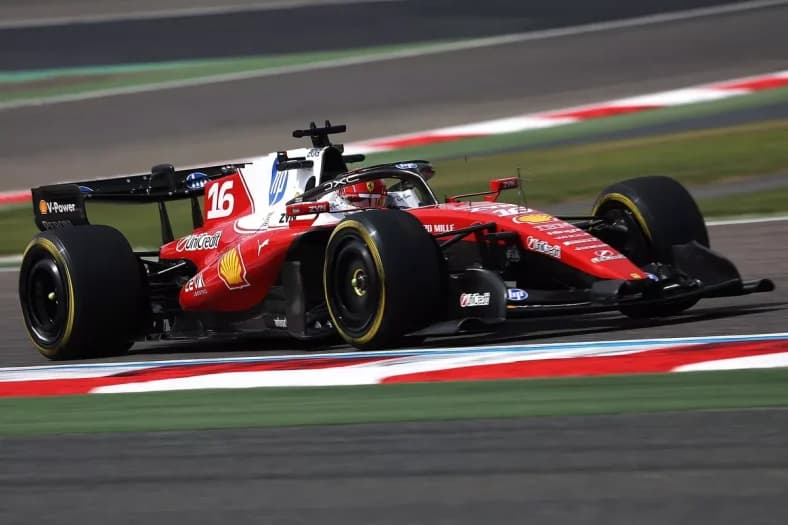
First, and most urgently, is the safety issue. Haas driver Ollie Bearman walked away from a violent crash at Suzuka, but the circumstances that caused it can’t be hand-waved away. The collision happened because Bearman’s car was in boost mode while Franco Colapinto’s Alpine ahead was harvesting energy, a speed differential of roughly 50 km/h between the two cars on the same straight. That’s not a racing incident. That’s a regulatory problem. McLaren principal Andrea Stella had been warning about exactly this scenario for weeks before Bearman’s car went airborne. Haas boss Ayao Komatsu said flatly afterward: “We just cannot ignore it.”
They won’t.
Second on the agenda is the qualifying mess. Charles Leclerc summed up the feeling across the paddock when he said the days of “crazy,” on-the-edge Q3 laps feel like a memory. The new power management requirements mean drivers aren’t attacking corners and instead they’re running algorithms. There’s also a genuinely bizarre quirk that surfaced after China, where a minor throttle input from Leclerc caused his car’s software to misread its own energy state, burning fuel in the wrong part of the track. His car confused itself. In qualifying.
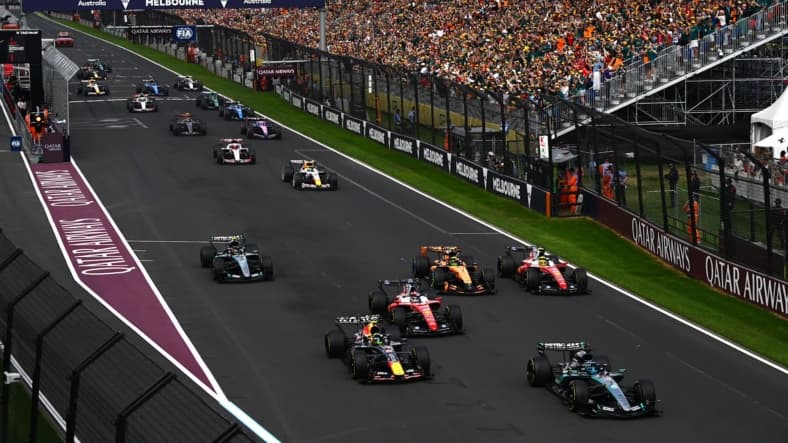
And the last issue they need to address before Miami is the straight-line speed collapse that’s made F1 2026 look strange on camera. Cars are hitting their top speed mid-straight, then visibly slowing before the braking zone. At Suzuka’s legendary 130R, cars that should be flat-out were backing off. On TV, with the engine note dropping away, it looks broken to casual viewers and looking broken to casual viewers is a problem Formula 1 can’t afford right now, especially with a massive American audience that only recently found the sport.
Six Solutions to F1’s 2026 on the Table Right Now
Here’s what’s reportedly in play for the April 9 discussions.
The most straightforward fix: Increase the energy that can be harvested during super clipping — the technique where drivers harvest battery power while still on full throttle. Right now, the cap is 250kW, whereas during lift-and-coast it is 350kW. Equalizing those limits would make super clipping the preferred option and reduce the frequency of the dangerous lift-and-coast speed gaps that contributed to Bearman’s crash.
The counterintuitive fix: Make the cars slower. Reducing the maximum MGU-K deployment from 350kW forces the car to spread its energy over a longer straight, so it doesn’t run dry before the braking zone. Slower cars, more consistently at the limit. The FIA reportedly tested this concept during pre-season.
Stricter recharge limits are also on the table. Qualifying currently allows 9 megajoules of energy recovery per lap (the amount of electrical energy the battery can recover in a single lap during qualifying). Suzuka was dialed back to 8MJ at the last minute. Some discussions have centered on dropping to as low as 6 MJ, which would cost lap time but could eliminate the frantic energy management scramble that’s turning qualifying into a math problem.
The active aero play: Here, they can expand or eliminate the defined zones where straight mode can be activated. If drivers can run reduced drag for longer stretches, or freely throughout the lap like DRS was in its early years, the power demands on the battery drop significantly, reducing the energy cliff.
Rule simplification is also part of the conversation. Strip some of the algorithmic thresholds from the rulebook and hand control back to the drivers. Leclerc’s China lap was a case study in what happens when the car’s own software overrules the driver at the worst possible moment.
The one thing that won’t happen this year: changing the ICE/electric power balance. Right now, it’s roughly 55/45 — 400kW from the combustion engine, 350kW from the battery. Shifting more to the combustion side would help, but the engines weren’t designed for that mid-season, and forcing it risks reliability failures. That conversation gets tabled for 2027.
What This Means for Miami and Beyond
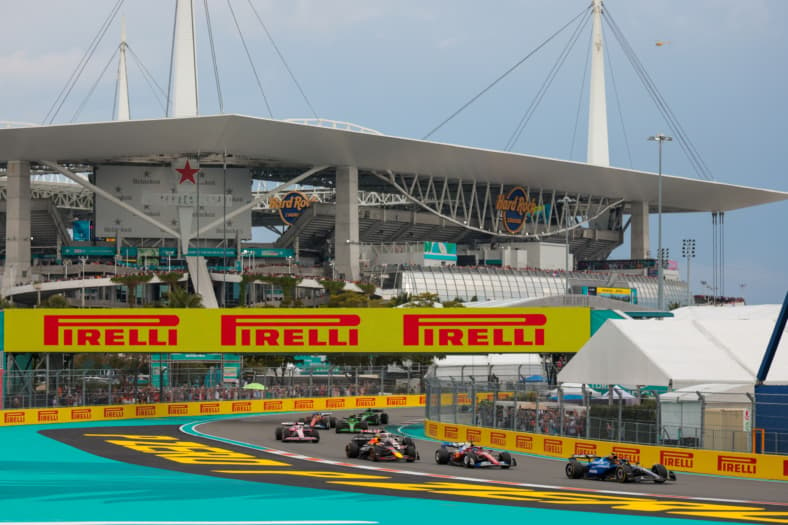
This week’s meeting isn’t a post-mortem on regulations that didn’t work and cannot be changed. It’s a deadline to save a season that’s already gone out of control. Whatever the parties involved in F1 agree needs to be implemented and tested before May 3 has to happen. At a time when F1 is growing in America and gaining steam, not addressing the issues will only compound the problems.
It’s a very tight window for things to get worked out. It’s roughly three weeks between agreement and race day in South Florida. Any changes need to clear the FIA’s bureaucratic and tedious regulatory process, be distributed to teams, and then be incorporated into the cars’ software and setup programs before Miami.
The good news: most of the fixes under discussion are software and regulatory parameter changes, not hardware overhauls. That makes them feasible on this timeline and means there’s no excuse for not executing them quickly.
The bigger picture is harder to ignore, though. F1 sold the 2026 regulations as the dawn of a new era. Three races in, the sport is holding an emergency meeting to fix what’s already broken. The rules, even with their rough edges, have produced close racing and genuine competition across the field. But the qualifying product and the safety risk on straights are major problems.
Miami is five weeks away. Formula 1’s emergency meeting this week is the moment F1 either shows it can adapt fast, or reveals how deep the problems actually run.