
 Scott Gulbransen
For decades, F1 had an American problem.
The sport that captivated millions across Europe, Asia, and South America barely registered in the United States. NBC stopped broadcasting races in 2018 after dismal ratings. Most Americans couldn’t name a single driver. The Indianapolis Motor Speedway hosted a U.S. Grand Prix in 2000, but the race was gone by 2007 after a farcical 2005 event where only six cars competed due to tire safety concerns.
That was then. Walk into any sports bar on a race Sunday now, and you’ll find Americans watching 20 drivers pilot multi-million-dollar machines at 200 mph. Something changed, and it happened fast.
The F1 American Shift
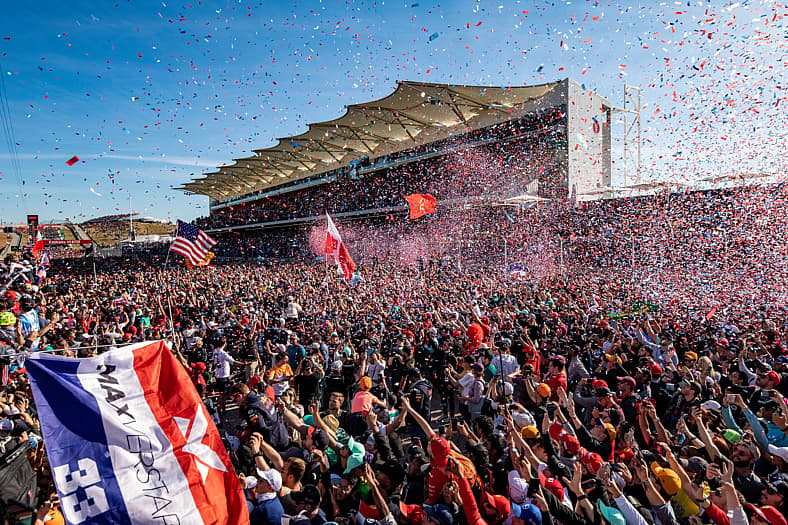
The shift started with geography. Austin, Texas, landed a race in 2012 when the Circuit of the Americas opened. The track gave F1 a permanent American home for the first time in years. More importantly, it gave the sport a foothold in a market it desperately wanted to crack. COTA proved Americans would show up if you gave them a reason. The race drew over 250,000 fans in its first year.
But a single race doesn’t create a fan base. F1 needed a way to reach people who had never heard of Lewis Hamilton or Sebastian Vettel, let alone understood why they should care about a sport where the same team often wins year after year.
American sports culture is driven by television. It’s what made the National Football League and the NBA what they are today. Liberty Media and F1 needed a way to reach Americans with more drama and more content that drives ratings and sponsorship in the U.S.
The Power of Netflix and F1 in America
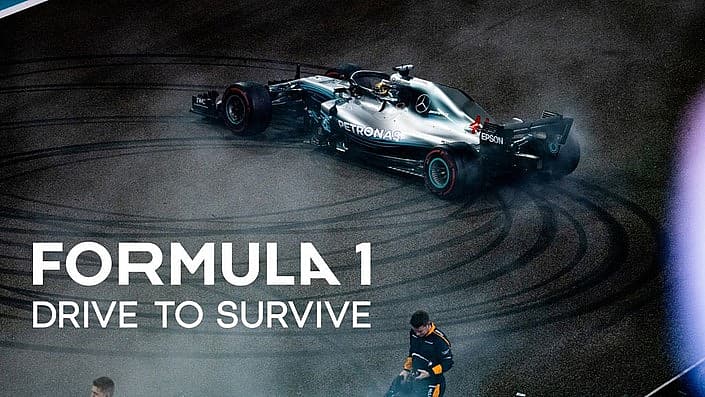
Enter Netflix in 2019.
Drive to Survive did what traditional motorsports broadcasting never could. The documentary series ignored the assumption that viewers needed to understand technical regulations or racing history. Instead, it focused on human drama. Feuding drivers. Team principals are making high-stakes decisions. Mechanics are working through the night to rebuild a wrecked car. The racing mattered, but the relationships mattered more.
Season 1 landed with modest expectations. By Season 3, it had become a cultural phenomenon. The series brought in fans who had never watched a race, particularly younger viewers and women, demographics F1 had struggled to reach for decades. Suddenly, people who couldn’t care less about aerodynamics were invested in whether Daniel Ricciardo and Max Verstappen could repair their friendship.
Critics argue the show manufactures drama and misrepresents rivalries. They’re not entirely wrong. But the approach worked. Nielsen reported that F1’s U.S. television audience jumped 58% between 2018 and 2021. The average viewer was five years younger.
Apple TV will now be the official home of F1 races in the US, offering more entertainment and coverage than ever before.
How F1 Figured Out the American Audience
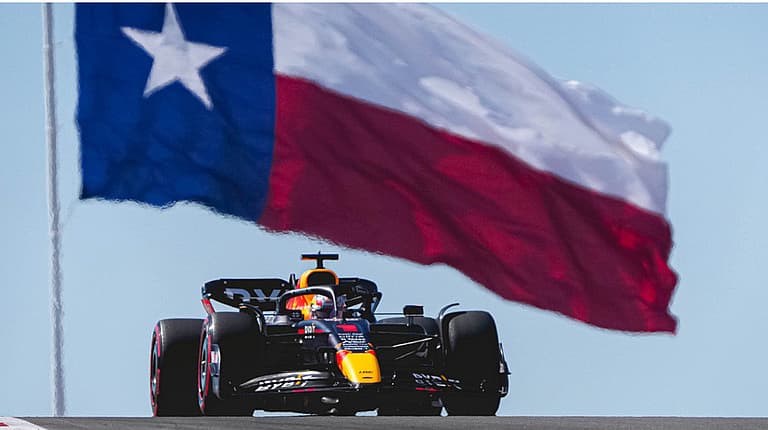
Liberty Media, which bought F1 in 2017, understood what previous ownership had not: Americans consume sports differently. They want personality and access, not just competition. Liberty invested in social media, created behind-the-scenes content, and encouraged drivers to build personal brands. The sport’s Instagram following tripled. TikTok accounts for individual drivers rack up millions of views.
The growth shows up in the schedule. F1 now hosts three U.S. races: Austin, Miami, and Las Vegas. Miami joined in 2022, drawing celebrities and a sold-out crowd despite a bland race. Las Vegas debuted in 2023 with a Saturday night spectacular on the Strip, complete with massive grandstands and a track that runs past casinos and landmarks. The addition of multiple American races signals F1’s belief that the U.S. market can sustain what no other country has: three separate grands prix in a single season.
Miami and Vegas aren’t traditional racing venues. They’re events. The racing takes a backseat to spectacle, something that bothers purists but attracts casual fans. F1 is betting that people who come for the party will stay for the sport. Early data suggests they’re right. Race attendance continues to climb.
The sport also benefits from timing. NASCAR’s popularity has declined from its peak in the mid-2000s. IndyCar remains a niche product outside the Indianapolis 500. F1 stepped into a gap in American motorsports fandom right when its product became accessible through streaming and social media.
Money follows attention. American sponsors now flood the grid. Miami-based companies back teams. American drivers are trying to break back into the sport, hoping one might land a seat and create a homegrown star. Logan Sargeant became the first American driver in F1 since 2015 when he joined Williams in 2023, though his tenure was short-lived. The search for an American driver who can compete at the front continues.
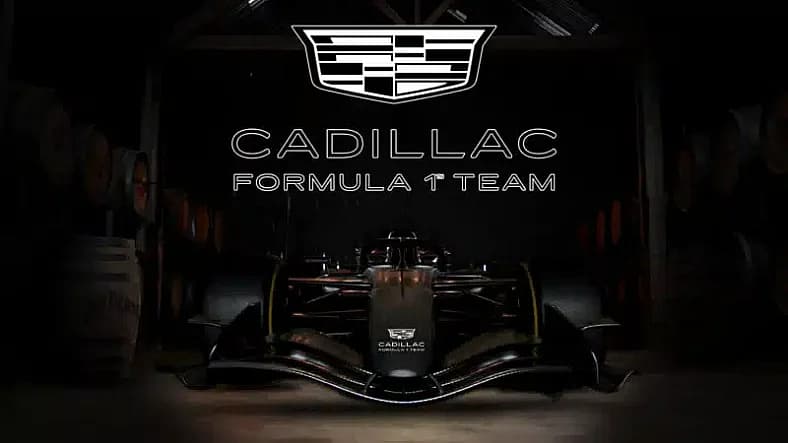
In 2026, Cadillac F1 joins the field as a truly American team and finally lands on the grid.
Some European Fans Not Happy with ‘Americanization’ of F1
Not everyone loves the changes. European fans complain that F1 has become too Americanized, too focused on entertainment at the expense of racing purity. They’re not thrilled about 11 p.m. local race starts to accommodate U.S. television windows or street circuits designed more for Instagram photos than overtaking opportunities.
But the numbers don’t lie. F1’s U.S. television ratings are up more than 50% since 2021. The sport projects continued growth as it locks in a new generation of fans who discovered racing through a streaming service rather than a transmission gearbox.
The question now isn’t whether F1 can succeed in America. It’s whether the sport’s traditional markets will accept how much it had to change to get here.