Scott Gulbransen
When the Aston Martin AMR26 rolled out of its garage on the fourth day of the Barcelona shakedown in late January, it stopped people mid-conversation. Dramatic sidepods that slope downward like tubes. A wide, bulging nose. Rear suspension arms are mounted so high that they attach near the rear wing pillar. Even rival team bosses couldn’t help themselves.
Mercedes driver George Russell called it “spectacular” and the “most standout car design” on the grid. Williams boss James Vowles was blunt: “Adrian is just a creative designer. It’s really impressive what he’s done with wishbones in places that I don’t think they should be. But he’s done them.”
For American fans still getting their sea legs in F1, such cross-team praise is unusual. Teams guard every millimeter of competitive advantage in this sport. When your rivals compliment your car before the season starts, it either means you’ve nailed something or you’ve built something too clever for its own good.
Adrian Newey’s Impact on Aston Martin
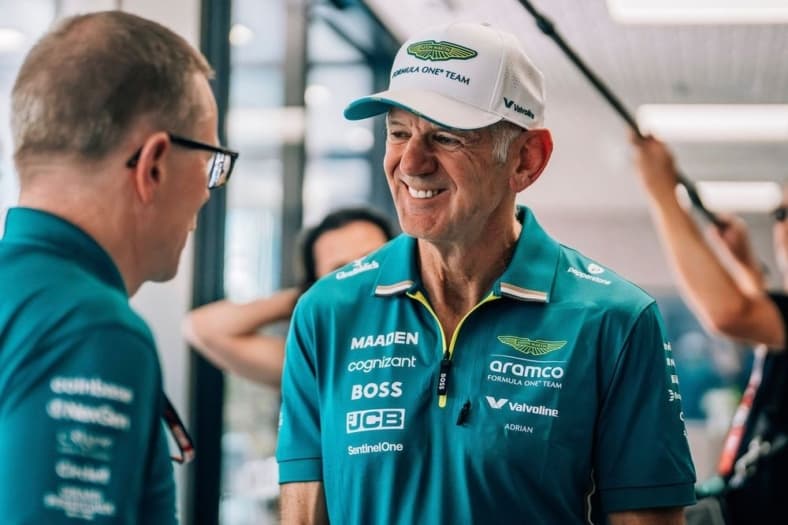
Adrian Newey is 67 and has been the aerodynamic brain behind 12 constructors’ championship winners at Williams, McLaren, and Red Bull. He doesn’t use computer-aided design. He sketches by hand, with a mechanical pencil, on a drawing board. His cars have won over 200 races. Think of him as the Bill Belichick of F1 engineering, except he’s pulled it off at three different teams.
Now he’s at Aston Martin, backed by billionaire Lawrence Stroll, with a gleaming new campus in Silverstone and a fresh engine partnership with Honda. The ambition is championship contention. Newey is the centerpiece.
But there’s a catch.
Aston Martin started wind tunnel development on the AMR26 roughly four months after everyone else. Their new facility wasn’t ready until April 2025. Newey didn’t officially join until March, though he spent his contractual gardening leave from Red Bull doing what he always does: thinking about cars.
“The philosophy really came in my gardening leave time from late April, when I was effectively out of the Formula 1 team,” Newey said at the car’s launch on February 9. “We all knew what the regulations were, they were published, so I just tried to sit back and think, ‘OK, I’ve got to think from first principles with these regulations. What could be a possible solution?’”
The Buzz Around the Aston Martin AMR26
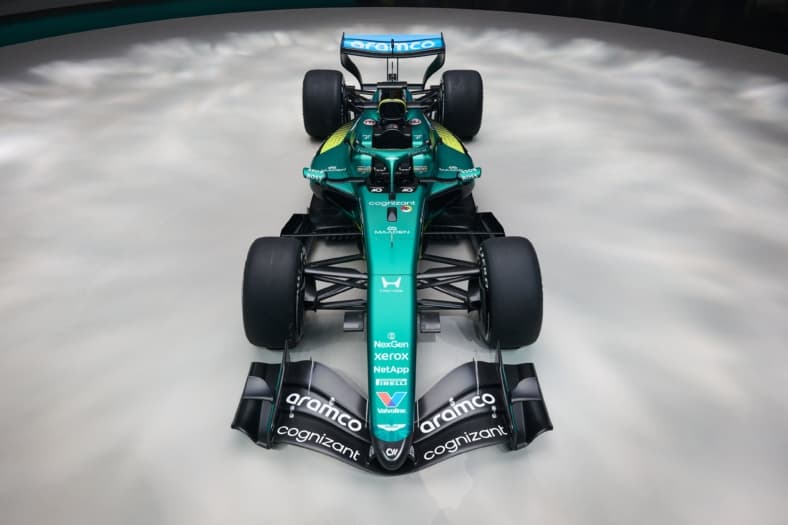
The result is a machine unlike anything else on the 2026 grid. Technical analysts have compared its visual shock factor to Mercedes’ radical “zeropod” concept from 2022. The internal packaging is trademark Newey —everything crammed tight to let the air do its work.
“The car is tightly packaged,” Newey said. “Much more tightly packaged than I believe has been attempted at Aston Martin Aramco before.”
Still, he kept expectations in check.
“In truth, with a completely new set of regulations, nobody is ever sure what the right philosophy is,” Newey said. “We certainly aren’t sure what the best interpretation of the regulations is. Because of our compressed timescale, we decided on a particular direction and that’s the one we’ve pursued. Whether that proves to be the right one or not, only time will tell.”
That compressed timescale is the elephant in the room.
“Think of him as the Bill Belichick of F1 engineering, except he’s pulled it off at three different teams.”
On Aston Martin’s Chief Designer, Adrian Newey
“We got in the tunnel mid to late April, as opposed to January 2 for everybody else,” Newey told Sky Sports. “We’re starting on the back foot and we’ll do our best to catch up.”
Fernando Alonso, Aston Martin’s 44-year-old two-time world champion, was pragmatic.
“We need to walk before running,” Alonso said. “Coming from seventh in the Constructors’ Championship last year, we need to make the steps one at a time.”
Reasons for Optimism on the Aston Martin Team
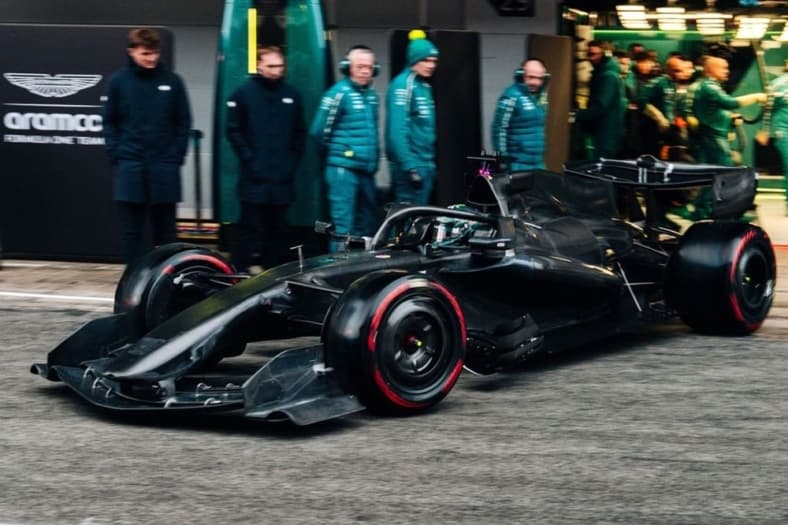
There are reasons for optimism. Newey has thrived during regulation shakeups before. He used a similar gardening leave in 1997 to sketch the McLaren that won the 1998 world championship with Mika Hakkinen. And his design philosophy this time prioritizes long-term development—a car built to improve over the course of the season rather than peak on day one.
“We’ve attempted to build something that we hope will have quite a lot of development potential,” Newey said. “What you want to try to avoid is a car that comes out quite optimized within its window but lacks development potential. We’ve tried to do the opposite.”
He also promised upgrades before the lights go out in Melbourne on March 8. “The AMR26 that races in Melbourne is going to be very different to the one people saw at the Barcelona shakedown,” he said. “And the AMR26 that we finish the season with in Abu Dhabi is going to be very different to the one that we start the season with.”
So where does that leave things? Aston Martin has the most talked-about car on the grid, designed by the sport’s most accomplished engineer, powered by Honda, and driven by one of the craftiest veterans in the field. But they started late, ran the fewest laps at Barcelona, and are entering a season where nobody, Newey included, knows which philosophy will work.
For American fans looking to pick a storyline in 2026, this is one of the best going. Just know it might take a few races before we find out if the genius has done it again.