Scott Gulbransen
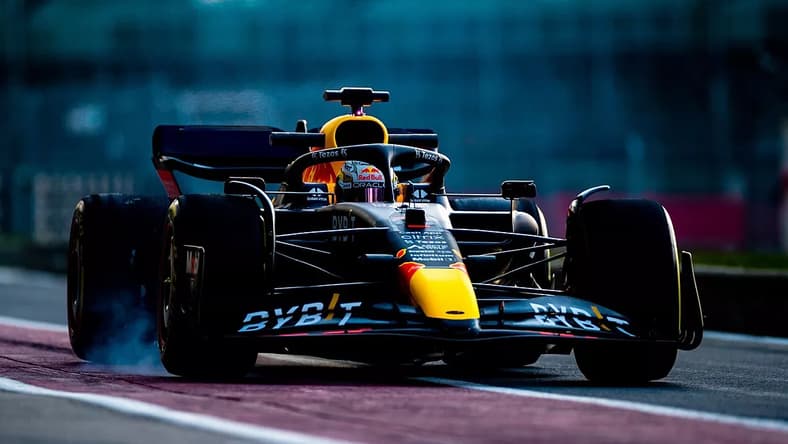
Formula 1’s most radical transformation in decades roared to life Monday, not for a packed grandstand, but for an empty circuit. Red Bull junior Isack Hadjar claimed the first bragging rights of the 2026 era, topping the timesheets on the opening morning of a secretive Formula 1 pre-season shakedown at the Circuit de Barcelona-Catalunya.
While the sport typically thrives on spectacle, this week’s action is unfolding behind closed doors. Ten of the grid’s 11 teams have descended on Spain to grapple with a technical overhaul that touches every inch of the car, from the return of step-plane floors to a complex new power unit architecture.
Hadjar clocked a 1:18.835 to lead the field by more than 1.5 seconds, a significant margin even for early testing. But the morning session was less about raw speed and more about survival, as teams faced the reality of reliability issues inherent in such a massive regulatory reset.
A Secret Start to a New Formula 1 Era
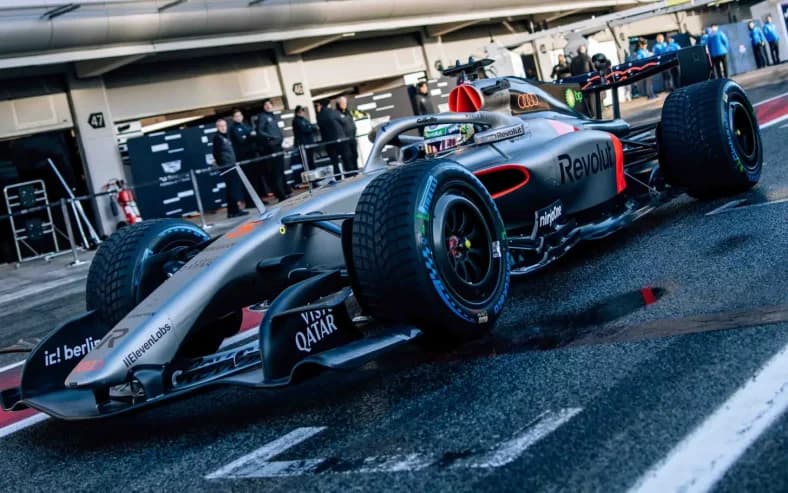
The privacy of this week’s test is by design. Fearing the optics of frequent breakdowns as they troubleshoot completely new machinery, the teams banded together to ban independent media and fans from the venue. They are permitted to run their cars on only three of the five scheduled days, a rule designed to offer flexibility for repairs or bad weather.
The caution is warranted given the sheer tectonic shift this year with new tech specs and regulations. The 2026 regulations mandate a 50-50 power split between the internal combustion engine and the electrical system, a shift that fundamentally alters how the cars are driven. The complex MGU-H component has been removed to simplify the architecture, but reliance on battery power has increased significantly.
The strain of these new systems was evident almost immediately. The session was interrupted by two red flags after Alpine’s Franco Colapinto and Audi’s Gabriel Bortoleto stopped on track with separate mechanical failures.
Despite the breakdowns and stoppages, history was made as the Cadillac F1 Team logged its first official miles. Veteran Valtteri Bottas completed 33 laps for the American outfit, finishing the morning sixth with a time of 1:24.651, roughly 5.8 seconds off Hadjar’s pace. Mercedes prospect Kimi Antonelli finished second, followed by Colapinto and Racing Bulls’ Liam Lawson.
The Engineering Headache
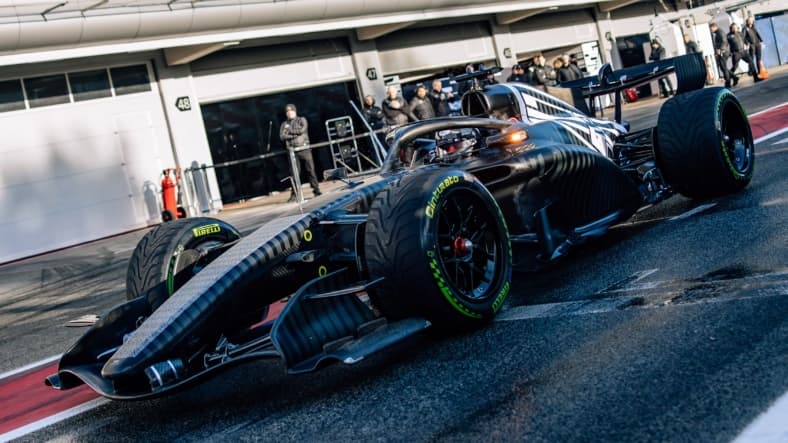
Formula 1 drivers and their team engineers are facing a steep learning curve this week as well. The new power units require the internal combustion engine to act as a generator during corners to charge the battery, which forces changes in braking and throttle application.
McLaren technical director of performance Mark Temple noted that while battery size remains similar to previous years, the higher power output means energy can be depleted in a single straight. This dynamic replaces the traditional Drag Reduction System (DRS) with a new “overtake mode,” which offers a boost of electrical energy when a driver is within one second of a rival.
Aerodynamics have also been overhauled in Formula 1, too. The 2026 cars feature active aerodynamics with moveable front and rear wings designed to reduce drag on straights. Beneath the chassis, the sport has returned to flat-bottomed “step-plane” floors, abandoning the venturi tunnels that defined the ground-effect era of the last few years.
All of these changes, coming at the same time, mean teams in Barcelona have a lot to work out in a short period. With just 40 days until Round 1 of the Formula 1 2026 season kicks off in Melbourne, there’s much work to be done without too much room for error.
Strategic Delays and Absences
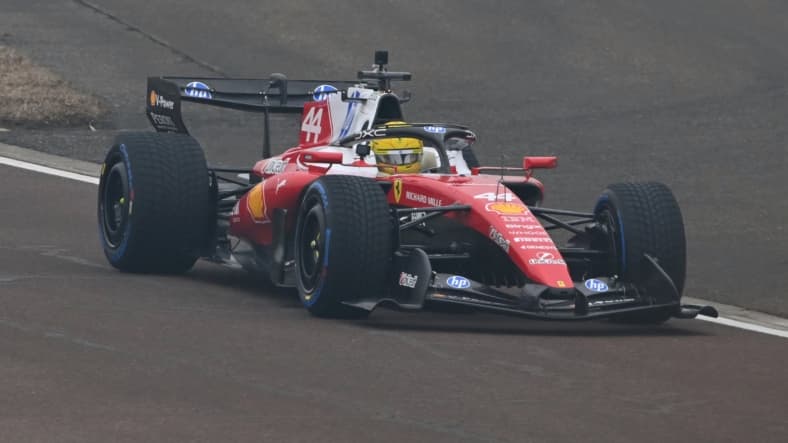
Not everyone was ready to hit the track on Monday. While Red Bull, Mercedes, Alpine, Haas, Audi, Cadillac, and Racing Bulls logged laps, heavyweights Ferrari and McLaren remained in the garage.
Ferrari team principal Fred Vasseur confirmed the Scuderia plans to debut its SF-26 on Tuesday, though he noted the schedule could shift depending on the weather. McLaren is taking a similar approach, opting to maximize development time before running later in the week.
Others are facing more serious delays. Aston Martin, now led by legendary designer Adrian Newey, is not expected to run until Wednesday or possibly Thursday. The team is reportedly struggling to meet the new minimum weight requirement of 768kg (down from 800kg last year) while integrating a new power unit from Honda.
Williams is absent entirely. The team announced last week it would skip the Barcelona shakedown to focus on “a better engineering outcome” ahead of the official tests in Bahrain.
Looking Toward Bahrain
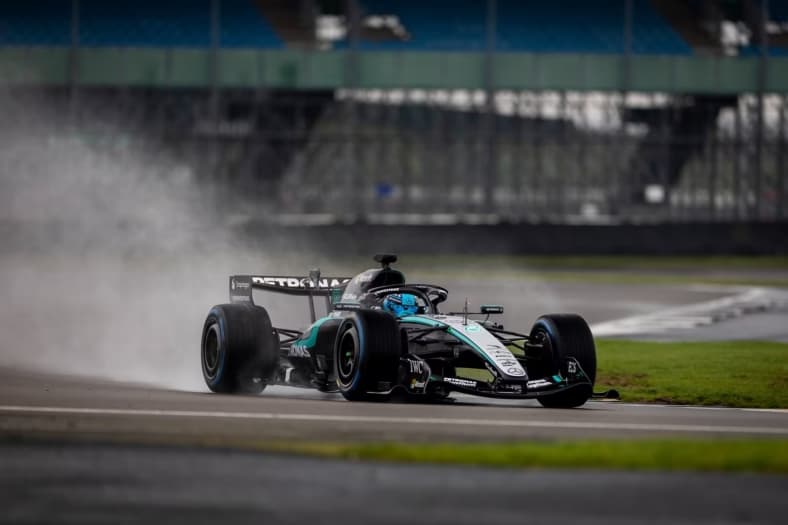
This week serves primarily as a systems check for all Formula 1 teams. The true competitive order likely won’t emerge until the official pre-season tests in Bahrain, scheduled just a few weeks from now on Feb. 11-13 and Feb. 18-20.
For now, the paddock remains in a cat-and-mouse game of development, with teams hiding their true performance behind private garage doors. The Formula 1 world will get its first clear look at the pecking order when the lights go out for the Australian Grand Prix in Melbourne on March 6.