
 Dan Kingerski
In an NHL season in which goaltender interference has been an increasingly frustrating topic, the nebulous and often purely judgment call went to Team Canada in the Men’s Olympic hockey semifinal, and propelled the Canadians to a 3-2 win over Team Finland.
With two Canadian referees, no less.
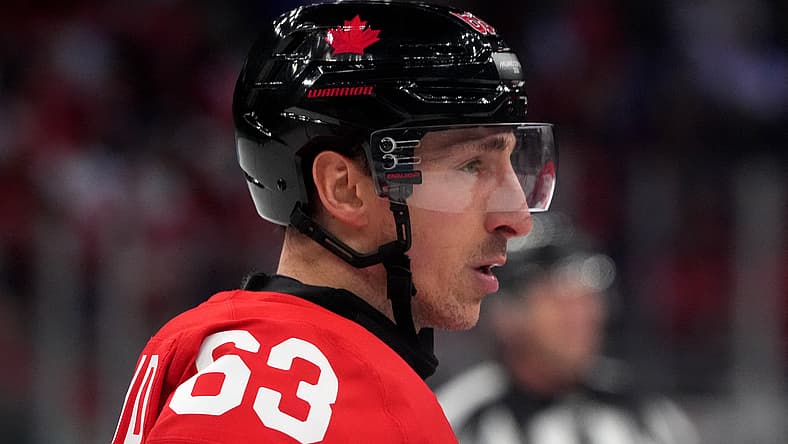
With 6:35 remaining and Canada trailing 2-1, pesky winger Brad Marchand went into the crease, unimpeded. He then contacted Team Finland forward Erik Haula from behind. Those are the undeniable facts.
From there, how fans saw the play had a lot to do with which passport they hold. Fearing being short-handed against the surging Canada, Finland did not challenge the call.
SHEA THEODORE TIES IT FOR TEAM CANADA 🇨🇦
— Yahoo Sports (@YahooSports) February 20, 2026
They trailed Finland 2-0 to start the game 😱
(via @NBCOlympics)pic.twitter.com/rYJTaBPdgM
Referees Eric Furlatt and Dan O’Rourke could have waived off the goal, but the call on the ice was a good goal.
To this writer, it certainly looked like Marchand created the contact and then tripped over Saros because of the contact, and that Saros did not have time to reset to play his position, but referees ruled Haula caused the contact or that Saros had enough time to regain his position.
Shea Theodore got credit for the call. This season, nearly 70% of goalie interference challenges in the NHL have been unsuccessful. Finland elected not to take the chance, potentially giving the Canadiens a power play.
Following a quarterfinal loss to Canada, Czechia coach Radim Rulík criticized referees and questioned their impartiality.
“I feel like everyone is afraid to call anything against Canada,” Rulik said after the game on Wednesday.
Adding insult to injury, Finland lost on a late power play goal following a high-sticking penalty. Canada forward Nathan MacKinnon blasted a shortside one-timer from the left circle with just 35 seconds remaining.
Canada will face the winner of Team USA vs. Slovakia on Sunday for the gold medal.