James Nichols
New Jersey Devils general manager Sunny Mehta does not intend to sit on the newly acquired draft capital.
Mehta just completed his first significant roster move by trading Simon Nemec and Maxim Tsyplakov to Calgary. In return, they picked up a 2026 second-round pick (originally the Rangers’), a top-10 protected first-rounder from Vegas in 2027, another top-10 protected first from Colorado in 2028, and prospect defenseman Etienne Morin.
That haul already looked substantial on paper. Layer in the Devils’ own 12th overall selection in this year’s draft and the picture sharpens considerably.
New Jersey suddenly holds a stack of draft assets that aligns closely against the package Florida sent to Ottawa for Brady Tkachuk: the 9th and 25th picks in 2026, a 2027 second-rounder, and a conditional first in 2029.
The Panthers landed a proven, high-impact forward by leveraging volume and quality in one draft class plus future flexibility. The Devils now sit in a comparable spot.
Market Precedent Shows the Values Align Closely
Using the Puckpedia Perri Pick Value Calculator—which assigns point values based on historical NHL draft pick swap trades to reflect real market precedent—the Panthers’ 2026 No.9 and No.25 together carry roughly the value of a single No.5 overall pick (around 50+ points on the scale where No.1 is 100). The No.9 sits in the mid-to-high 30s, while the No.25 adds low-to-mid teens, combining for that elite-first-round equivalent. Add in a typical 2027 second-rounder (roughly 8–10 points) and a conditional future first (valued in the mid-20s to low-30s range, depending on expected slot and conditions), and Florida’s package delivered strong immediate capital plus depth and future upside.
The Devils’ side mirrors this balance through a different mix.
Their 12th overall pick carries solid high-first-round weight (likely in the low-to-mid 30s on the same scale), pairing well with a 2026 second-rounder in the same 8–10 point range as the Panthers’ 2027 second. The two protected future firsts (2027 from Vegas and 2028 from Colorado) provide comparable long-term volume to Florida’s conditional 2029 first, though the top-10 protections introduce a modest discount—they still represent meaningful assets if those teams remain competitive, as expected.
Overall, the combination gives New Jersey similar total market value: one premium near-term first-round selection, a useful second-rounder, and two solid future firsts with some built-in risk management via protections. It’s not identical piece-for-piece, but the aggregate trade precedent lines up closely enough to give the Devils real negotiating power.
This isn’t about exact point totals on any one chart. It’s about what GMs actually move in practice. The Devils can now either keep the picks to stock their prospect pool—which is unlikely—or take the more likely route by bundling pieces to acquire established talent without gutting their core.
Room to Maneuver Up Front
New Jersey’s forward group has skill in bunches with Jack Hughes and Jesper Bratt, but adding another top-six piece would give Sheldon Keefe more options and better balance across lines. The new draft capital opens doors that perhaps weren’t there before the Nemec deal closed.
Here are a few realistic targets that fit the profile of a top-six forward the Devils could pursue by packaging some of these assets:
Jason Robertson, Dallas Stars
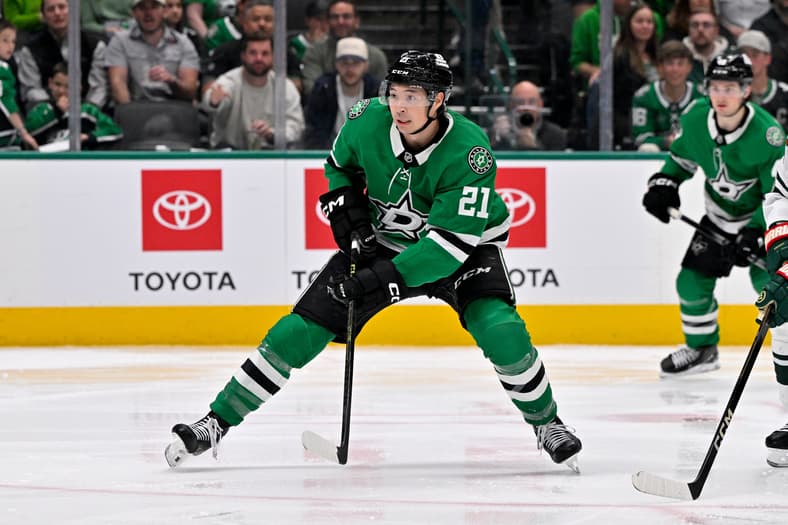
Robertson would be the big swing — a proven star winger coming off a 45-goal, 96-point season who would instantly transform the top line alongside Hughes and Bratt. At 26 (turning 27), he’s in his prime with the size, hands, and playmaking ability to be a true difference-maker.
He’s a pending restricted free agent after his current deal, and contract talks with Dallas have been bumpy—he reportedly turned down an eight-year, $12 million AAV offer while seeking something closer to $14 million. If the Stars decide to trade rather than risk an offer sheet or arbitration, Robertson becomes very much in play.
Landing him wouldn’t come cheap. The Devils would undoubtedly need to put most of their new capital on the table: the 12th overall pick, both protected future firsts, and perhaps the 35th overall pick in Friday’s draft. Heck, the Devils might even have to cough up Dawson Mercer or Anton Silayev to put the trade over the hump.
It’s a heavy price, but one that could pay off huge for a team ready to contend.
Matthew Knies, Toronto Maple Leafs
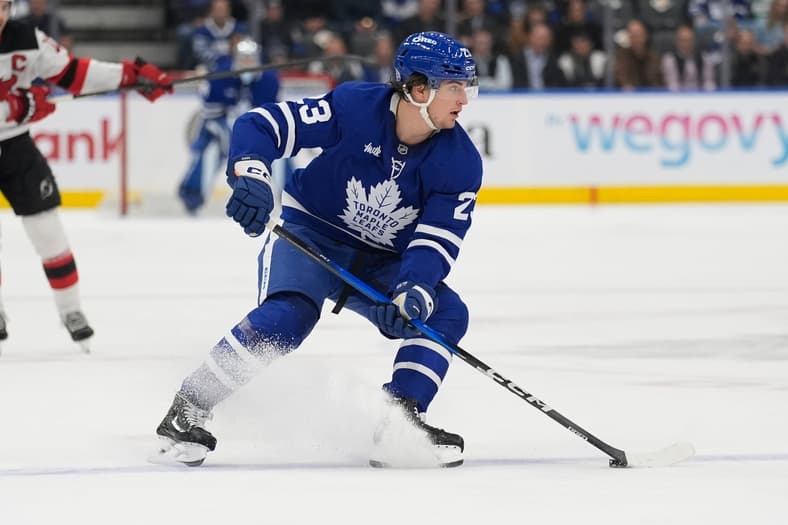
There are mixed messages on Knies’ availability. Until he’s determined untouchable, he remains a target for New Jersey with their newfound assets.
Knies brings a rare combination of size, physicality, and skill that would fit nicely in New Jersey’s top six.
The big winger has taken real steps in Toronto and could be available if the Leafs look to shake things up or address other needs. His contract situation and Toronto’s cap picture might create an opening, and the Devils could use their 12th overall pick plus one of the protected firsts (or the 2026 second) as the foundation of a deal.
Knies projects as a player who could thrive with more opportunity next to elite talent like Hughes.
Dylan Larkin, Detroit Red Wings
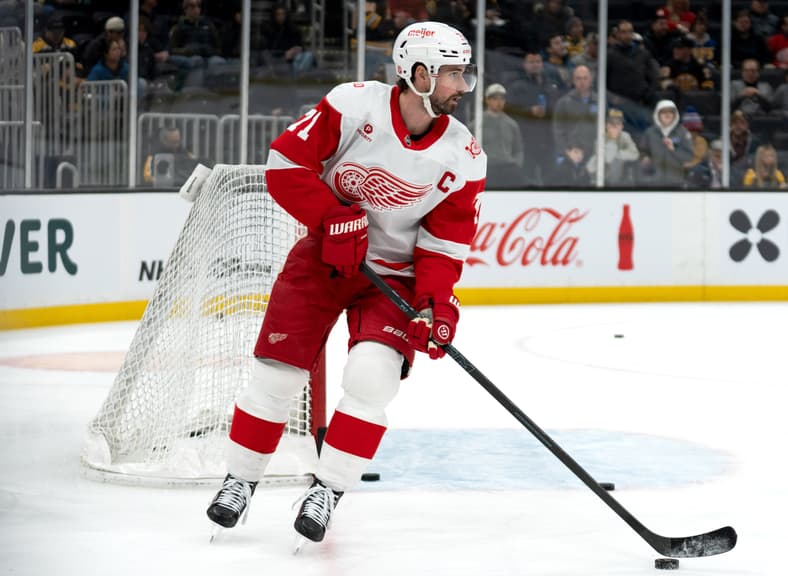
Larkin represents another high-upside option.
A proven two-way center who can drive play and produce at a high level would transform New Jersey’s middle. It would likely take the 12th overall, one protected first, and perhaps another piece to get it done, but the Devils now have the depth of assets to at least start that conversation. Larkin’s contract and no-trade clause add complexity, yet his fit in New Jersey works if Hughes moves to the wing.
As one source tells New Jersey Hockey Now, it sounds like Larkin would OK a move to New Jersey if it came down to it.
The 12th pick gives the Devils a high-floor prospect if they prefer to build internally, or a strong trade chip if a deal for an established forward materializes. Either path strengthens a group that already has elite talent but needs another consistent scorer or play-driver to push deeper into the playoffs.
New Jersey’s front office now operates with the same kind of draft leverage Florida used to revitalize its contention window. This shouldn’t come as a surprise.
After all, Mehta learned how to operate through Bill Zito.
How Mehta deploys it—whether through aggressive trades or patient drafting—will shape the roster for the next several seasons. The pieces are there. The market will decide how quickly they turn into on-ice impact.