
 Farah Ben Gamra
Is a single-car spin enough to label a driver dangerous? Should NASCAR require results before allowing drivers onto superspeedways? Or does bringing new fans into the sport justify the risk?
Those questions went off like fireworks across the garage and online following opening weekend at Daytona International Speedway, after social media personality Garrett Mitchell and NASCAR driver Natalie Decker were both involved in some pretty nasty-looking incidents that just reignited all kinds of criticism of how NASCAR handles driver approval.
Some fans were quick to point out that you can have many race wins and still cause a big wreck at Daytona. Even guys like Denny Hamlin and Kyle Busch have managed to trigger some major crashes over the years. Others asked a harsher question: is NASCAR approving really about being any good behind the wheel or is it just about marketability?
For veteran spotter Freddie Kraft, the answer was blunt.
Freddie Kraft questions NASCAR’s approval process
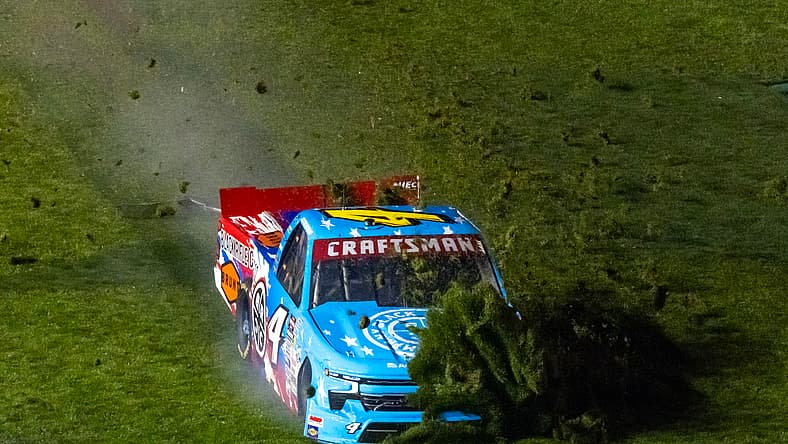
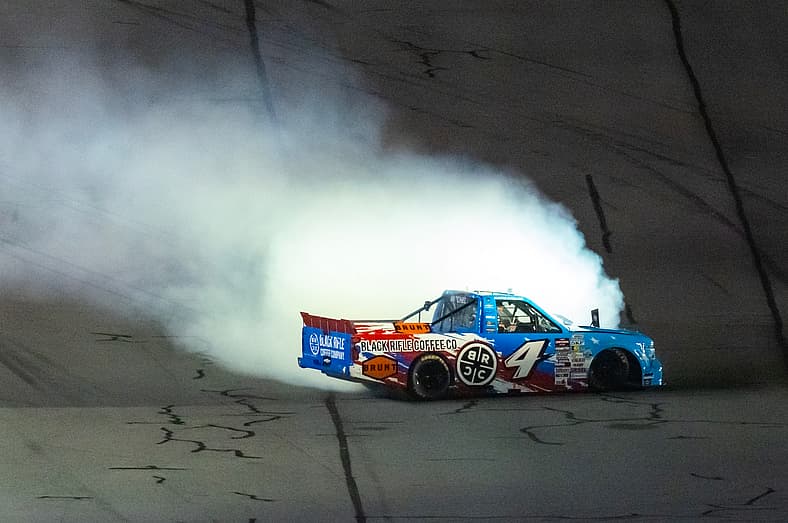
Mitchell , known to his fans as Cleetus McFarland, was approved for the Truck Series season-opener in Daytona, after passing a high-speed test. But his debut ended quickly. He lost control coming out of Turn 4 and he crashed out just six laps in , finishing last
Kraft called it “dumb luck” that the crash did not take out others. “This is gonna be very unpopular, and I’m sorry, but what are we doing? Are we trying to get the best racecar drivers on the racetrack, or are we trying to get the biggest social media following?” Kraft said on Door Bumper Clear.
“The system should not be based on participation; it needs to be based on results. This guy ran two plate races last year, wrecked in both of them, wrecked half the field in one of them trying to do a restart.”
“We’re just lucky the other night that he didn’t wipe out the Truck field… It was just dumb luck. We talk about safety. I’m sure he’s a great guy, he seems like a phenomenal person. But he’s not ready for what he’s doing. So, you can’t approve these people to go out there.”
Natalie Decker incident deepens criticism
Kraft even brought up the ARCA crash that Decker was involved in, where she hit Sam Mayer after an earlier incident. Sadly for Decker, her series results aren’t exactly what you’d call encouraging. Every time she raced, she’s finished 22nd or worse.
The veteran spotter placed responsibility only on NASCAR. “ First of all, how did she ever get approved? She’s run 13 races and averaged a 29th-place finish, piling in the wrecks on top of that,” Kraft said.
“At what point do you look and say, ‘Alright, we made a mistake approving this person, now we need to take it back.’… The system is broken.”
Those comments also touched on a bigger issue: is it ever a good idea to use superspeedways as a learning environment for drivers?
Dale Earnhardt Jr. urges development, not exclusion
But not everyone agreed with Kraft’s conclusion. NASCAR Hall of Famer Dale Earnhardt Jr. felt strongly that Mitchell’s best bet would be to focus on getting more experience under his belt.
“Is he ready to race trucks right now? No. Will he be? Could he be? Yes, I would if I was NASCAR, I would be doing everything I could to get him better. And what he needs is more ARCA races. He needs to race short track asphalt,” Earnhardt said.
He made a point that Daytona, arguably the toughest track in the sport, demands a level of experience that you can’t just teach. “What happened to him at Daytona could happen to anyone, happen to me, could happen to anyone. But I just think that he needs a bigger library of experience,” he added.
Fans divided as NASCAR faces defining question
The fans are right in the middle, torn apart. The people who support Mitchell see him as a kind of throwback personality, bringing a real authentic vibe to the sport and bringing in a whole new crowd, with nearly 60,000 tuning in to watch his in-car footage during the race.
On the other hand, the critics just can’t buy into the idea that being popular is enough to get you in the driver’s seat. They argue it’s Daytona, of all places, where you really want to have some experience under your belt before you even step out on the track.
At its core, the debate forces a tough question: should NASCAR protect the ladder or open the door?
Because the answer may define who gets to race and why for years to come.