Matt Weaver
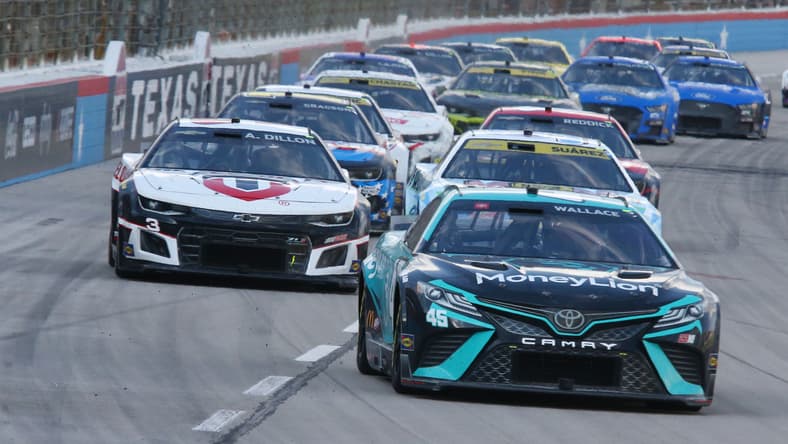
The NASCAR Cup Series race on Sunday is forecast to be dangerously hot.
There is also an increasing chance of thunderstorms as the afternoon progresses but until the rain arrives, which would be a problem in its own right, the Autotrader EchoPark Automotive 400 has a real feel high of 110 degrees Fahrenheit.
It will be hot for fans in attendance, but also uncomfortably hot for drivers inside their race cars with temperatures exceeding 140 degrees Fahrenheit, a dynamic made worse by the current generation of car that is already notorious for its cabin temperatures.
Team Penske’s Ryan Blaney says he worries more about attending fans than himself or his fellow drivers.
“When the temperature is that high, I worry more for people in the grandstands sitting out all day and stuff like that,” Blaney said. “That concerns me more than me being in the car. As drivers, we understand you are going to have days like this and hot race days and you just know that what you do and you rely on what you do as far as prep work, training and hydration and that stuff is going to work no matter if it is 110 or 50 degrees.”
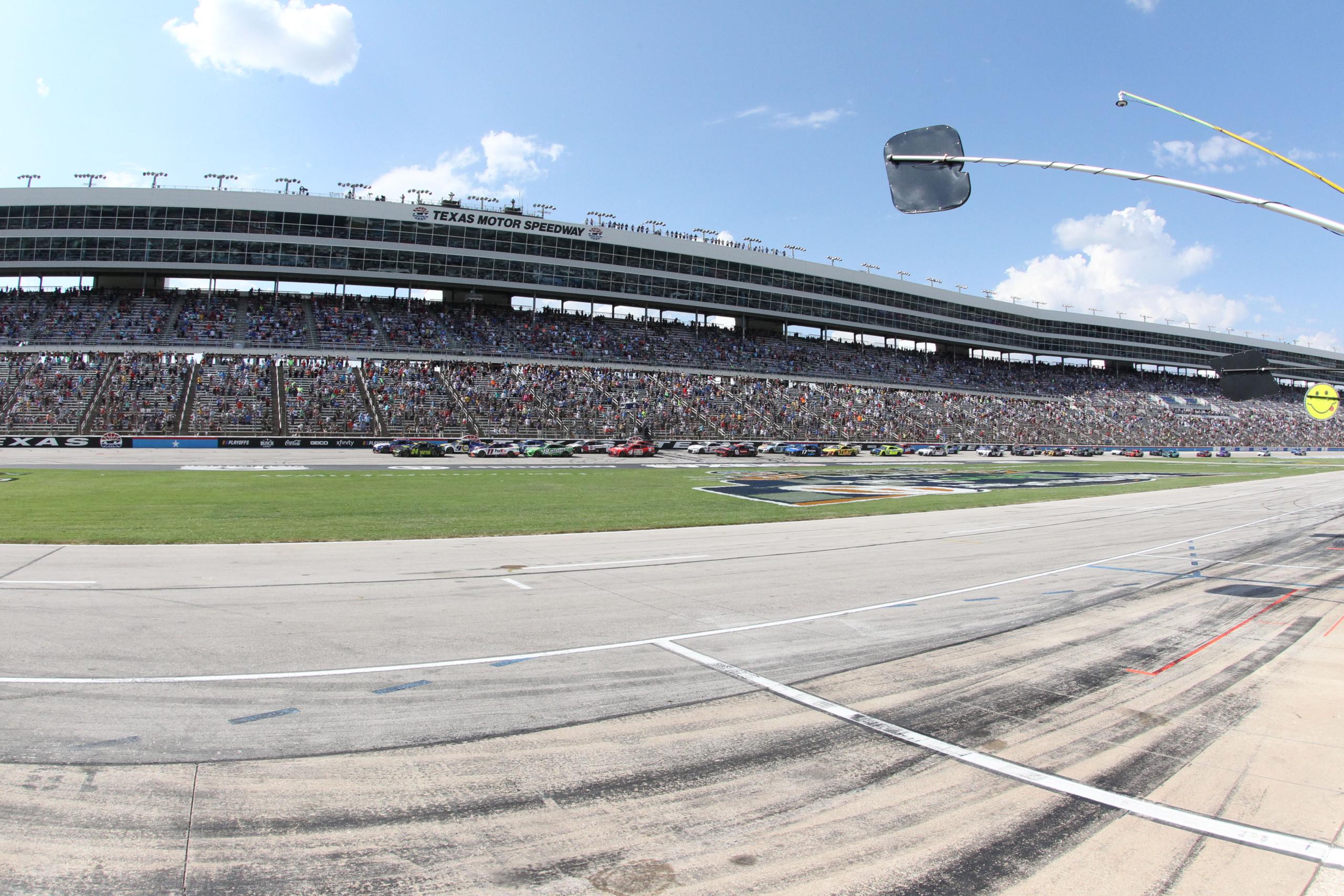
Kyle Busch also preemptively gave fans a lot of credit for what they are about to do on Sunday.
“Look I give NASCAR fans all the credit in the world because they are a damn strong bunch,” Busch said. “They are passionate and they are loving to our sport as much as we want them to be. But to be out in the 100-degree heat in aluminum grandstands, I’m not paying to do that. I’m getting paid to do that!”
But seriously though, is there a point where it gets to be too much for even drivers to compete?
“These cars are really hot,” Busch said. “We’re in 140 to 150-degree cockpit temperatures, so it gets warm out there, for sure. But you have to be conditioned for it, for us, to withstand that. And a lot of us are, so I feel like our bodies are more accustomed to that than some others.”
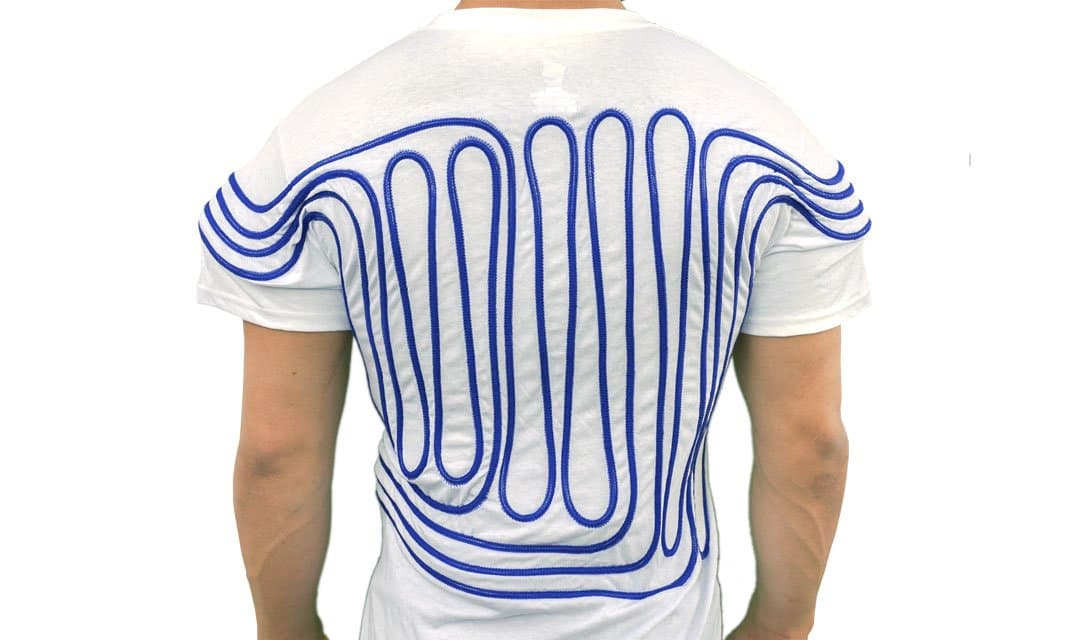
It helps that every NASCAR driver where a ‘cool shirt’ that circulates cold water around their bodies. It helps, but as Martin Truex Jr. says, there are caveats.
“It doesn’t feel that cold until it stops working and then you realize how good it is,” Truex said. “We had ours quit at Indy five laps in and I don’t know how I made it to the end. We got to Lap 20 and I said, ‘no way.’ I somehow did but tomorrow is going to be a disaster if that thing quits working.”
His teammate, Christopher Bell, agreed with that sentiment.
“That’s bad,” he said. “It’s bad, bad. It’s certainly significant worst when you have the vest on and there’s no cooling going into it. If you don’t have the switch on, the water is just going to get hot and if it doesn’t work, it’s just bad.”
Despite that possibility, most drivers seem unmoved by the temperatures, because it is what it is.
“Yeah, I mean it’s certainly going to be really hot,” Byron said. “Last year was around 96 degrees. I was looking at that, for reference. But I do think it’s going to be tough. These cars are really hot. We take a lot of measures to help cooling on our side, with the cool shirts and all those things. So hopefully all of that stuff works well and we can have a smooth day.”
New right side tires for Texas
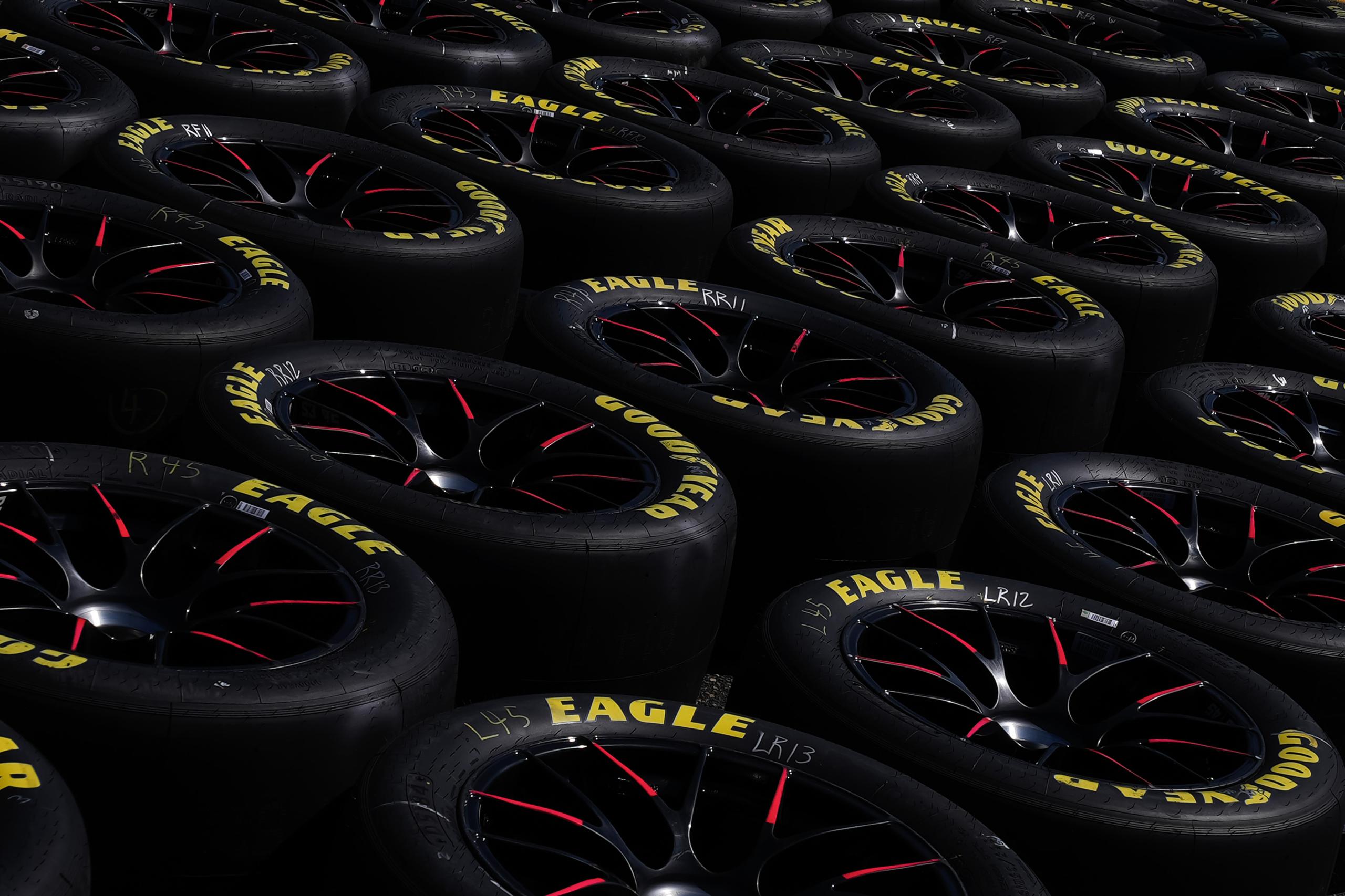
In response to a rash of tire failures at the playoff race at Texas last season, Goodyear has brought a different right-side tire combination to the track this weekend. The left sides have been used this year at California, Kansas, Las Vegas, Michigan, Nashville and Pocono but the new rights are exclusive to the Fort Worth intermediate.
They were tested on July 11-12 by Denny Hamlin, Joey Logano and Daniel Suarez.
Christopher Bell says the data looks promising early.
“Anytime you do a test, it’s all long runs,” Bell said. “Denny said they put a lot of laps in at the test. I would expect it to be fixed but you never know until you get in a race.”
Tyler Reddick is adamant that all the blowouts last year were team induced, competitors going far beyond the recommended air pressures and camber settings issued by Goodyear and ultimately paying the price for it.
“I have an odd opinion on it: I think the teams just have to do a better job,” Reddick said. “We saw a lot of tire failures last year at Texas and I think that was a byproduct of the playoffs, teams and drivers being aggressive.
“They have to play with that fine line and there were failures. I don’t think this was a track issue. We’ve seen the IndyCar guys want it to be less rough too so if it will help everyone, do it but don’t do it because a bunch of teams complained about missing the setup last year.”
To that point, Brad Keselowski said this race will still be determined by those set-up decisions, while hopefully not being as at risk to blowouts with the new right side combination.
“There’s a trade off with this car, short run speed versus long run speed,” Keselowski said. “The more aggressive you are with the tires, the faster you are on the short run. It either slows down more on the long run or it blows the tire out.
“With Goodyear have done more to hopefully fix the blowout side, I think you’ll just see guys lose the handling over the long run and be even more aggressive. Overall, with this car and the way you set it up, it creates comers and goers and when you have that, it makes for great racing — be it here at Texas or any other intermediate track.
“That’s a long-winded way of saying I’m encouraged by what I see and we’ll see what happens tomorrow.”
Despite the tire blowouts last year, the race at Texas did have a considerable amount of passing and the requisite comers and goers, and William Byron expects that to continue too.
“I saw a lot of passing,” Byron said of the 2022 race. “As crazy as that was to see, I thought there was a lot of passing throughout the field last year. I think this NextGen car yields itself to have some of that. With it being hot out, I think you’re going to move around the track some within those two grooves that we have here.
“You’re going to be off the throttle and be able to pass people.”
Matt Weaver is a Motorsports Insider for Sportsnaut. Follow him on Twitter.