
 Matt Higgins
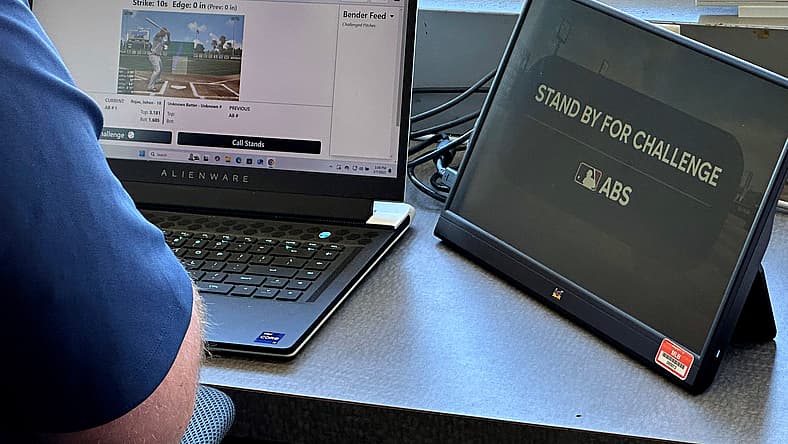
The robots are officially coming. Major League Baseball will be using the Automated Ball-Strike Challenge System (ABS) beginning in the 2026 season.
Fans have been clamoring for this for years so balls six inches off the plate aren’t called strikes and pitches inside the strike zone aren’t called balls. Now, crucial moments in the game won’t be decided by a bad call from the home plate umpire.
The system has been tested extensively in the minor leagues over the past several years. MLB teams were allowed to use ABS during spring training as a test run, and it was also implemented during the All-Star Game.
How the Challenge System Will Work
Here’s how the new rules will operate:
- Each team will get two challenges throughout the game and can keep them if successful
- Challenges can only be initiated by the pitcher, catcher or batter — not the dugout — and must be done immediately after a pitch
- To signal the umpire to challenge a pitch, the pitcher, catcher or batter will tap their helmet
- Help from the dugout or from the field is prohibited
- In each extra inning, a team will be given a challenge if it has none remaining entering the inning
BREAKING: Major League Baseball will use the Automated Ball-Strike Challenge System (ABS) during the entire 2026 season
— MLB (@MLB) September 23, 2025
ABS CHALLENGE RULES:
– Each team will get two challenges and can keep them if they're successful
– Challenges can only be initiated by a pitcher, catcher, or… pic.twitter.com/xHkRIbHrRx
Cameras will be set up around the field’s perimeter to track each pitch’s location, with a graphic on the scoreboard showing the challenge result.
MLB also revealed how the strike zone will be measured under the new system.
“Like the plate, it is 17 inches wide. The top end of the zone is at 53.5% of the player’s height, while the bottom is at 27% of the player’s height. The depth of the zone is 8.5 inches from both the front and back of the plate,” according to MLB.
The league found that umpires have been more lenient to pitchers when calling balls and strikes.
“The umpire-called zone has generally been more rounded and more lenient to pitchers, with a 55.6% max up top and 24.2% minimum at the bottom.”
During spring training testing, 2.6% of players challenged calls with an overturn rate of 52.2%.
Because of the automated strike zone, what we see on TV as the strike box might not be totally accurate. Also, umpires will still be calling balls and strikes — “robots” won’t be replacing them entirely.
For many fans, they wish the system had been implemented years earlier, but at least MLB is finally moving forward with it in 2026. The technology promises to eliminate the human error that has frustrated players and fans for decades, potentially changing how the game is called at its most fundamental level.