Scott Gulbransen
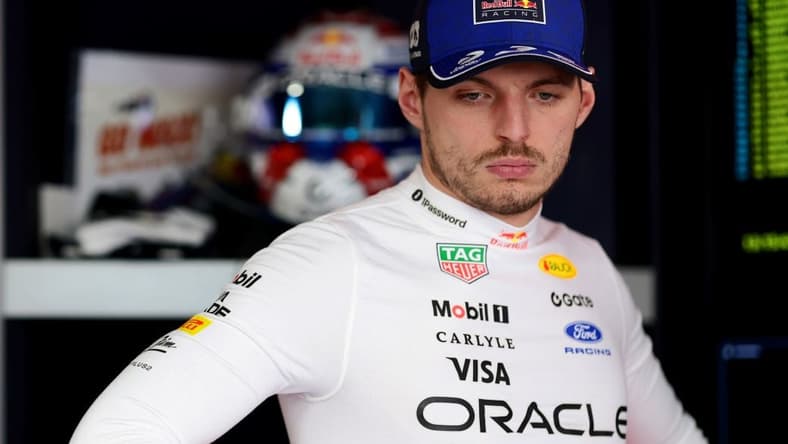
For four years, asking “what happens if Verstappen loses” was theoretical. A fun exercise. Something you’d debate on a podcast or in a comment section.
It’s not theoretical anymore.
Three races into 2026, ahead of this weekend’s Miami Grand Prix, the four-time world champion sits ninth in the drivers’ championship with 14 points. Red Bull is sixth in the constructors’ standings — behind Haas and Alpine. Verstappen crashed out of qualifying in Australia, retired in China and managed a sixth in Japan while complaining about the car the entire time. His teammate, rookie Isack Hadjar, is outscoring him.
The man who won four consecutive championships has gone from the best driver on the grid to someone stuck behind a Haas in a spec series he describes as feeling like “Formula E on steroids.”
The New Reality for Max Verstappen at Red Bull
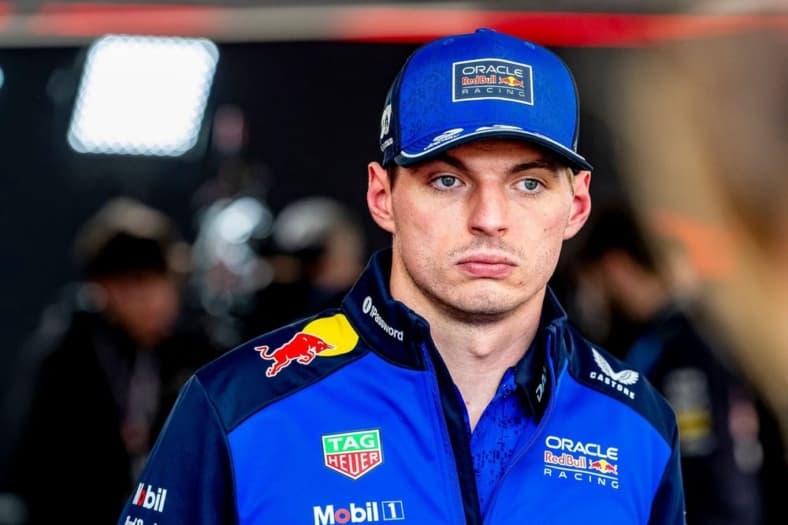
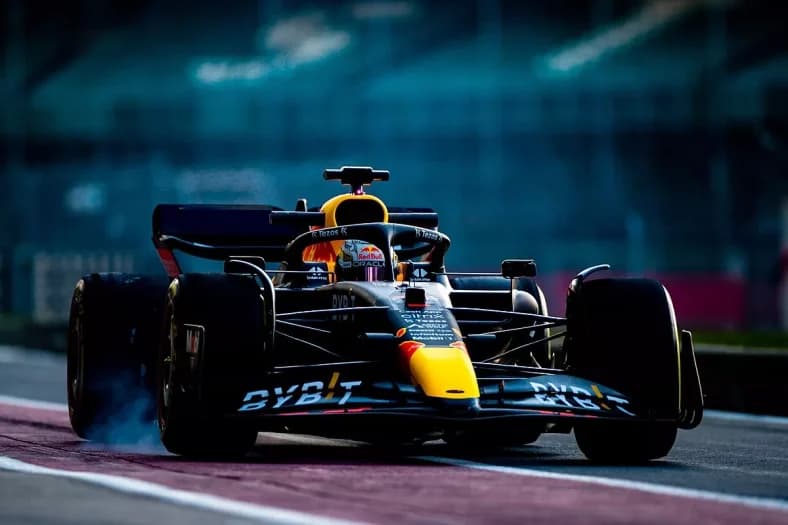
The problem is the car. That’s important to say clearly, as this isn’t a Verstappen performance issue. He’s ninth because the RB22 is nowhere near where it needs to be.
Red Bull built their own power unit in partnership with Ford for 2026. That was the gamble. The ambition was to control their own destiny rather than rely on a supplier. The reality is that developing a competitive Formula 1 power unit from scratch, simultaneously with a new chassis under completely new regulations, while also losing key technical figures like Adrian Newey and Jonathan Wheatley, was always going to carry massive risk.
The risk is materializing on track every Sunday.
The qualifying gap to pole position grew from 0.785 seconds in Australia to 0.938 in China to 1.2 full seconds in Japan. That’s not an anomaly. That’s a trend. Red Bull team principal Laurent Mekies acknowledged the team has “significant shortcomings” and that the problems aren’t fully understood yet. Verstappen was equally direct: “I never saw myself even close to Mercedes or Ferrari. But this weekend has been particularly bad.”
The start of the race is a specific disaster. Under the new 2026 regulations, drivers must rev their engines at high RPM for 10 seconds before the lights go out to spool up the turbo while also managing battery reserves from the formation lap. Verstappen has botched every start this season. In Australia, he cited “no battery.” In China, it happened again. The team hasn’t fixed it.
Related Story: 5 Storylines to Watch at the 2026 Formula 1 Miami Grand Prix
This Has Happened Before But It Looked Different
Every dominant driver in Formula 1 history eventually faces a moment where the car stops carrying them. Michael Schumacher had it at Ferrari after 2004 — his last championship — when the sport’s regulations reset and the team couldn’t keep pace. Lewis Hamilton had a version of it in 2025, though that was more driver adaptation than pure machinery. The sport is cyclical. Regulations change. Hierarchies reset.
What makes Verstappen’s situation different is how fast the fall has been and how deep it is.
Schumacher’s decline at Ferrari was gradual, including competitive seasons that slowly yielded to Renault and then McLaren. When Hamilton struggled at Ferrari in 2025, he never dropped out of the mid-table. Verstappen is ninth. He is behind teams that were fighting to stay in the midfield last year. Three races in, he has 14 points. Hamilton, in his worst season, had more than this through three rounds.
The other difference is the structural chaos around Red Bull. Newey is gone. Wheatley is gone. Now Gianpiero Lambiase, Verstappen’s race engineer since 2016, the man on the other end of the radio during all four championships, has agreed to join McLaren in 2028. The dynasty isn’t just struggling. It’s actively being dismantled around its most important asset.
What Red Bull Does Between Now and Canada
The five-week gap between Japan and Miami was Red Bull’s window to work. Mekies was clear about what that meant: simulator time, data analysis, trying to understand why the car loses performance in certain corner speeds and conditions that can’t be explained by set-up alone.
They’re expected to arrive in Miami with some incremental improvements. Not a fix. Improvements. The gap to Mercedes is still estimated internally to be around 1 second in qualifying. Closing that in five weeks isn’t realistic. Getting the car into a more predictable operating window and fixing the start procedure is.
The realistic timeline for Red Bull being genuinely competitive is mid-season. They came back strongly last year with a mid-season upgrade package that nearly gave Verstappen a fifth title. The infrastructure to do that again exists. But the starting point this year is deeper in the hole, and the hole has more layers to it — power unit, chassis, aerodynamics, and now morale.
Red Bull need to at least get ahead of Haas and Alpine before they can worry about Ferrari or McLaren. That’s a different problem than they’ve faced in a long time.
The Bigger Question Nobody Wants to Ask About Verstappen
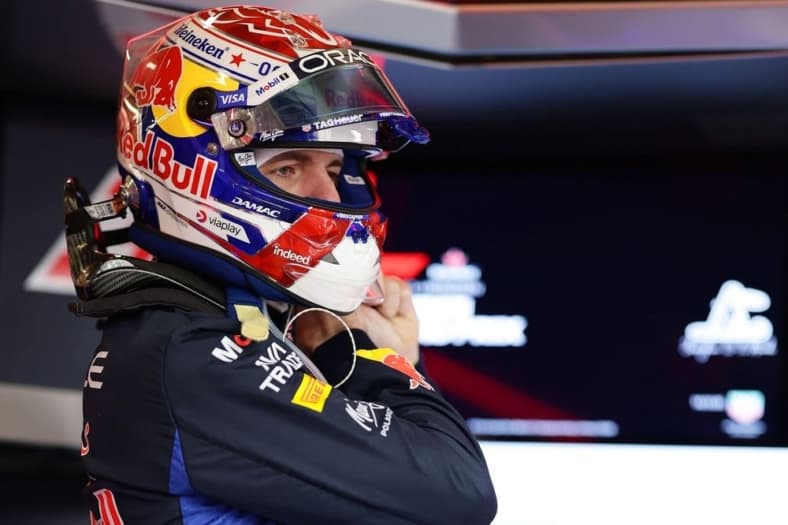
Verstappen has a contract with Red Bull through 2028. It includes performance clauses. Reports indicate those clauses would allow him to depart earlier, given Red Bull’s struggles this season, meaning he would likely be in a position to make an exit if he wants to.
He said in 2023 that the day Lambiase stops being his race engineer would be the day he’d be ready for something new. Lambiase is leaving. Verstappen has spent the first three races of 2026 complaining about regulations, driving a car he hates and watching his engineer pack his bags for McLaren.
McLaren CEO Zak Brown has already backed Verstappen to join Mercedes if he were to leave Red Bull after the 2026 season. Not McLaren — Brown is happy with Norris and Piastri — but Mercedes, post-Hamilton, post-Russell, is a possibility that’s being discussed openly in the paddock.
At what point does “Verstappen in a down year” become “Verstappen deciding his F1 story is finished”? He’s already competing in GT3. He did the Nurburgring 24-hour qualifiers during the April break. There’s a version of the next two years in which the regulations get fixed, Red Bull returns to competitiveness, and Verstappen adds a fifth title before Lambiase leaves. That version exists.
There’s also a version in which none of that happens, and Verstappen, who has always been clear that he races on his own terms, decides the equation no longer makes sense.
What to Expect From Max at the Miami Grand Prix

Verstappen won the Miami Grand Prix in 2022 and 2023. Back-to-back. He knows this circuit better than almost anyone. The layout, the tire degradation and late-race management reward drivers who can look after their equipment over a long stint.
The new regulations take effect this weekend. If the start fix works, Verstappen immediately eliminates one of his three-race-old problems. If Red Bull found something in the simulator over five weeks, Miami is where it shows up.
He needs this race. Not for the championship, but for the narrative, for the team, and maybe most importantly for himself. A strong Miami weekend doesn’t fix Red Bull’s season. It does prove that the man inside the car isn’t the problem.
Four championships. The greatest sustained dominant stretch in the modern era. The best car and driver combination F1 has seen in a generation.
Miami will tell us if any of that still matters in 2026.