
 Scott Gulbransen
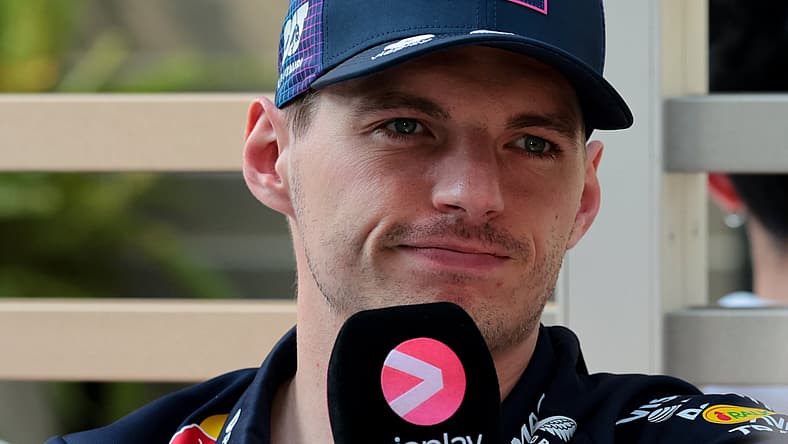
There’s a headline about Max Verstappen this week that no F1 reporter saw coming six months ago. The four-time defending world champion is seventh in the drivers’ championship. Seventh. He has 26 points. Kimi Antonelli, a 19-year-old who replaced Lewis Hamilton at Mercedes this year, has 100.
Now Verstappen gets Montreal, which historically has not been a track where Red Bull’s problems get smaller. They get bigger.
The Circuit Gilles Villeneuve is built around long straights, heavy braking zones, and a pair of slow chicanes leading into the Wall of Champions. Under the 2026 regulations, with the new active aero and the much more demanding energy-deployment system, every one of those features punishes a car that’s weak on power-unit performance or short on harvesting efficiency. That’s a brutal description of where Red Bull currently sits in its debut year as a full power unit constructor in partnership with Ford. The team’s DM01 engine, named for the late Red Bull founder Dietrich Mateschitz, is its first ever in-house build.
It’s not going well.
Red Bull’s Formula 1 Troubles and Impact on Verstappen
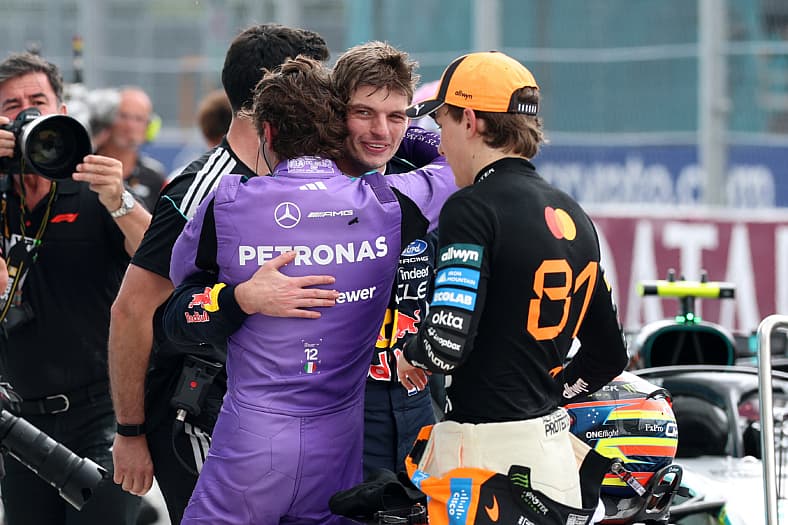
Red Bull has scored 30 constructors’ points in the first four races. Mercedes has 180. The team’s best finish all season is a fifth place for Verstappen in Miami, on a weekend where he qualified second but spun on the opening lap and ended up 40 seconds behind the race winner.
“Of course not,” Verstappen said in Miami when asked if the spin cost him a shot at the win. “I finished 40 seconds behind. A spin isn’t 40 seconds.”
That’s about as honest a self-assessment as you’ll hear from a driver in this sport.
Verstappen has been openly miserable about the 2026 rules since before the season started. He called them “a joke” after the Chinese Grand Prix. He’s compared the racing to “Mario Kart,” noting that drivers now have to manage battery deployment, often forcing them to lift and coast on straights. He’s said he wants F1 to make “significant” changes for 2027. And Verstappen has openly told Dutch outlet Viaplay that he needs the next several weeks and months to figure out what he actually wants from the rest of his career. There’s a release clause in his Red Bull contract that activates if he sits outside the top two in the standings after the Hungarian Grand Prix in late July, and given where he is right now, the math says he’ll have a decision to make.
Is Verstappen Focused on F1 or Other Interests?
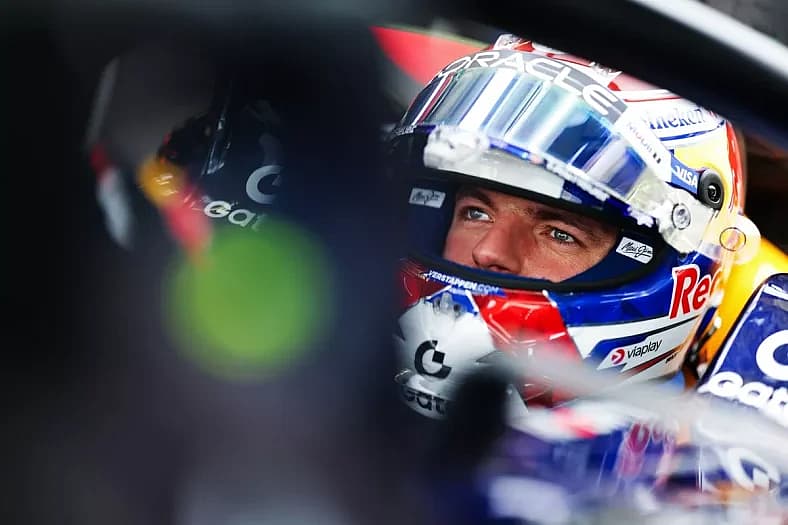
This is also why he keeps wandering off to other forms of racing. Last weekend, Max Verstappen made his Nurburgring 24 Hours debut in a Mercedes-AMG GT3, of all things, and was leading the race outright with a couple of hours to go before a driveshaft failure took his team out of contention. He has talked about Le Mans. He has talked about NASCAR. He has not said he is thrilled to drive the RB22 around Montreal.
Verstappen is the closest thing this sport has had to a generational dominator since the Schumacher years. He has 71 grand prix wins, the third most in F1 history. He won four straight world championships from 2021 to 2024. If he leaves the sport or even just continues to struggle through 2026, the entire competitive shape of F1 changes. The “next Schumacher” narrative goes away. The “Verstappen vs. the field” story goes away. What you’re seeing right now, the rise of Antonelli, the resurgence of Mercedes, the McLaren title defense, is a sport in the middle of changing eras in real time.
Montreal is where you find out how much of this is real and how much is just a bad Red Bull car.
Montreal and Verstappen’s History There
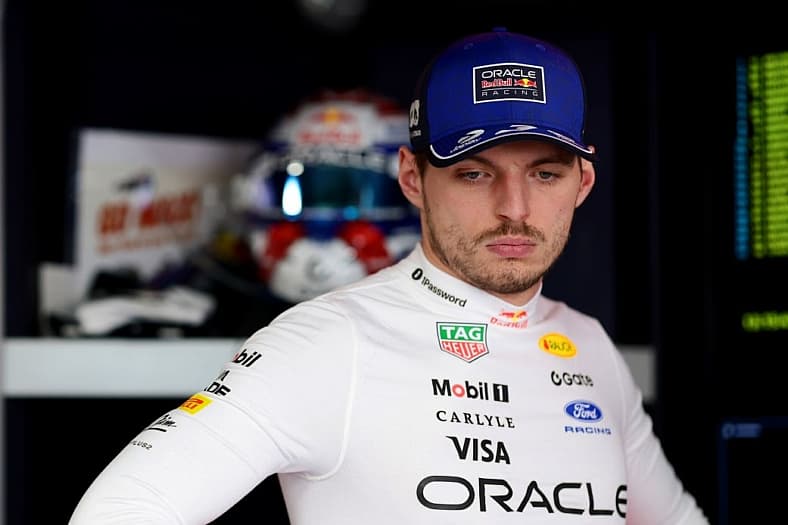
Verstappen has been very good at this track recently. He won three straight here from 2022 to 2024, becoming only the third driver to do so after Hamilton and Michael Schumacher. He likes the rhythm of the circuit. He likes the way it punishes other drivers’ mistakes. In years when his car has not been the absolute best, Montreal has historically been a place where he can drive around the problem.
But the 2026 regulations changed the math. Energy deployment matters more here than at most tracks on the calendar. The new Straight Mode aerodynamic system, which essentially flattens the wings on the long straights, rewards cars that can put down clean power through the deployment zones. Red Bull is not one of those cars right now. They have, by their own engineers’ admission, a chassis problem on top of the engine learning curve. The car is heavy. It loses grip in high-speed sections. Verstappen has spent qualifying sessions making constant steering corrections just to keep the thing pointed in the right direction.
There is, however, one path. If it rains in Montreal this weekend, and the forecast says it might, none of the above matters very much. Verstappen is one of the best wet-weather drivers in modern F1 history. The cooler conditions might also reduce some of the tire and energy management issues that have been killing Red Bull on Sundays. If qualifying gets weird, if a safety car comes out at the right moment, if a sprint race throws the order around, Verstappen suddenly becomes the most dangerous floater.
Helmut Marko, the longtime Red Bull adviser, said after Miami that he saw “light at the end of the tunnel” with the team’s Miami upgrade package. Whether that light is real or just the headlight of another freight train is answered this weekend.
Verstappen has said before that he doesn’t get frustrated for the sake of being frustrated. After Suzuka, where he finished eighth at one of his favorite circuits, he was asked how he was processing the whole situation. “I just waved at him when he came past me again,” he said, referring to Antonelli. “It’s not going the way it should, but getting frustrated about it all the time won’t help. I’m just trying to laugh about it.”
A four-time world champion, in a car he can’t push, waving as a teenager laps him.
Montreal is going to tell us if Max Verstappen has anything left to laugh about in 2026.