Scott Gulbransen
For the better part of six months, the story of the 2026 Formula 1 season wrote itself almost too neatly. Kimi Antonelli, 19 years old, impossibly poised, winning races in succession like he’d been doing it for a decade. He racked up five straight victories heading into Barcelona. Antonelli built a 68-point championship lead that felt less like a gap and more like a foregone conclusion. Then Lewis Hamilton drove a race car in Spain, and the script got torn up.
Hamilton won the Spanish Grand Prix at Barcelona-Catalunya on Sunday, ending a 686-day victory drought and claiming his first win in Ferrari red. He crossed the line nearly 20 seconds clear of George Russell, set the race’s fastest lap, and completed all 66 laps without a meaningful error. It was a dominant performance, which matters because it wasn’t supposed to be possible yet, not at this stage of the season, not against a Mercedes team that had won every race to that point.
The people who spent 2025 telling Hamilton he should retire are quiet today. They’ve earned the silence.
Lewis Hamilton’s Spanish GP Win Changes Everything
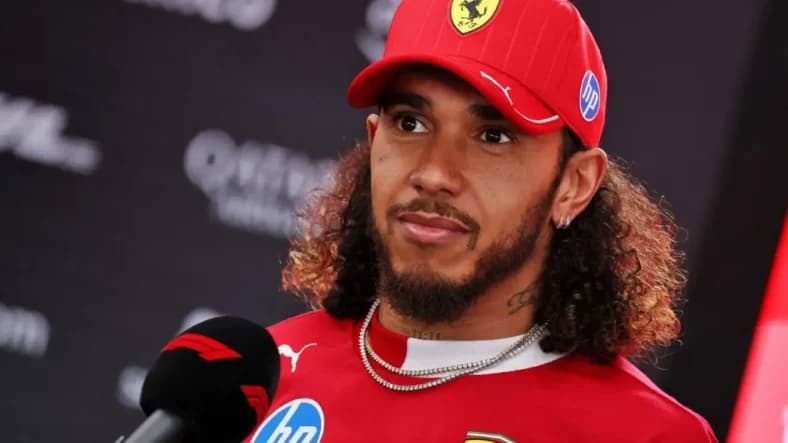
Antonelli’s championship lead dropped from 68 points to 41 after the Italian retired with engine failure three laps from the finish while running second. That’s a 27-point swing in a single afternoon. In a season with so many races remaining, 41 points is not a comfortable buffer. It’s an invitation.
The result carries more weight because of what surrounded it. Ferrari brought its most extensive upgrade package of the 2026 season to Barcelona, featuring comprehensive aerodynamic modifications including a revised floor concept, updated sidepods, and diffuser changes.
WATCH F1 LIVE: The 2026 Season is Just Underway, Don’t Miss the Action NOW on Apple TV!
Toto Wolff admitted afterward that the scale of Ferrari’s improvements exceeded Mercedes’ expectations, and noted that the Spanish circuit has traditionally been one of the most reliable benchmarks for evaluating true car competitiveness. When the man running the dominant team in the championship concedes that his rival made a significant step, you take it seriously.
Hamilton Helps Drive Ferrari Upgrades
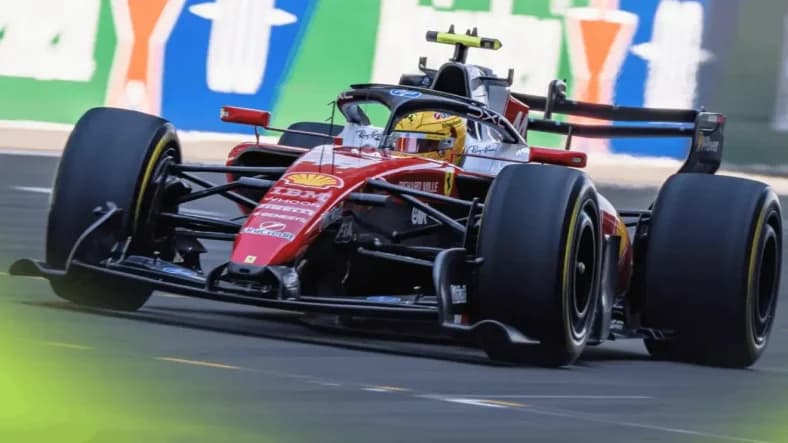
Hamilton himself had a hand in what arrived in Barcelona. He played an active role in the SF-26’s development, contributing through simulator work and detailed technical feedback, with several of his inputs implemented directly into the car. Ferrari principal Fred Vasseur gave him the space to do it, and former F1 driver Riccardo Patrese made the point plainly this week, speaking for BetBrothers in the UK.
“When you are a seven-time world champion with all his experience,” Patrese said, “it was crazy not to listen to Lewis and build the team around him.”
By his assessment, that’s exactly what’s happening now at Maranello, and the puzzle is coming together.
There may be more coming. Reports from the paddock indicate that an upcoming ADUO power unit upgrade could further elevate Ferrari’s competitiveness. If the aero package from Spain produced a front-row start and a commanding race win, the implications of additional engine performance are worth tracking closely over the next several rounds.
At 41, Hamilton became the oldest Formula 1 race winner since Jack Brabham in 1970. That number is often cited as a biographical footnote. It’s actually a statement about what sustained excellence at the highest level of motorsport looks like.
Patrese framed the championship picture this way: “It will definitely be very interesting to see the youngster against a 41-year-old ‘boy,’ because he is still a boy because of emotion.”
Hamilton’s Emotion and Challenges Returned His Edge in 2026
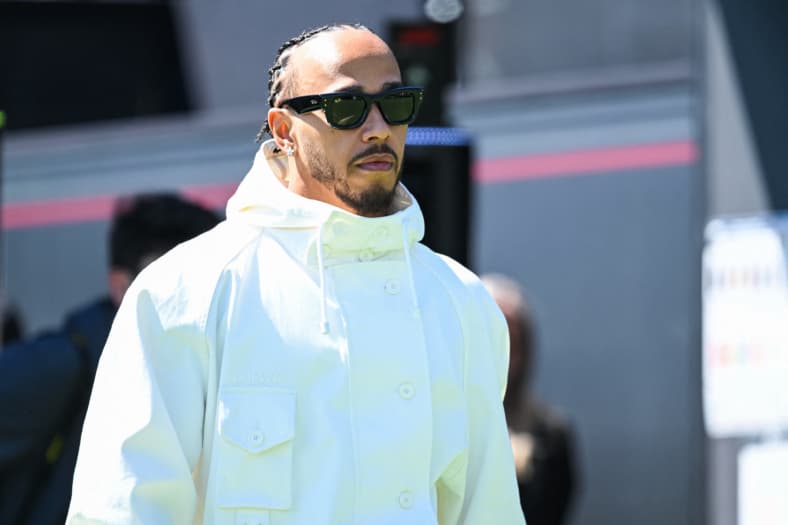
Watch the replay of Hamilton on that podium after his win last weekend in Barcelona. That reaction was not a performance. That was a man who had been through something difficult, coming out the other side of it.
Hamilton’s own words after the race reflected it.
“I started out with a dream last year which seemed almost impossible during my time last year,” he said, “but we never gave up hope and the team just continued to lift me up.”
On social media, he posted two words: “DREAM THE IMPOSSIBLE.”
Even Antonelli, who retired from the same race while running second, offered genuine congratulations.
“I’m very happy for Lewis because he’s been chasing that first win with Ferrari for so long,” the teenager said.
That’s a class response from the championship leader, who also watched his advantage get nearly cut in half in the process.
The math is manageable. A gap of 41 points over the remaining rounds requires roughly a race and a half worth of net swing. That’s the kind of movement that happens when a developing car keeps improving and reliability starts costing the leader points. Wolff acknowledged after Barcelona that Mercedes “will need to improve reliability if we are to fight for both World Championships.” That’s not a throwaway comment. That’s the other side of the equation.
Patrese, someone who has watched Formula 1 from the inside for decades, put the title picture honestly.
“I really don’t know who the winner will be,” he said. “I am torn between the two of them.”
That’s not diplomacy. That’s a genuine assessment from someone who knows what a real championship fight looks like.
Nobody expected this in February. The narrative was supposed to be a generational transition, with the sport moving on, a 41-year-old making a graceful farewell tour in Italian red before the Antonelli era took hold. Instead, Hamilton won the race and he’s second in the championship. The SF-26 is still being upgraded and the season just got genuinely interesting.
Related: Lewis Hamilton Survived His Ferrari Nightmare. Now Comes the Hard Part