Farah Ben Gamra
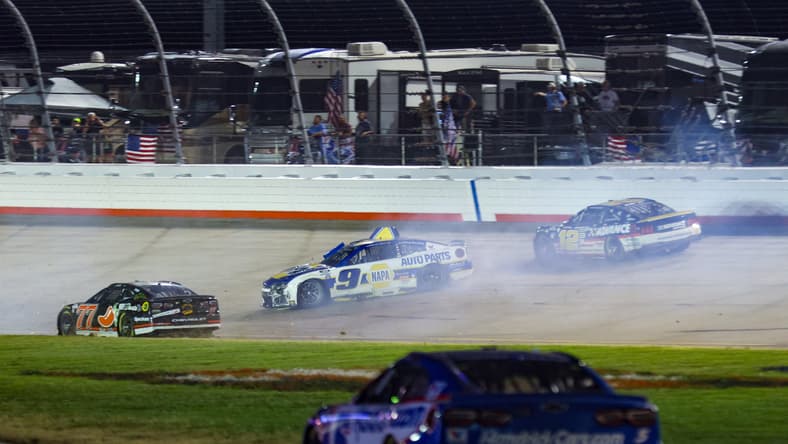
Dale Earnhardt Jr. is sounding the alarm after the brake issues that hit Nashville Superspeedway, suggesting things could get even worse when NASCAR heads to World Wide Technology Raceway for the Enjoy Illinois 300.
Multiple right-front rotor failures already disrupted the Nashville race. But Earnhardt Jr. believes that what happened in Nashville exposed how the 2026 technical package has pushed teams into extreme and opposite engineering directions, with brake systems now sitting right at the limit of what the Next Gen car can handle.
Now it’s about how differently teams are approaching brake cooling. That split, he thinks, could create bigger problems at Gateway.
Teams are no longer working within a narrow setup window. Instead, the garage is basically divided into 2 extremes and inside the garage, that kind of spread usually signals one thing: the margin for error is getting smaller.
Earnhardt Jr. said the difference stood out immediately when he looked at the cars:
“I was looking at all the teams’ brake ducts and man, they’re all so different. Typically everybody’s kind of close. Guy might have a little more opening, less than the others, but not vast differences, right? A lot of Fords were sealed solid, and a lot of Chevrolets solid. 75% of the garage didn’t have any opening,” Dale Jr. said.
So basically, one large group has gone with tightly sealed brake ducts. The thinking is: keep heat in the system, because some setups struggle to maintain proper brake temperature. The trade-off, though, is that once temperatures climb, there’s very little room left before components start to fail.
The other side has gone the opposite direction, running much more open ducts to push airflow through and keep everything cool. That approach helps with temperature control, but it creates its own problem: brakes that cool too quickly on long straights before being hit with heavy load again in the braking zones.
He also pointed to what he saw during the race itself, where some components were pushed right to the edge. Several glowing front-right rotor under braking was one of the clearest warning signs that things are already tight.
Dale Earnhardt Jr. on why Gateway could be even tougher on brakes
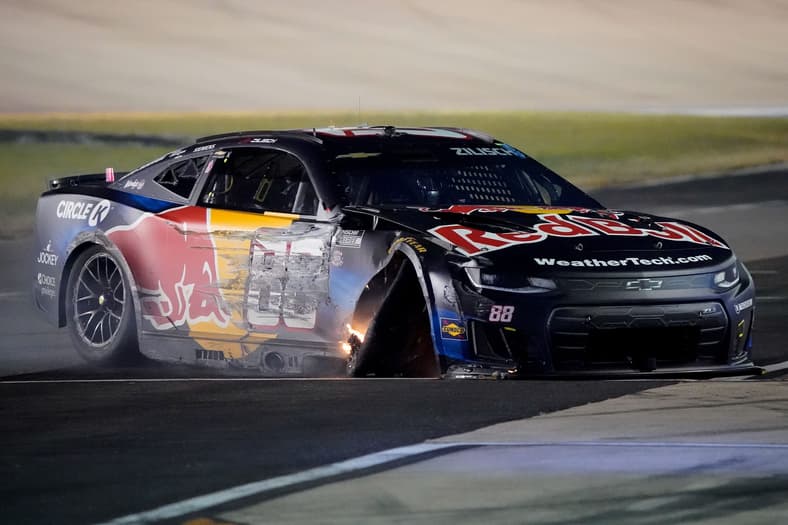
Gateway is where Earnhardt Jr. thinks this all gets riskier. The track has a very specific rhythm with long straights into tight, heavy braking zones. That combination is exactly what stresses modern brake systems the most.
From a technical point of view, the issue isn’t just heat, it’s the constant swing between extremes. Rotors cool rapidly on the straights, then get slammed with maximum braking force seconds later. That cycle repeats lap after lap, and over time it creates structural fatigue inside the brake material itself.
On the straights, airflow drops temperatures fast. Then drivers hit heavy braking zones and everything spikes again. That back-and-forth creates serious stress inside the brake system, especially with the Next Gen rotors.
Here is what Earnhardt Jr. expects in St. Louis:
“Mark this down. St. Louis, we run the same package. St. Louis is harder on brakes than Nashville. St. Louis, you’re gonna have some guys that fail.”
Teams are already split between sealing brake ducts and running them wide open. Earnhardt Jr. believes Gateway could punish any small mistake. And in a race like this, one wrong call on cooling might be all it takes to end a day early.