

 Lou Orlando
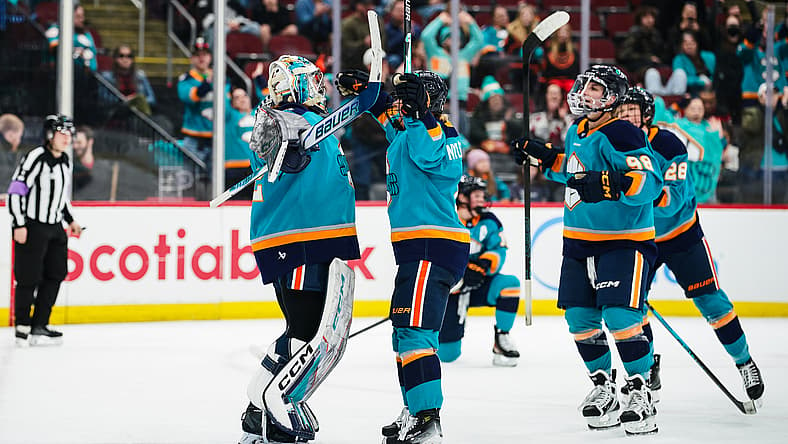
Phase 2 of the PWHL’s 2026 expansion process was not kind to the New York Sirens. Four players from their 2025-26 roster agreed to deals with expansion teams during the four-day expansion team foundational signing period, tying the Seattle Torrent for the most departures across the League.
Starting goalie Kayle Osborne was the first to go, signing a three-year standard player agreement Friday with PWHL Hamilton. Free agent center Kristin O’Neill and rookie forward Anne Cherkowski followed Saturday, both inking deals with PWHL San Jose. Rookie winger Maddi Wheeler joined them Monday as San Jose’s fifth and final addition in Phase 2.
New York had Osborne and Cherkowski under contract through 2027-28 and held the contract rights to Wheeler, who entered the offseason as a restricted free agent. The Sirens were one of three teams to lose three players under contract, the maximum allowed in Phase 2.
Osborne’s departure hardly came as a surprise. New York was the only existing team that did not protect a goaltender in Phase 1, instead retaining star forward Sarah Fillier and rookie standouts Kristyna Kaltounkova (No. 1 overall) and Casey O’Brien (No. 3 overall).
“They protected three really quality players,” Osborne told Karissa Donkin of CBC Sports. “I definitely understood that. But I think then at that point, I was kind of grasping that this is a new chapter, it’s a new opportunity, and then with that came excitement.”
The 24-year-old Olympian was widely considered one of the top goalies available and became the first to sign with an expansion team in 2026. She’ll return to her home province of Ontario to play for Coach of the Year finalist Kris Sparre, who guided the Boston Fleet to a share of first place in 2025-26.
It leaves a gigantic hole for New York to fill — a risk general manager Pascal Daoust was willing to take in order to protect his three franchise forwards. But it’s far from the only area that needs addressing after Phase 2.
The Sirens now have three vacancies in their top six after O’Neill, Cherkowski, and Wheeler signed with San Jose. O’Neill spent the 2025-26 season as New York’s second-line center, winning faceoffs at a 54.8 percent clip (ninth-best Leaguewide) and contributing on both the power play and penalty kill. An ultra-reliable defender, coach Greg Fargo leaned on her heavily against the opponent’s top line.
San Jose listed O’Neill as its top choice for an expansion foundational offer (EFO), a binding contract that players on expiring contracts cannot decline. The 28-year-old expressed excitement about reuniting with coach Troy Ryan after playing under him internationally with Team Canada.
Cherkowski (No. 9 overall) and Wheeler (No. 27 overall) were key components of a rookie class that led the PWHL with 28 goals and 62 points. Puck luck rarely favored Cherkowski, but the 23-year-old consistently generated quality scoring chances and looks poised for a breakout campaign in 2026-27. Wheeler, meanwhile, emerged as one of the biggest steals of the 2025 PWHL Draft. The two-time NCAA national champion finished fourth in the League with 51 hits and ranked fifth on the Sirens with 10 points (three goals, seven assists). Her dependable 200-foot game made her a seamless fit in New York’s system — and one of the more painful losses of the expansion process.
The Sirens can only lose one more contracted player for the remainder of the 2026 expansion process. That doesn’t make the ensuing days any easier, though. New York has plenty of decisions to make and little time to weigh them.
Phase 3 begins Wednesday at noon EST, allowing expansion teams to sign up to three players on expiring contracts. Existing clubs must submit an additional three-player protection list by 5 p.m. EST on Friday, bringing their total number of protected players to six.
Sirens must prioritize Maja Nylen Persson, D-Corps in Phase 3
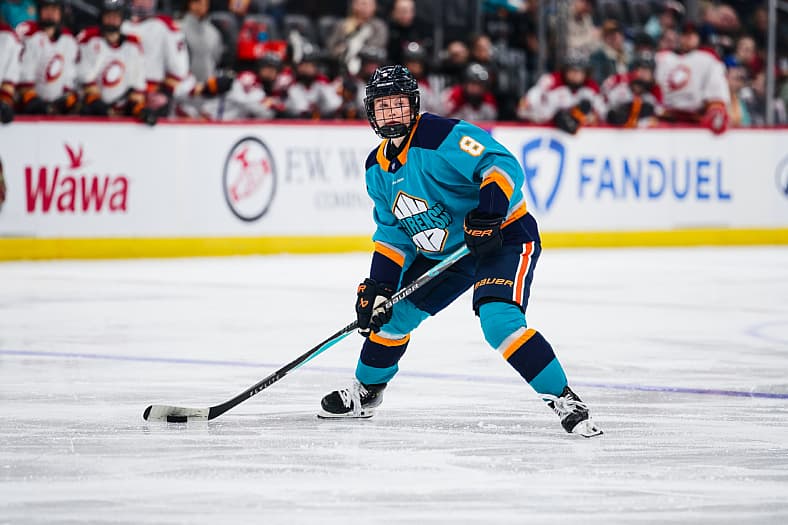
Despite major losses at both forward and goalie, New York can take solace in a completely unscathed defensive corps. The Sirens have four defenders under contract in 2026-27 — Micah Zandee-Hart, Jaime Bourbonnais, Maja Nylen Persson, and Allyson Simpson — and also hold the rights to rookie Dayle Ross. All five survived Phase 2 untouched. After protecting three forwards in Phase 1, New York would be wise to prioritize defense this time around.
The easiest decision the Sirens can make is protecting Nylen Persson — and all signs point to them doing just that. Last summer, Daoust used his fourth protection slot on the young Swedish defender, opting to retain her over notable names like Jessie Eldridge, Abby Roque, and Bourbonnais. One year later, there’s little reason to believe the organization views her any differently.
Nylen Persson was New York’s most impactful defender last season, leading the team in ice time and quarterbacking the top power-play unit. Her two goals and 11 points paced the blue line, and with just two PWHL seasons under her belt, she’s already one of the club’s most important building blocks. New York can’t afford to lose its best puck-mover on the backend, let alone a top-pair D capable of handling the toughest assignments.
Given her $54,000 cap hit in 2025-26, the Sirens should be thrilled Nylen Persson emerged from Phase 2 without a new deal. Protecting her in Phase 3 is about as close to a layup as you’ll find in this League.
As for Zandee-Hart, Simpson, and Bourbonnais, all are worth considering for the remaining two slots.
Of the three, Zandee-Hart seems most likely to be featured on the list. Daoust made the 29-year-old one of his first three protections last offseason and heralded her as a foundational piece of the organization’s long-term vision. Her cap hit could discourage interest from expansion teams looking to stay near the required League average ($60,099.99) in 2026-27, but New York might not be willing to take any chances with such an important asset.
Bourbonnais carries similar importance within the Sirens’ locker room as one of just four players to don teal, navy, and orange for all three seasons of the franchise’s existence. Named an alternate captain ahead of the 2025-26 season, she remains a staple on the power play and one of the blue line’s more reliable offensive contributors. Simpson, however, may be the more attractive option for expansion teams. At 25, the former No. 16 overall pick is younger and cheaper than her defensive partner, Bourbonnais, while still offering plenty of top-four experience.
If New York goes the three-defender route, Simpson is likely the best choice for the third slot. It’s hard to envision Bourbonnais willingly going elsewhere, even if the possibility of playing closer to home in Hamilton could hold some appeal. She’ll still be vulnerable if a selection process is triggered, but the 27-year-old largely controls her fate this offseason.
Could Sirens use protection slot to cement forward depth?
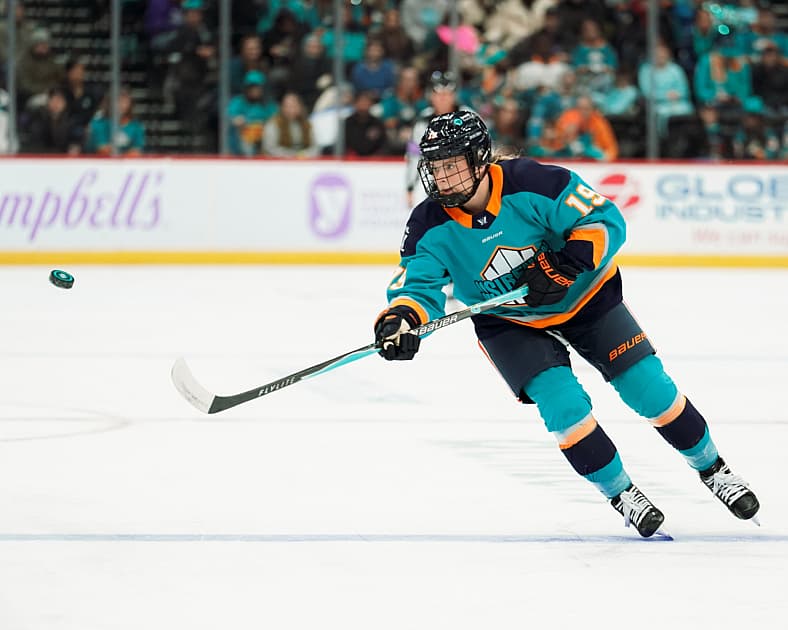
New York will almost certainly protect at least one defender in Phase 3 — if not more. But the Sirens may need to dedicate one of their remaining slots to an increasingly thin forward group.
Star power isn’t an issue with Fillier, Kaltounkova, and O’Brien under control in 2026-27, but the top six is markedly weaker after significant departures in Phase 2. Cherkowski and Wheeler were two of New York’s best secondary scorers. O’Neill’s impact, both defensively and in the faceoff dot, won’t be easily replicated.
The Sirens don’t have many top-six caliber forwards left to protect, though one jumps out as a potential option.
Paetyn Levis makes a lot of sense for a team looking to maintain its tenacious identity. One of New York’s most reliable defensive forwards, she routinely joined O’Neill on the penalty kill, forming the team’s top shorthanded tandem. Levis also showed signs of offensive growth in her third PWHL season, setting career highs with five goals and 10 points to finish fifth in team scoring.
The 26-year-old made $44,500 in 2025-26 and remains under contract through next season, making her a realistic target for any expansion team looking to be more economical in Phase 4. New York can only lose one more contracted player, so perhaps they roll the dice and leave Levis unprotected — but they won’t be eager to lose such a versatile piece.
The Sirens could also consider players on expiring deals like Denisa Křížová or Taylor Girard. Křížová, acquired at the 2026 PWHL trade deadline, is a strong fit for New York’s system and a welcome veteran addition to the League’s youngest roster. Girard’s scoring touch was a major boost in 2025-26 and will be even more important now that Cherkowski and Wheeler have signed in San Jose.
As unrestricted free agents (UFAs), both Křížová and Girard would have to sign a deal by 3 p.m. EST on Friday to qualify for Phase 3 protection. That outcome doesn’t feel particularly likely, especially given Girard’s season-ending knee injury. The Sirens expressed interest in bringing both forwards back for the 2026-27 season, but the exclusive team re-signing period in Phase 5 is a more realistic timeline for those talks to be resolved.
No goalies worth protecting after Nicole Hensley signs in Las Vegas
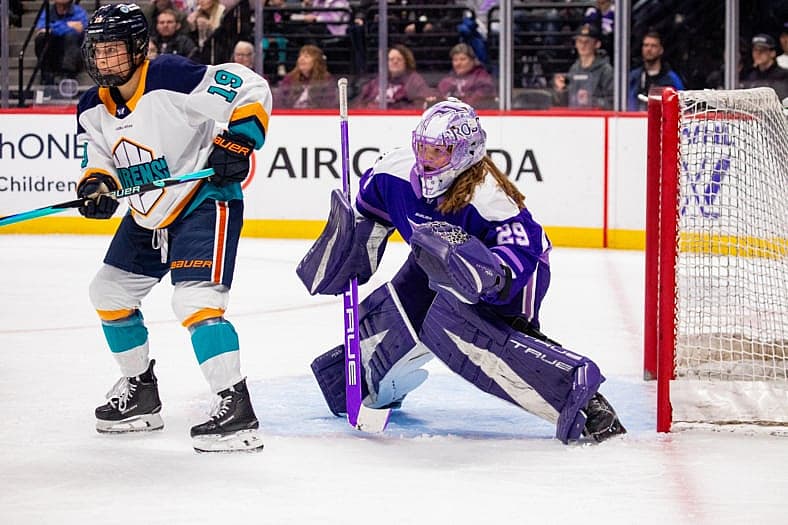
A unique wrinkle in the PWHL’s 2026 expansion process is that existing teams can protect any player on an expiring contract, provided they sign them during one of the designated protection windows.
Entering Phase 3, Nicole Hensley seemed like an enticing option for the Sirens to pursue. The 31-year-old was virtually the only free-agent goalie with legitimate starting experience over the last three seasons — and could have filled a glaring need for a New York team that lost its starting goalie in Phase 2.
That window closed quickly, as Hensley signed a two-year deal Wednesday with PWHL Las Vegas following three seasons with the Minnesota Frost.
Signing and protecting a goalie in Phase 3 didn’t feel like a particularly likely outcome for New York anyway, but with the two-time Walter Cup champion off the board, the option is almost certainly off the table.
Other notable free-agent goalies include Sandra Abstreiter and Elaine Chuli, who played a combined 13 games in 2025-26. The Sirens’ best bet is to protect three quality skaters in Phase 3 and target a goalie early in the 2026 PWHL Draft, scheduled for June 17.