

 Marc Dumont
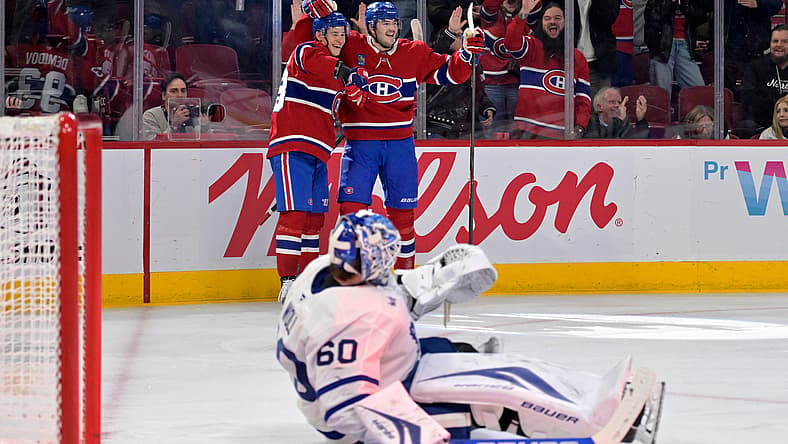
While the Montreal Canadiens continue to find success, their longtime rivals, the Toronto Maple Leafs, have finally admitted their Stanley Cup window has slammed shut.
With that in mind, let’s take a look at some of the lessons the Canadiens should remember as the Maple Leafs attempt to identify what went wrong.
1 – It’s A Long Way To The Top If You Want To Rock And Roll
There’s no fool-proof recipe when it comes to building a Stanley Cup contending roster, and the best laid schemes of mice and men often go awry.
Take the Washington Capitals, for example.
Even with the best goalscorer in NHL history in the lineup, it took them two years to qualify for the playoffs. And once Alex Ovechkin got his first taste of springtime hockey, it took him and the Capitals 11 years to finally capture the Stanley Cup.
That’s 12 years of disappointment, a heavy price to pay for any fan base.
In fact, many of the best teams in NHL history have failed miserably in their respective playoff pushes. The Boston Bruins produced the most points in league history in 2022-23, with 135, and yet, they were eliminated by the Florida Panthers in the first round. The Tampa Bay Lightning secured 128 points in 2018-19, the third-highest haul in NHL history. They were unceremoniously eliminated in the first round in four straight games by the Columbus Blue Jackets.
The Maple Leafs never made it out of the second round, failing to win two consecutive series for nine years, which eventually led to them removing talented players from the mix in exchange for more truculence, a recipe that slowly yet surely distanced them from the ultimate prize.
The lesson in this case is that convincing passionate fan bases like those in Montreal and Toronto to show a little more patience isn’t always easy.
Simply put, winning a Stanley Cup is incredibly difficult, and some of the greatest legends in league history have failed to lift hockey’s Holy Grail.
2 – Asset Management
While there’s certainly some logic involved in trading future assets for NHL-ready players, a trend that was popularized by the Lightning, there must be some semblance of asset management in place.
The Leafs have traded several of their first-round picks, with very little long-term value in the return. Spending a first-round pick on a defensive defenceman such as Brandon Carlo, while only convincing the Bruins to offer top-5 pick protection, is the epitome of a high-risk, low-return type of deal.
Why is the Brandon Carlo draft pick to Boston only top-five protected?
— luke fox (@lukefoxjukebox) March 6, 2026
Brad Treliving: "Because that's what we had to do to get the deal done last year."
How hard did you push for top-10?
"We pushed."
Another good example of wasted assets was the acquisition of Scott Laughton. The Leafs once again used a first-round pick to get the deal done, and while Laughton did provide the team with more energy than most of his teammates, he was eventually dealt to the Los Angeles Kings at the NHL Trade Deadline in exchange for a conditional third-round pick.
It’s easy to criticize with the power of hindsight, though I’d argue both deals were rather easy to criticize in a contemporary setting as well.
The Canadiens have already moved some of their first-round picks, including the deal that landed Noah Dobson, however, they ensured he’d be with the team throughout his prime, and he fit the ideal age group of the rest of the core players.
Adding players can be great, and moving first-round picks is fine, as long as deals stick to the vision put in place by management.
3 – Having A Plan, Sticking To It
Speaking of vision, it’s quite apparent the Maple Leafs struggled to establish a long-term vision with their group of talented players. Having a blind spot big enough for two divisional rivals should be considered a hockey sin.
You could even argue that it’s still an issue, based on Keith Pelley’s recent press conference.
Thoughts on Pelley presser:
— Bryan Hayes (@HayesTSN) March 31, 2026
1) they still don’t have a vision. No firm hired, no hierarchy determined. Doesn’t mean they won’t get this right, but they’re winging it right now.
2) Pelley just told the prospective GM’s he doesn’t want to hear about scorched earth rebuild.
Fortunately for the Canadiens, sticking to the plan is the name of the game in Montreal, but the pressure will eventually mount.
At that point, the temptation of deviating from the plan will come into play, and it will be up to Kent Hughes and Company to stay true to their original vision.
4 – Scoring Is Fun, Defending Is Crucial
The Canadiens, much like the Leafs, love to score goals, but it’s fair to say defending usually takes a backseat when it comes to their on-ice strategy.
Having decent goaltenders can help mask the problem, but it doesn’t address the root of the issue.
Kent Wilson, a former Calgary Flames analyst, put it best.
“Blocking shots is like killing rats. Doing it is preferable to not, but if you’re doing it all the time it suggests you have bigger problems.”
The Canadiens block a lot of shots because they allow a lot of shots, a situation that risks being exposed in a seven-game series.
Other than the first line of Juraj Slafkovsky, Nick Suzuki, and Cole Caufield, most Canadiens lines have a hard time outshooting their opponents. As for the defencemen, they also tend to be outshot, with the exception of Lane Hutson and Adam Engstrom.
The Habs are one of the most entertaining teams in the league, and they have an affinity for late game comebacks, but that’s a symptom of a greater issue that has plagued them for several years.
As the adage goes, defence wins championships.
5 – Keep The Pipeline Flowing
The Leafs did a good job putting together a relatively strong lineup, however, you’d be hard-pressed to argue they supported their lineup with a constant stream of young, talented players.
Trading first-round picks like candy was part of the problem, and there were some highlights, such as Matthew Knies, but for the most part, the Leafs had to pay a high price to add mediocre players to the lineup.
Having prospects such as Michael Hage, Alexander Zharovsky, and L.J. Mooney up front, not to mention Bryce Pickford, Adam Engstrom, and David Reinbacher on the blue line, should mitigate this concern to a certain extent, but it cannot sustain the team for 10 or more years, especially if the draft picks start to dry up.
A healthy balance between drafting and using draft picks to improve the NHL roster is always in order.