
 Matt Johnson
In the weeks leading up to the 2026 NFL Draft, one of the most popular picks is the Tennessee Titans taking All-American running back Jeremiyah Love with the fourth overall pick. It would be a massive mistake by the franchise.
Love isn’t just the best running back in this class; he’s arguably the best prospect in the 2026 NFL Draft and might be even better than recent top picks like Ashton Jeanty and Jahmyr Gibbs. However, as the Las Vegas Raiders and Detroit Lions have proven, landing spot is paramount in dictating just how impactful an elite talent at the running back position can be.
Related: 2026 Dynasty Positional Rankings, including Jeremiyah Love
The Case Studies: How Surroundings Impacted Jahmyr Gibbs, Ashton Jeanty
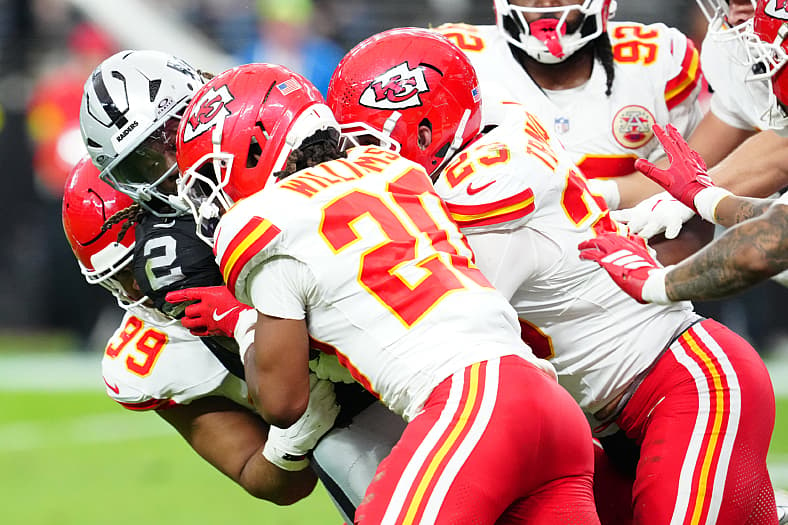
In Gibbs’ case, he landed in the perfect situation. Detroit put him behind one of the best offensive lines in football with an offense that had a running back in David Montgomery who perfectly complemented his skill set. Detroit also boasted arguably one of the three best offensive play-callers in the NFL (Ben Johnson) with a diverse group of pass-catchers to go with it.
The end result is Gibbs ranking first among all players from the 2023 NFL Draft class in Pro Football Reference’s Weighted Career Approximate Value, earning three Pro Bowl selections with 5,029 scrimmage yards and 49 total touchdowns in 49 regular-season games.
Now let’s compare that to the situation Jeanty was thrust into after being selected with the sixth overall pick in the 2025 NFL Draft. Injuries and inept coaching from offensive line coach Brennan Carroll played a major role in the Raiders’ offensive line ending last season ranked 22nd in ESPN run-block win rate (70.4 percent) with the second-lowest yards before contact per RB rush (0.6) allowed and the highest rush stuff rate in the NFL.
Jeanty finished his rookie season with the seventh-most carries (266) and the sixth-most touches (321) in the NFL. Because he was stuck behind one of the league’s worst offensive lines without a competent play-caller or weapons to take attention off him, Jeanty finished 21st in scrimmage yards (1,321), 52nd in yards per touch (4.1) and 63rd in PlayerProfiler‘s true yards per carry (3.5).
Environment Matters: Examining Tennessee’s Supporting Cast for Jeremiyah Love
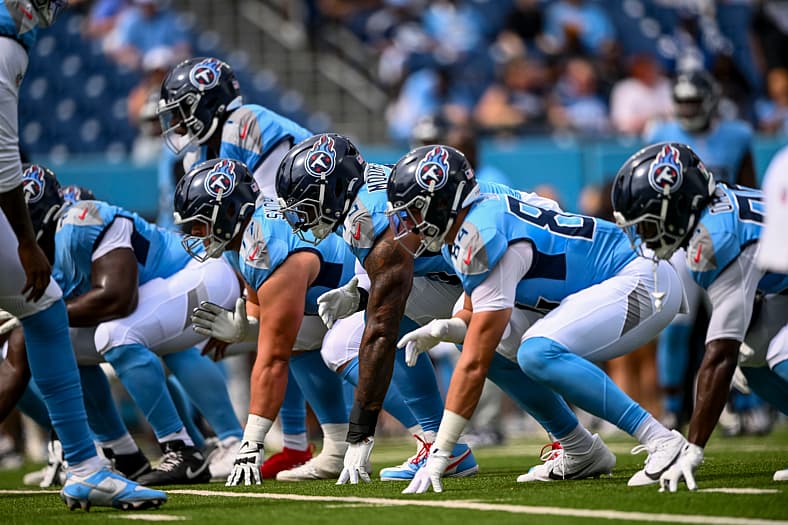
Jeremiyah Love would not be walking into a great situation in Tennessee. We’ll start up front with a Titans offensive line that ranked 26th in ESPN run-block win rate (70 percent), 22nd in yards before contact per RB rush (1.2), and 12th in rush stuff rate (15.9 percent).
Is it better than the Raiders’ offensive line? Yes, but that’s an extraordinarily low bar to clear. We can also acknowledge that Tennessee fared better in the trenches after firing offensive line coach Bill Callahan, but this is still a well below-average line.
That in itself doesn’t bode well for Love. To make matters worse, the top Titans receivers next season are poised to be Wan’Dale Robinson, Calvin Ridley, and Elic Ayomanor. Robinson, standing at 5-foot-8, can’t block; Ridley looked sluggish even before his broken fibula in November, and there isn’t a dangerous vertical threat safeties have to respect, let alone a true No. 1 receiver in Tennessee. Why does that matter? Because Titans running back Tony Pollard faced the seventh-highest stacked front carry rate (14.5 percent) and his 58.7 percent light front carry rate ranked 26th among running backs.
Love will have a promising but still unproven quarterback in Cam Ward and a play-caller in Brian Daboll, who oversaw a New York Giants offense from 2022-25 that ranked 19th in Rush EPA per Play (-0.086) and 22nd in Rush Success Rate (39.1%), per RBSDM.com.
Love wouldn’t even have a Montgomery-like running back to be paired with him, as Pollard doesn’t bring complementary skills to the table. We’re not attempting to knock Love’s talent, but the Titans can’t maximize him.
Opportunity Cost: Why Contract and Positional Value Trumps BPA
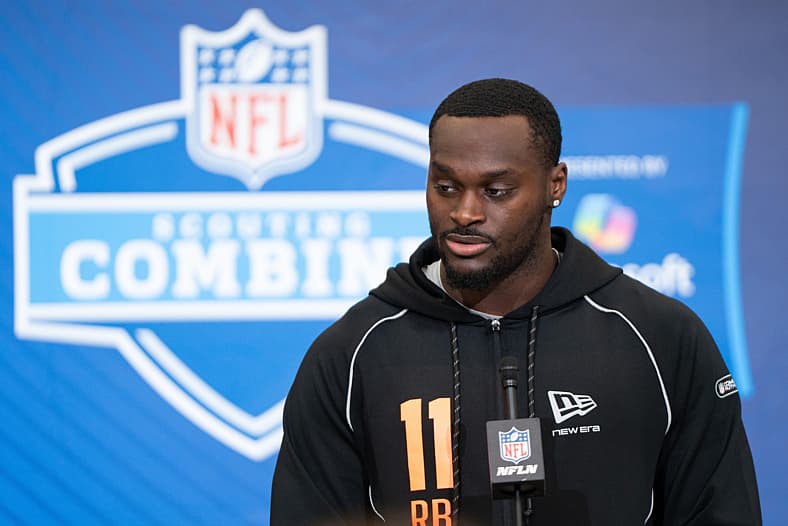
It’s certainly very possible that Love is rated by multiple teams, including the Titans, as the best prospect in the 2026 NFL Draft class. However, positional values matter, and salaries for specific spots tell you why the Titans would be making a mistake using the fourth overall pick on a running back.
If Love is taken with the fourth overall pick, the NFL’s rookie wage scale will immediately lock him into a contract that makes him one of the 10 highest-paid running backs in the NFL. Jeanty was taken sixth overall, and he ranks ninth in both three-year cash ($30.164 million) and contract value ($35.895 million), with the second-most money guaranteed at signing ($35.895 million) at his position. Love will cost Tennessee even more long-term.
Let’s compare that to edge rusher, another pressing need on the Titans’ roster. Abdul Carter, the third overall pick in the 2025 NFL Draft, ranks 23rd in three-year cash ($38.248 million), 16th in total guaranteed money ($45.255 million), and he’s 32nd among edge rushers in contract average annual value ($11.313 million).
The NFL franchise tag values this year also perfectly capture how much of a premium clubs face on a great pass rusher compared to a running back. In 2026, placing the franchise tag on an edge rusher costs more than $26 million fully guaranteed. Meanwhile, the franchise tag for a running back is only $14.293 million fully guaranteed.
Purely from a roster-building perspective, it’s far easier to create a better team while working within the constraints of the NFL salary cap with a great pass rusher on a rookie-scale contract than it is a running back. It’s not even close.
Who Should the Titans Draft in 2026?
Even after acquiring edge rusher Jermaine Johnson from the New York Jets, the best thing the Titans could do with their top pick in the 2026 NFL Draft is land a pass rusher. Hiring Robert Saleh as head coach and defensive play-caller will certainly help Tennessee’s defense take a step forward, but it’s not nearly enough.
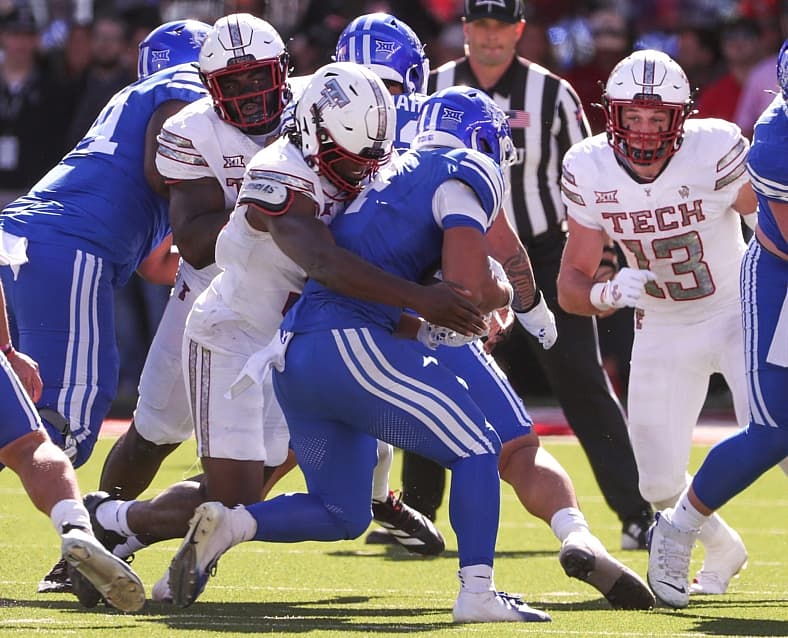
While the Titans ranked 15th in ESPN pass-rush win rate (37 percent) last season, a lot of that had to do with Jeffery Simmons (32 pressures, 21 QB hits, and 11 sacks) on the interior. Adding someone like Texas Tech edge rusher David Bailey opposite Johnson is the perfect way to elevate Tennessee’s ability to consistently generate pressure and sacks off the edge. Plus, given Simmons drew the highest double-team rate among defensive tackles (67 percent) last season, there will be more one-on-one opportunities on the edge.
Whether it’s Bailey, Ohio State Buckeyes edge defender Arvell Reese, or Miami Hurricanes pass rusher Rueben Bain Jr., Tennessee needs to use the fourth overall pick on a cornerstone defensive player. Either that, or it can trade down and select wide receiver Carnell Tate, giving Ward a true No. 1 receiver, collecting more draft capital, and using that first-round pick on a more valuable and impactful position than running back.