

 Scott Gulbransen
Nobody talks about base defense anymore. That’s the dirty little secret of modern NFL football — most teams spend the majority of their snaps in nickel or dime packages and the “base” defense is more of a philosophical starting point than an actual game plan.
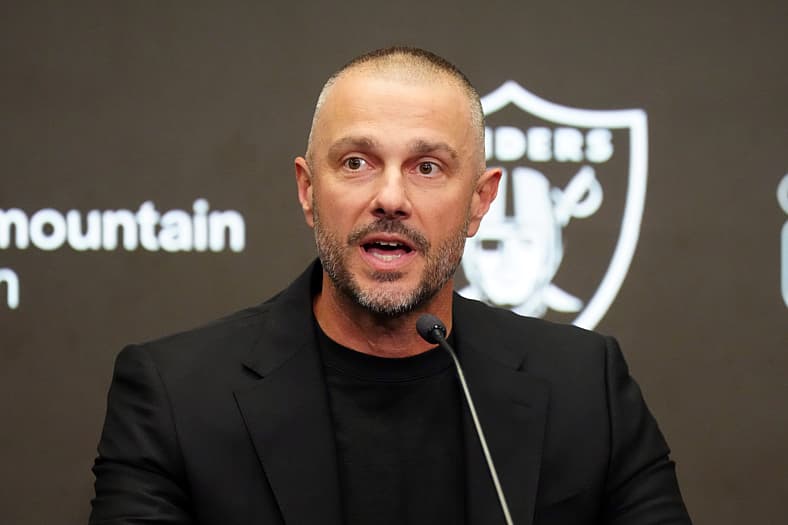
So when Klint Kubiak stood at a podium in Indianapolis during the NFL Combine and announced the Raiders were shifting to a 3-4 under new defensive coordinator Rob Leonard, some people shrugged.
They shouldn’t have.
This isn’t a minor tweak. This is a full identity overhaul for a defense that ranked among the league’s worst a year ago. And while the base package won’t dominate the snap count on Sundays, the 3-4 framework shapes every personnel decision Las Vegas makes between now and kickoff — in free agency, in the draft, and in the film room. If you want to understand where this team is headed defensively, you have to start here.
What Rob Leonard Is Actually Building with Las Vegas Raiders
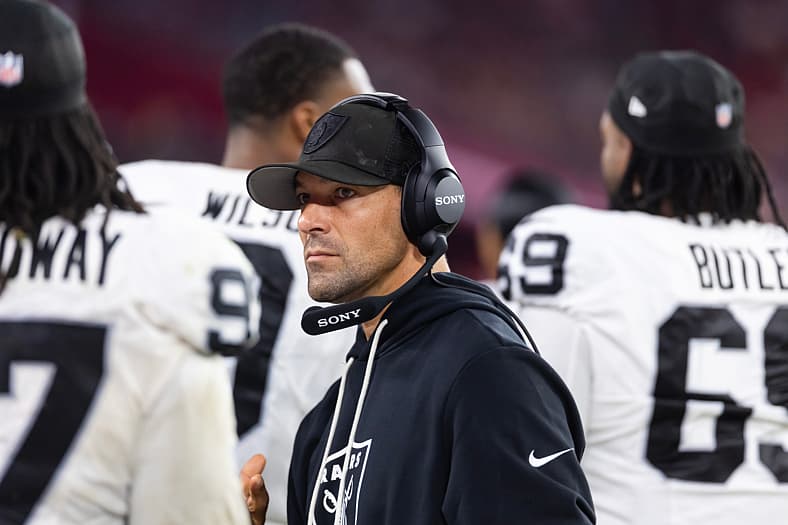
Leonard takes over as a first-time NFL defensive coordinator, which is either a red flag or a sign of how much John Spytek and Kubiak trust him. Spytek pushed hard to get Leonard the job after sitting in on his interview last year when Pete Carroll was also evaluating him for the DC role. Kubiak met with him, was sold quickly, and handed him the keys.
Leonard’s background tells you exactly what kind of defense Las Vegas is trying to build. He learned under Brian Flores in Miami and Mike Macdonald in Baltimore. Don’t expect a static, vanilla 3-4. Expect multiple fronts, heavy doses of 3-3-5 on third down, constant stunts and rotations, and linebackers with real responsibilities before and after the snap. Macdonald’s fingerprints are all over this thing.
Kubiak called it a “starting point.” Where this defense goes from there depends entirely on the players Leonard has to work with.
What It Means for the Raiders Roster
The Raiders spent four years under Patrick Graham’s 4-3 defense. Before that, Carroll’s 4-2-5. The roster was built — or mostly neglected — around those schemes. The 3-4 creates immediate, specific needs.
You need a true nose tackle. A space-eating, double-team-absorbing anchor in the middle of the line. The Raiders don’t have one. That need shows up in free agency and the draft alike.
You need linebackers who can do more than play downhill. In a 3-4, outside linebackers are hybrid pass rushers who set the edge against the run and occasionally drop into coverage. That’s a different animal than a traditional 4-3 end. Leonard’s scheme will rotate bodies heavily and demand athleticism at every level. Right now, this roster is thin at both spots.
Maxx Crosby Fits: Full Stop
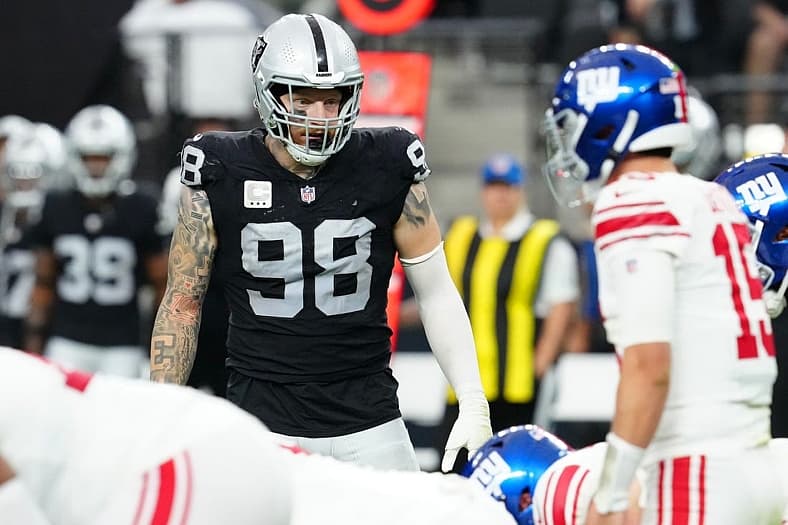
Crosby is a Raider. The Baltimore trade is dead. And the 3-4 transition plays directly to what he already does well.
Crosby has always been more of a stand-up edge player by nature. Operating as a 3-4 outside linebacker gives him more freedom in his pass-rush setup and the ability to crash inside or go wide based on what he sees at the snap. The scheme doesn’t just accommodate Crosby — it could unlock a version of him we haven’t seen in a couple of years.
Tyree Wilson also has a real shot to figure it out here. He’s been miscast as a traditional defensive end since Las Vegas drafted him in the first round. Moving inside to a 4i-technique plays to his length and power instead of asking him to win with athleticism and bend he doesn’t have. Wilson’s 2026 will define whether he has a future with this franchise. The scheme change gives him his best shot.
The Bottom Line
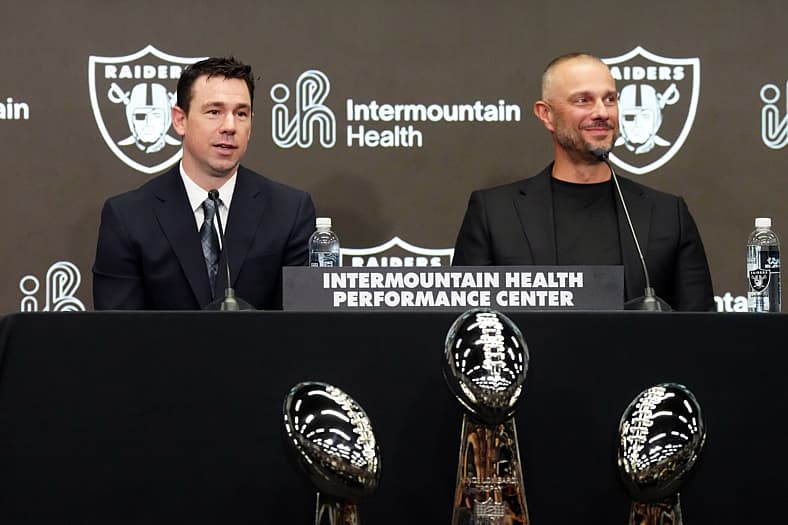
A scheme change alone doesn’t fix a defense that lost 14 games. But overhauling your defensive identity with a coordinator trained by the best minds in the business and a head coach willing to give him real authority is at least a coherent plan.
The 3-4 is not a magic bullet. It’s a framework. What Leonard and Spytek build inside it between now and the draft in Pittsburgh will tell us whether this defense can be competitive in 2026 or whether it’s another long year for Raider Nation.