
 Farah Ben Gamra

Katherine Legge’s NASCAR Cup Series run (coming after more than 20 years racing at a high level in IndyCar, IMSA and other international series) has reopened debate about how NASCAR decides when a driver is ready for Cup. For most, the question is whether she was moved up before she had enough stock car experience to really be set up for success.
Conversations about Legge’s NASCAR Cup Series run have picked up again after veteran spotter Freddie Kraft questioned whether her entry into the series left her in an impossible position from the start.
On the Door Bumper Clear podcast, Kraft shared how he views the situation.
“NASCAR kind of set her up for failure. There was nothing, no win for her in going out there and running in the back because only bad things could happen.”
That argument is a wider garage conversation about how NASCAR decides who gets Cup opportunities, and whether the current system properly prepares drivers before they arrive at the top level.
Legge debuted in the Cup Series in March 2025 at Phoenix International Raceway. Across the 2025 and 2026 seasons, she has made 7 Cup starts.
Her best result so far came in the 2025 Brickyard 400 at Indianapolis, where she finished 17th, the strongest finish by a female driver at the track since 2017.
Kevin Harvick: Legge was “Thrown to the Wolves” by NASCAR
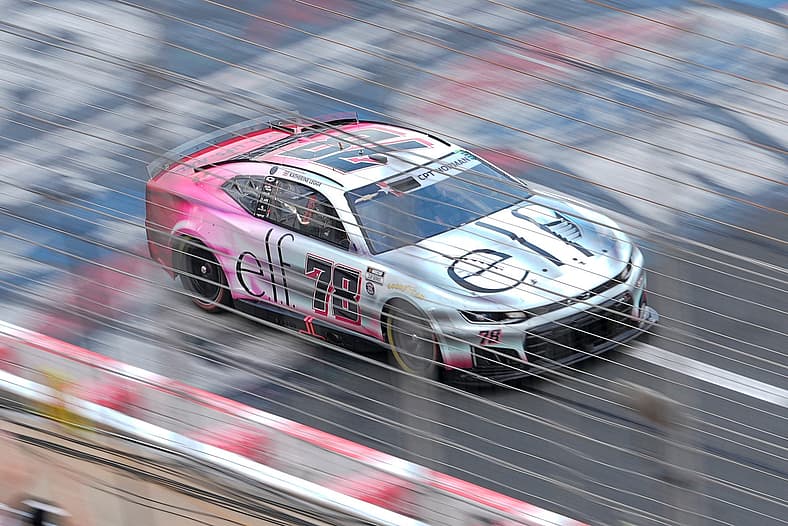
Former Cup champion Kevin Harvick had a similar opinion already a year ago about Legge.
“She was really thrown to the wolves in this situation,” Harvick said.
He pointed to the lack of Cup experience and the level of equipment she was placed in as key challenges.
“She’s in the worst car and showing up to Phoenix in a Cup car that she’s never driven, not a lot of NASCAR experience. And I know that we want people from different series to be able to come in to the Cup Series, but we’ve got to get back to some accountability of making sure that the people that are driving these Cup cars are properly prepared to go out on the race track and do the things that they need to do.”
There is a broader concern inside NASCAR that drivers are sometimes placed into Cup environments before they have enough stock car reps, forcing them to learn in situations where mistakes are heavily punished.
The criticism around Legge has also been loosely compared to the reaction toward Cleetus McFarland, another driver who entered NASCAR with limited traditional stock car development. Both have been labeled by some fans as “skipping the line,” with criticism focused on experience levels and early on-track mistakes.
However, the contexts are significantly different for the two drivers. McFarland comes from a content-creation and grassroots racing background, while Legge brings a long professional résumé across IndyCar and international sports car racing.
The only common point is NASCAR’s own structure and how its current approval and entry system does not prepare drivers properly for Cup racing, and puts them into terrible situations.