
 Matt Johnson
Major League Baseball is headed for a lockout in 2027. While the league and MLB Players Association have months to negotiate a new collective bargaining agreement, the initial proposals from both sides show how far apart the two sides are from labor peace next season and beyond.
An MLB salary cap is the central issue in all of this. In 2026, the Los Angeles Dodgers have a $407 million projected luxury tax payroll, per FanGraphs, while the New York Mets ($370 million) and New York Yankees ($334 million) make up the three highest MLB payrolls this season.
The MLBPA has fought for decades against a salary cap, and the desire for its implementation by owners is viewed as a non-starter for the players’ union. It will create a long and nasty fight, one that MLB teams have seemingly prepared for, as evidenced by a lockout war chest worth north of $2 billion. The initial offers in CBA talks also tell us something about where each side is.
Reviewing Initial CBA Offers by MLB, MLBPA
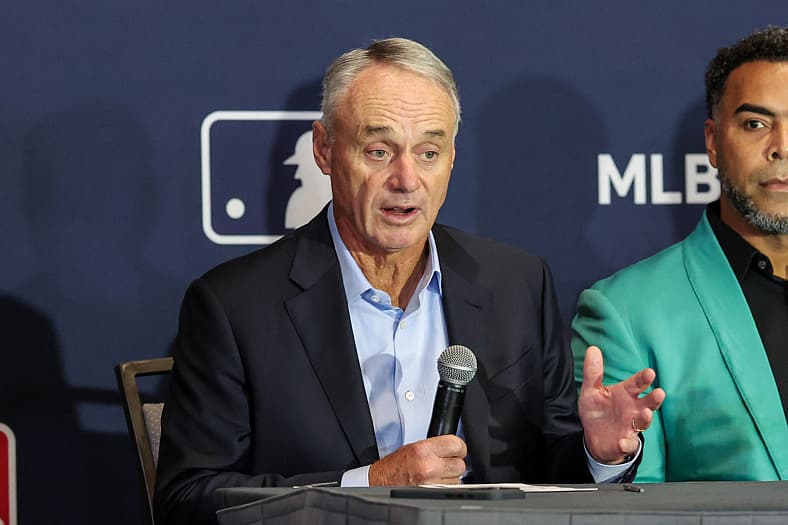
The players’ union filed the opening salvo in negotiations at the end of May. As reported by ESPN‘s Jeff Passan, the MLBPA proposal raises the luxury tax threshold to $300 million, requires teams to spend at least $150 million per season on player payroll, and creates a “Competitive Integrity Tax” which would fine teams that don’t clear the payroll minimum. The players’ union also asked for the minimum salary to be raised from $780,000 in 2026 to $1.5 million, providing a significant raise for young players.
Meanwhile, the league proposed its own creation of a salary floor set at $171.2 million. One key difference with its proposal, however, is a hard MLB salary cap that is set at $245.3 million next season and would rise progressively depending on annual baseball-related revenue.
Key Elements of MLBPA Offer
- Luxury tax threshold raised to $300 million
- Creation of “Competitive Integrity Tax”
- Minimum salary raised to $1.5 million with 10% annual raises
Key Elements of MLBPA Offer
- 50/50 split of baseball-related revenue
- MLB salary floor, beginning at $171.2 million in 2027
- MLB salary cap, beginning at $245.3 million
In 2026, per Spotrac, there are six MLB teams (St. Louis Cardinals, Sacramento Athletics, Washington Nationals, Chicago White Sox, Cleveland Guardians and Miami Marlins) with a total payroll under $100 million, with 13 of 30 teams under the MLBPA’s proposed $150 million payroll floor and 16 clubs under the owners’ proposed salary floor. On the other end of the spectrum, there are six teams (Mets, Dodgers, Yankees, Toronto Blue Jays, Philadelphia Phillies and Atlanta Braves) that are over what the hard cap would be.
Picking an MLB Salary Cap
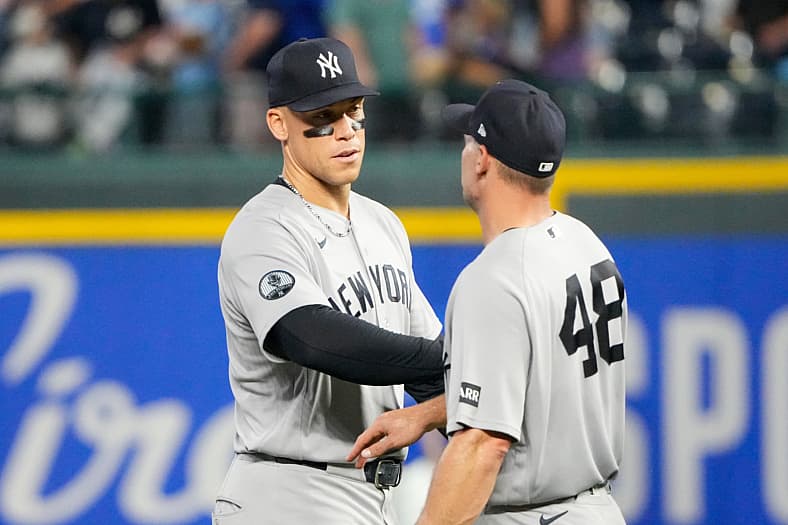
The highest-paid MLB players and the biggest stars in the sport will obviously be the most vocal critics of a salary cap. After all, a hard ceiling that limits spending means fewer players land deals worth $50-plus million per season. It also limits the flexibility of teams like the Yankees, Dodgers and Mets to go all-in by splurging on the best talent.
However, salaries across the board can still rise over time. The NFL makes billions of dollars more in annual revenue than MLB, but the average annual value of contracts for nearly every position has skyrocketed in the last decade. An MLB salary cap isn’t a barrier to players collectively making more money.
With that said, an MLB salary cap being set at $245.3 million in 2027 should be a non-starter. Even more so since owners are pushing for player benefits to be included, the implementation of which would effectively make that $245.3 million cap significantly lower.
We’d propose setting the MLB salary cap next season at $280 million, with it set to progressively climb in the subsequent years based on the agreed-upon split of revenue. Importantly, this would strictly be for player payrolls only, with benefits excluded from the total. At $280 million, only the Dodgers, Mets, Yankees, Blue Jays and Phillies would have to shed money this offseason.
An MLB salary cap is obviously the last thing the players’ union wants to support. However, there can still be significant long-term gains for players as a whole if another step is taken.
Proposing an MLB Salary Floor
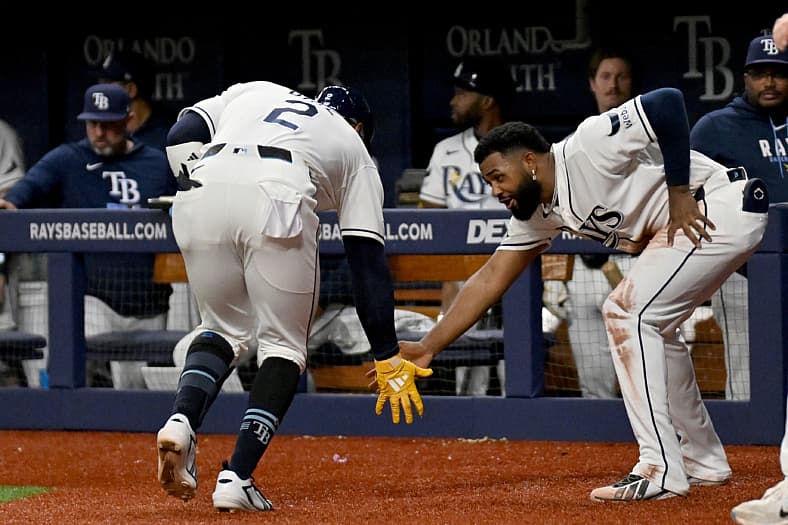
MLB’s biggest stars will lose some of their long-term earning potential with the implementation of a salary cap. With that said, a union exists to protect the majority of its members, and a salary floor can be life-altering for far more players around the league. There’s also a great benefit to it for baseball fans.
Establish a $175 million floor beginning next season. Instantly, clubs like the Nationals, Cardinals, Athletics, White Sox and Minnesota Twins need to invest $80-plus million into their major-league rosters next winter. Meanwhile, the Pirates, Colorado Rockies, Milwaukee Brewers, Cincinnati Reds and Tampa Bay Rays all have to add $60-plus million in payroll commitments beginning in 2027.
What does that mean? Conservatively, more than $700 million would need to be spent by a third of the league on MLB free agents and players eligible for contract extensions. There would also be raises in the arbitration system, spreading out the wealth to a large majority of players.
That far outweighs the payroll reductions for the Dodgers, Mets, Yankees, Blue Jays and Phillies. It also ensures that with teams investing more into the on-field product, there should be more competitive teams next season and beyond. There’s a windfall in this for the owners’ perspective, too.
Guaranteeing a close-to-even split of all TV money and baseball-related revenue would also ensure that both the MLB salary cap and floor keep rising in the years to come. More competitive teams with greater parity should benefit ratings and attendance as well, creating a cycle that enriches everyone.
We can certainly rationalize the argument against an MLB salary cap, and its implementation would hurt some of the top stars. However, allowing for a cap also opens the door to a salary floor that finally forces teams that cashed in for years on revenue sharing while trotting out the lowest payrolls in baseball to spend that money immediately.
Ultimately, the needs of the many should outweigh the needs of the few. While the league’s top stars and biggest teams might be against this, it is of far greater benefit to fans and a majority of baseball.
Ultimately, the needs of the many should outweigh the needs of the few. While the league’s top stars and biggest teams might be against this, it is of far greater benefit to fans and the majority of baseball.