Isaac Ciravolo
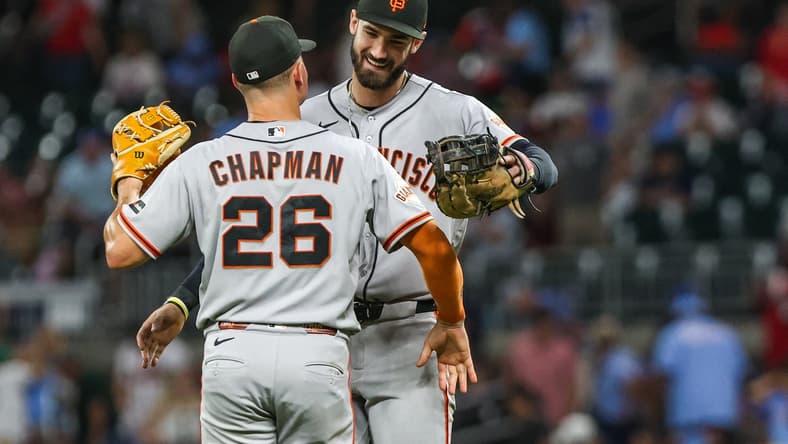
The San Francisco Giants just watched one of their likely trade chips walk off the field. Matt Chapman exited Tuesday’s loss to the Diamondbacks with an abdominal strain, creating a nightmare for a front office staring down a July deadline selloff.
Related: Latest Intel on Potential Matt Chapman Trade
Devastating Injury at the Worst Time
Chapman tweaked his core in the sixth inning. He charged a slow grounder, made an awkward barehanded throw to first and instantly grimaced. He managed to take one more at-bat before the Giants pulled him. Chapman later told reporters that the injury had been lingering for a month and Tuesday’s play was simply the breaking point.
This injury complicates San Francisco’s deadline strategy. The Giants currently sit 15 games below .500 and 20.5 games back of the NL leading Los Angeles Dodgers. With a 19th ranked farm system (per MLB Pipeline), the Giants could sell some of their top players like Robbie Ray and Luis Arraez to move up on the list. Before Chapman’s injury, he was included in this list of potential trade pieces.
Prior to his injury, Chapman was peaking. He crushed the baseball throughout June. Chapman put up a .241/.355/.483 slash line with a 133 wRC+. In addition to this great hitting, he was still fielding at his typical elite level. Chapman was proving to contenders that his bat still carried premium power to pair with his always great fielding.
Now, everything depends on his MRI results. A core injury is a massive red flag for a power hitter. It limits rotational force, disrupts timing and alters swing mechanics. If Chapman needs an injured list stint, his trade value craters. Contenders will not surrender premium prospects for a player who needs three weeks to recover his bat speed.

Contract Complications
Even if Chapman’s MRI brings good news and his market rebounds, the Giants face another massive hurdle: his no-trade clause. Since Chapman’s contract includes a full no-trade clause, he has the power to veto any deal, President of Baseball Operations, Buster Posey presents him.
As a California native who has spent the majority of his big-league career in the Bay Area, Chapman is highly unlikely to waive that clause for just anyone. If he does agree to move, he will certainly veto any trade to a non-contender.
This leaves San Francisco with zero leverage. They cannot simply shop him to the highest bidder. Any interested team must be a World Series threat located in a destination Chapman approves. Rival executives know this and will use both the lingering abdominal strain and his limited list of destinations to drive down the asking price.
San Francisco needed a July bidding war. Instead, they are holding their breath, hoping Chapman heals fast enough to salvage a heavily discounted deal.