
 Isaac Ciravolo
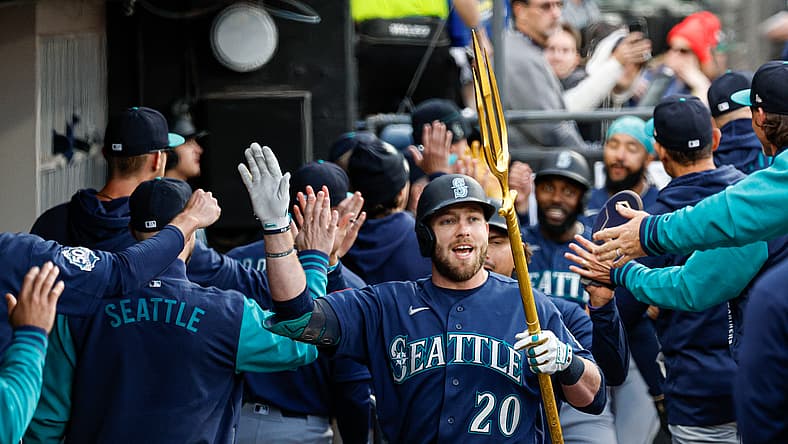
Seattle Mariners’ Luke Raley is taking the modern “three-true-outcomes” hitting philosophy to the absolute extreme in 2026. Each plate appearance is a high-stakes gamble. It’s either going to be a devastating whiff or a majestic moonshot into the bleachers. There is virtually no middle ground.
For opposing pitchers and the Mariners’ front office, Raley is the most polarizing hitter in baseball. Let’s decode the ultimate “coin-flip” profile.
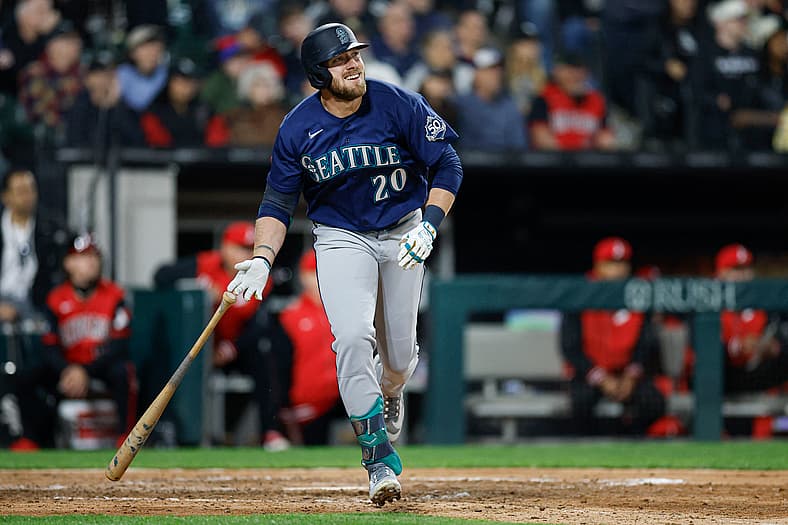
Heads: Elite, Game-Breaking Power
When Raley connects, he doesn’t just hit the baseball, he absolutely destroys it. If baseball were simply a home run derby, Raley would be taking home the hardware.
After, an underwhelming 2025 campaign slashing a mere .202/.319/.311 while dealing with an oblique strain, Raley showed signs of regression after 2.7 WAR 2023 with the Tampa Bay Rays and a 3.2 WAR 2024 with the Mariners. But any signs of regression have flipped entirely in these first couple months of 2026, launching double-digit homers and posting an OPS+ of 150, 50% better than the league average.
Here is why his power is so lethal:
- Top-Tier Exit Velo: His average exit velo at 91.9 MPH and max exit velo of 113.8 MPH both rank within the top 87th percentile of all major league players, according to Savant.
- Punishing Mistakes: To go along with this top notch exit velo, he has a 98th percentile Barrel%, 95th percentile Hard-Hit% and a 28.1% Pull AIR rate. These metrics perfectly correlate with how to hit a homerun: barrel it hard and pull it in the air.
- The Underlying Analytics: The sabermetrics also back up this power-centric profile. He has a 90th percentile xwOBA and a 97th percentile xSLG (expected slugging). This xSLG is actually higher than his current SLG showing he should have even better power numbers than his already great ones.
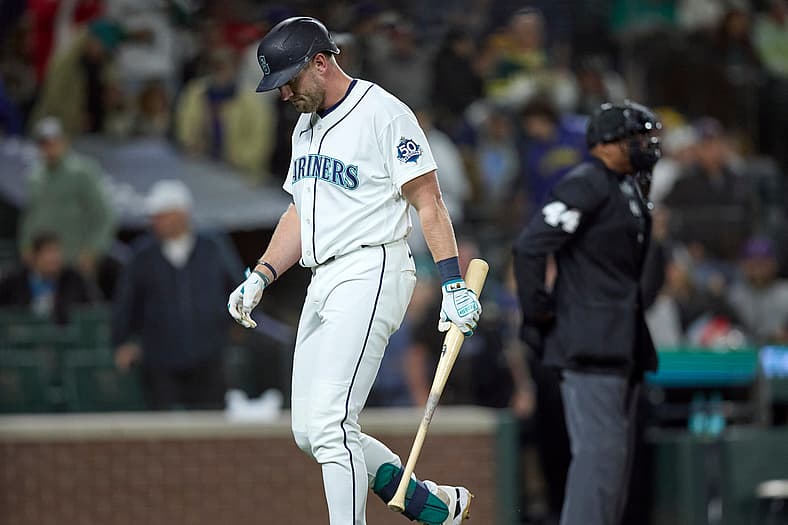
Tails: Historic Swing-and-Miss Vulnerabilities
On the flip side, Raley’s swing has some massive holes. Just as much as Raley punishes pitcher mistakes, pitchers punish his shortcomings.
The blue sections of his Savant page are just as extreme as his deep red:
- Glaring Whiff Rates: An inverse of his Barrel%, Raley has a 1st percentile Whiff%, whiffing 43.6% of the time. As a result of this astronomical Whiff% (almost twice the league average), Raley strikes out in a third of his plate appearances.
- The Scouting Report is Out: Pitchers don’t need elite velocity to get him out, all they need is a breaking ball. Throughout the season, pitchers decreased their fastball usage to him from 46.8% to 36.6% and increased their breaking ball usage from 27.3% to 37.5%. This is inline with his 5 run value against 4-seam fastballs while posting a 0 run value on curveballs.
- In-Zone Struggles: Raley’s issue is not chasing outside of the zone, it’s his abysmal 65.9% Zone Contact rate, 17% below league average. He also swings in the zone at a rate 10% above league average. Combining his poor zone contact rate with a high zone swing rate leads to his strong zone struggles.
Is the Luke Raley Gamble Worth It?
So, how does a modern front office manage a player whose profile its this volatile? It all comes down to roster construction.
A “coin-flip” hitter like Raley is an incredibly valuable asset, so long as he is not the sole engine of the offense. When surrounded by high-OBP, contact-heavy bats (his antithesis), a team can easily swallow his 34% strikeout rate, letting his power flourish with ducks on the pond.
However, Raley also struggles with one more issue, lefties. Raley has a .286 OPS against lefties while sporting a .902 OPS against righties. This stark difference in platoon splits is what front offices are most scared of when putting Raley in the starting lineup.
Luke Raley is the ultimate test of patience in the front office. He won’t win a batting title and he will walk back to the dugout shaking his head more often than not. But when the game is on the line and a pitcher gives him a fastball?
The coin lands on heads and everyone remembers exactly why his bat is in the lineup.