
 Isaac Ciravolo
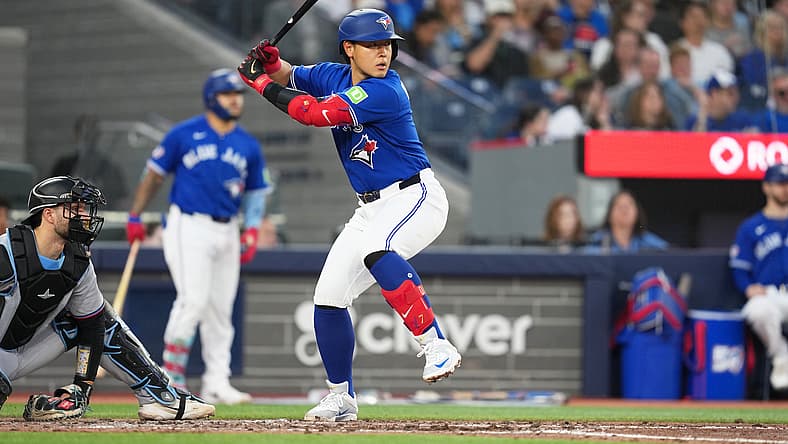
When the Toronto Blue Jays signed Kazuma Okamoto to a four-year, $60 million deal this January, they weren’t just importing a bat; they were importing a 248-home run NPB pedigree. The 29-year old slugger arrived from the Yomiuri Giants with a reputation for elite plate discipline and raw power.
Yet, as with almost every hitter crossing the Pacific, the transition from Tokyo to Toronto hasn’t been perfectly linear. Through his first 55 games in the major leagues, Okamoto has showcased great power, cranking 11 home runs and a 94th percentile hard-hit rate. This production has not been smooth. He has been forced to navigate brutal cold streaks and a steep mechanical learning curve.
Here is a look at the data behind his early-season woes, the mid-April stance changes that sparked his bat, and the counter-adjustments currently testing his resilience.
The NPB to MLB Transition
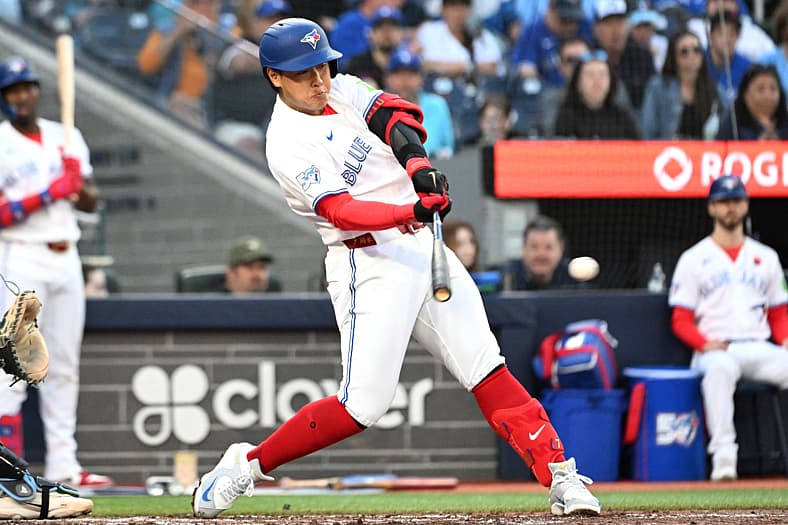
The most significant hurdle for any NPB import is the leap in average velocity and movement profiles of major-league breaking balls. The average fastball velocity in the MLB is 4 mph higher than in the NPB, 95 to 91. In Japan, Okamoto thrived against control-oriented pitchers who lived on the edges of the zone, but in the MLB he must face flamethrowers with lack of care for control.
Initially, this velocity gap disrupted his timing. Through mid-April, his Whiff% sat above 35% and his strikeout rate hovered near 33%, as per savant.
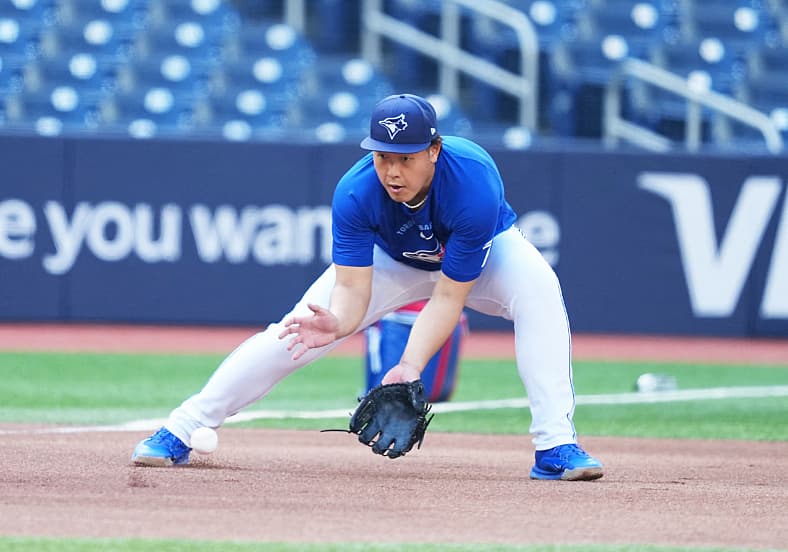
The transition hasn’t just been in the batter’s box. Defensively at third base, the drastic increase in MLB exit velocities has forced Okamoto to position himself significantly deeper than he did in the NPB. He also has to actively adjust his internal clock for each different infield dirt and turf across all MLB stadiums. This is much different from the NPB where eight, including his former team’s field, out of twelve stadiums are turf.
The Mid-April Box Adjustment
In mid-April, Okamoto made two key changes in his stance: he moved back in the box and closer to the plate. These two changes were made to combat the velocity increase and the big breaking balls. By moving back in the box, Okamoto effectively slowed the velocity in the MLB down to what the NPB fastball felt like. He also moved closer to the plate to fend off and battle outside sweeping breaking balls.

Image via Savant
The underlying data responded beautifully to this tweak. His average bat speed jumped from 73.1 mph in April to a peak of 74.4 mph in early May because he gave himself more time to catch up to the fastball. His Barrel% spiked to 20.1% and his Chase% plummeted from 25.3% down to just 11.3% during that window. This offensive surge culminated on May 5, when he crushed his 10th home run of the season, a 107.9 mph missile off a 96 mph fastball from the Rays.
The League Punches Back
In the major leagues, the moment you fix a hole in your swing, advance scouting departments test you somewhere else. Once Okamoto crowded the plate to cover the outer half, MLB pitchers responded by hammering him inside.
To catch up to inside velocity from his new, closer position, Okamoto began trying to “cheat.” He started opening up his front hip too early to clear out his hands, compromising his plate coverage and leaving his barrel lagging on off-speed pitches.
The statistical fallout has been severe. This punch back after his mechanical adjustments has triggered a brutal 9-for-63 skid starting on May 9. From May 9 to May 29, he posted a 34 wRC+ and a pitiful 38% strikeout rate. This mechanical leak became so pronounced that Blue Jays manager John Schneider gave Okamoto a day off May 23. The reason for this reset day, according to Schneider, was because Okamoto was “pulling off everything” and flying open.
From May 9 to this reset day, Okamoto posted a terrible -7 wRC+, meaning he was 107% worse than league average, but from this reset day to now he has a great 136 wRC+.
Looking Ahead
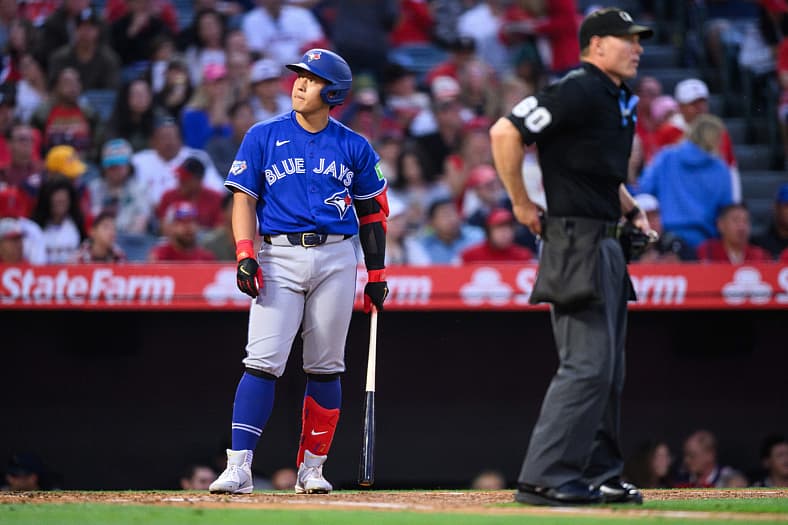
Okamoto’s recent struggles are not indicative of his talent; they are a standard rite of passage for rookie NPB imports. Despite these struggles, Okamoto’s raw power metrics show his high ceiling. His season-long 92.8 mph average exit velocity ranks in the 93rd percentile of the league and pairs well with his above average 24% pull-air rate to make him an elite power threat once fully adjusted.
The blueprint for his next hot streak is already in the data. If Okamoto can lock down his front side, keep his front hip closed, and trust his hands to handle inside velocity without “cheating,” the whiffs will drop. The league has adjusted to him; now, it’s time for Okamoto to adjust back.