Scott Gulbransen

There’s a moment in every young driver’s career where the narrative around them either becomes true or falls apart under the weight of expectation. For Andrea Kimi Antonelli, that moment came on a Sunday afternoon at the 2026 Chinese Grand Prix, 56 laps around one of the most demanding circuits on the Formula 1 calendar, in front of a global audience watching to see whether the teenager Mercedes bet their future on could actually deliver.
He delivered.
Antonelli Wins in Shanghai — and Makes History Doing It
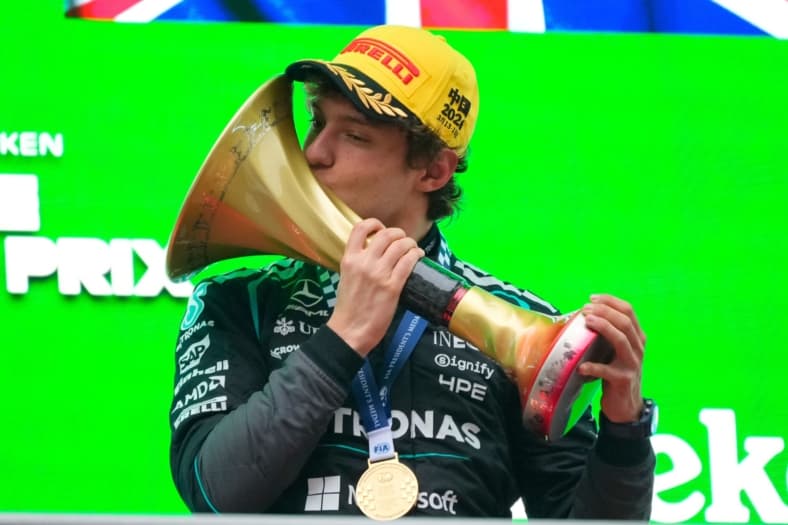
Antonelli won the 2026 Chinese Grand Prix in a performance that was commanding, intelligent and — for one genuinely terrifying moment with four laps remaining — almost spectacularly undone by a massive lockup at Turn 14 that sent him deep into the runoff. He gathered it, held the gap and crossed the line 5.5 seconds clear of teammate George Russell to become the second youngest race winner in Formula 1 history.
Only Max Verstappen, who won his first grand prix at 18 years old in Spain in 2016, has done it younger. Antonelli is 19. He has now started two Formula 1 grands prix and finished both of them on the podium.
A Weekend That Was a Statement For Kimi Antonelli
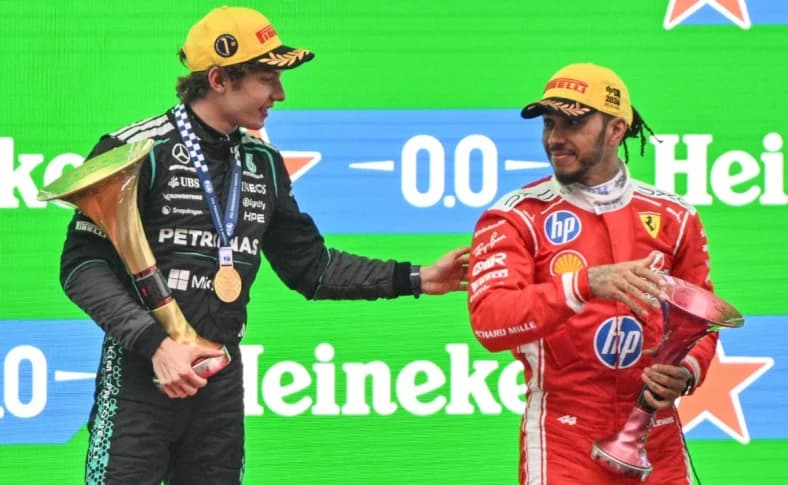
The Chinese Grand Prix weekend itself told you everything about where Antonelli is as a driver right now. On Saturday, he became the youngest Grand Prix polesitter in the history of the sport, beating a record that had belonged to Sebastian Vettel since 2008.
When the lights went out Sunday, he briefly lost the lead to Lewis Hamilton, who made a brilliant launch from third on the grid and surged past both Mercedes into Turn 1. What Antonelli did next revealed more about who he is as a racing driver than the pole position did. He didn’t panic. He didn’t push past the limit chasing Hamilton down. He raced cleanly, found his way back to the front before the end of the second lap and managed the rest of the afternoon with a composure that drivers twice his age sometimes can’t find in the heat of a real fight.
That composure is what separates the truly special drivers from the merely fast drivers. F1 has no shortage of fast drivers. It has very few who can process the chaos of a race at the front of the field — the tire management, the energy deployment decisions, the pressure of a teammate hunting in clean air — without making the kind of mistake that hands a race away. Antonelli made one late error, that lockup at Turn 14, and he absorbed it. The gap was large enough, the mind calm enough. He got back on track and finished the job.
Mercedes Made the Right Call Replacing Hamilton with Antonelli
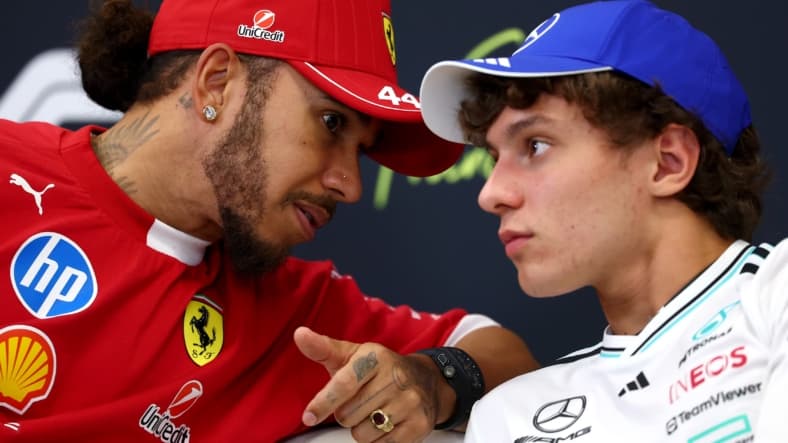
Mercedes knew what they were doing when they placed Antonelli in the seat Lewis Hamilton vacated after 11 years. The scrutiny that came with that decision was immense, and not entirely unfair: replacing the most decorated driver in the history of the sport demands a certain kind of proof before the paddock is willing to accept the choice.
Two races in, Antonelli has 19 points, a race win and is the second-youngest-winner in the record books. Russell leads the drivers’ championship by a single point. The two of them are already setting up what could become one of the most compelling intra-team rivalries the sport has seen in years, and the season is barely two weekends old.
For fans in the United States who are newer to F1 and still building their mental map of who matters in this sport, here’s what you need to understand: Antonelli is going to be one of the defining figures of this era.
The regulation reset that 2026 brought with it created a level playing field that doesn’t come around often, and Antonelli is thriving on it in a way that suggests this isn’t a hot start that cools once the field catches up. When he crossed the finish line in Shanghai and came on the radio, he said he was about to cry. He thanked his team. He said he’d promised himself he would bring Italy back to the top step, and for the record, he’s the first Italian race winner since Giancarlo Fisichella in 2006.
He is just 19 years old and he meant every word of it. Pay attention to this kid.