
 Scott Gulbransen

Two races into the 2026 Formula 1 season, the reigning constructors’ champions are a disaster. They’re not struggling — they’re a complete dumpster fire. McLaren sits 80 points behind Mercedes with just 18 on the board, a number that looks even worse when you remember Oscar Piastri hasn’t completed a single racing lap all year.
Suzuka isn’t just the next race on the calendar. It’s a lifeline.
McLaren Teetering on Edge of Oblivion for 2026

Both McLarens failed to start the Chinese Grand Prix two weeks ago due to separate electrical faults on the Mercedes power units. It was the first time the team had two non-starters in the same race since 2005. That race, for context, was the infamous U.S. Grand Prix where a tire fiasco pulled 14 cars off the grid. This was worse, in a way, because it was entirely self-inflicted. Andrea Stella described it bluntly: “We are here to go racing, and today we were not in condition to do so.”
In Australia, Norris finished 51 seconds behind race winner George Russell, a chasm that told its own story about where McLaren stands against the dominant Mercedes W17. Then came Shanghai and the double DNS. There is no way to spin that.
WATCH: Tune into Apple TV+ to Watch the 2026 Japanese Grand Prix
The machinery problems run deeper than one bad weekend. Norris was candid about it after Melbourne, admitting McLaren “didn’t do enough” to tackle the 2026 challenge and calling out the team’s software integration with the Mercedes power unit as a core issue. The new regulations demand a 50/50 split between combustion engines and electrical systems, and McLaren is clearly still trying to figure out how to harness what Mercedes has built. The works team has won every race so far, making it look routine. Their customers in Woking are fighting fires.
McLaren Retrenching for 2026 Japanese Grand Prix
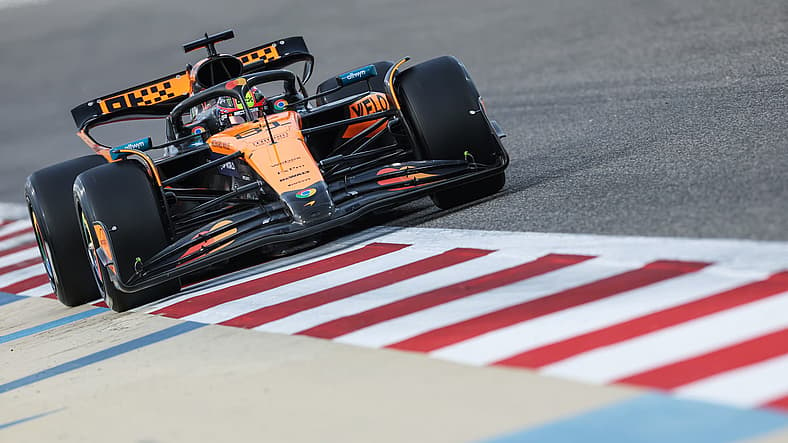
Zak Brown assembled the team at McLaren HQ this week and delivered a rallying cry through a social media video, insisting the team has the best drivers and best culture, and that winning “will be sooner rather than later.”That kind of messaging is fine for morale. What happens at Suzuka will say considerably more.
The minimum requirement this weekend is straightforward: get both cars to the grid. That’s the first stated objective from within the paddock: getting both Norris and Piastri to the formation lap. It sounds like a low bar for the team that dominated 2025. It is. But that’s where they are.
Beyond just starting, McLaren needs race pace. Suzuka is one of the most demanding tracks on the calendar — a high-speed, high-downforce circuit that exposes aerodynamic weaknesses and punishes setup compromise. It’s also a place with enormous history for the team. McLaren has won there more than any other constructor. Senna clinched two titles on this stretch of asphalt. That history won’t do anything for the MCL39 on Sunday, but it does underscore how much this place matters to the brand.
The stakes are sharpened by what comes after. With both the Bahrain and Saudi Arabian Grands Prix cancelled due to the ongoing conflict in the Middle East, the Japanese Grand Prix will be followed by a five-week break before the schedule resumes.That gap is both a blessing and a pressure point. A strong Suzuka result gives the team something to build on during the break. Another non-points weekend and they carry that weight into a long stretch without a race to redeem themselves.
Related: Max Verstappen’s 2026 Formula 1 Criticism Is Correct — and Completely Unconvincing
The pace of development in 2026 is fast, and teams are genuinely improving round by round. McLaren isn’t standing still. But Mercedes has been flawless and Ferrari has been consistent, and the gap in the constructors’ standings is already starting to look structural rather than circumstantial.
Norris is the reigning world champion. Piastri is one of the best young drivers in the sport. The MCL39 showed genuine pace in China before Sunday fell apart. There is talent and resources to work on fixing this. Suzuka is where they need to start.